AI data centers are now being pushed to the front of the power queue, and that matters more than most people realize. This is not just a utilities story. It...
AI Data Centers Get a Fast Lane to the Grid: What It Means for Tech, Power, and Consumers
AI data centers are now being pushed to the front of the power queue, and that matters more than most people realize. This is not just a utilities story. It affects cloud prices, device performance, local electricity bills, and whether the AI tools everyone is selling can actually keep running.
Key Takeaways- AI data centers need far more power than ordinary server farms.
- Grid upgrades, permits, and substations are now part of tech strategy.
- Faster interconnection can speed AI deployment, but it can also shift costs and strain local systems.
- Buyers should watch power efficiency, cooling design, and vendor transparency.
- A data center is no longer just a server room; it is infrastructure policy in disguise.
What is AI data center fast-lane policy?
It is a policy or utility priority that gives large AI computing facilities quicker access to the electrical grid, permitting, and infrastructure upgrades. That sounds tidy. In practice, it means megawatts, transformers, transmission lines, cooling loops, and very expensive waiting lines.
The old model is blunt. A company submits a request, then sits there while engineers study load, substation capacity, and the roadblocks around interconnection. The new push says some AI projects are strategic enough to move faster, especially as demand from machine learning, training clusters, and inference farms keeps rising. Here is the kicker: the chips are only half the story. Power is the other half.
When I look at this stuff, I see three forces colliding. First, the appetite of GPUs and accelerators keeps rising. Second, the grid is old, patched, and already stressed. Third, public officials want the economic upside of AI without turning neighborhoods into overheated billboards for bad planning. That tension is the whole game.
The smell of hot exhaust, the hum of chillers, and the math of capacity all matter here. What seems like a clean software story is actually a steel-and-copper problem. Frankly, most tech coverage skips that because watts are boring until they are scarce. Then everyone notices.
The policy angle is not purely technical either. Good stewardship means using expensive resources well, not pretending they are infinite. Tech should serve people, not bully the power bill into becoming a social problem. That principle matters when governments decide who gets first access to the grid and who waits.
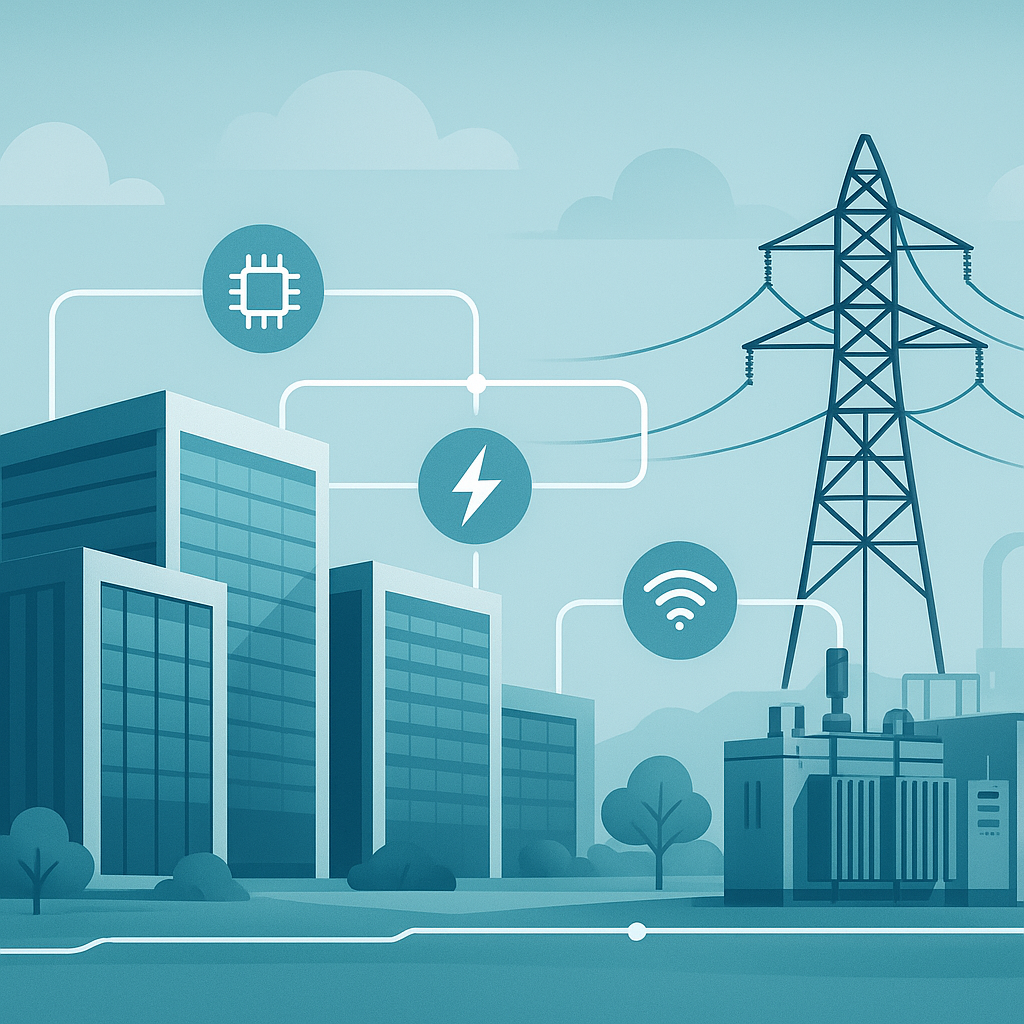
What is an AI data center fast lane? It is a priority system that moves large computing projects ahead in the queue for grid interconnection and related approvals. That does not mean “free pass.” It means the state or utility may give certain projects expedited review if they fit economic or strategic goals.
Most people think a data center is a warehouse full of blinking boxes. That is quaint. Modern AI facilities are power plants in reverse, pulling massive electrical loads, dumping heat, and relying on elaborate cooling systems, backup generators, switchgear, and fiber links. The processor count matters, yes, but so does the electrical architecture supporting the whole stack.
I have reviewed enough hardware to know the pattern. Companies obsess over the GPU model, the memory bandwidth, and the benchmark chart, then act surprised when the utility asks for months of engineering review. That is not a side issue. It is the issue.
A fast lane usually reflects a political bet. Officials want investment, jobs, tax revenue, and a share of the AI boom. They also want to avoid a mess where speculative projects reserve capacity and never build. So regulators may demand milestones, financial backing, environmental review, and proof that the project can actually run without wrecking local supply.
The biggest competitor to this policy is the old wait-in-line model, where every large load fights for grid access on equal terms. That sounds fair. Sometimes it is. But when a region has a narrow power margin, slow review can choke investment for years. The result is less computing capacity, fewer nearby jobs, and more reliance on distant clouds.
For readers coming from consumer tech, the link may not be obvious. It should be. Every AI assistant, photo tool, search feature, and creative app depends on server farms somewhere. If you want to read about the consumer side of that pressure, see TechCrunch’s report on AI data centers and grid access, along with broader context from the International Energy Agency on electricity demand and the EPA’s data center energy guidance.
Core Benefits and Importance
The benefits are real, though not magic. Let’s be real.
- Faster deployment of AI services. If a data center can get power sooner, companies can launch training runs, inference capacity, and enterprise tools without waiting forever.
- Local economic activity. Construction, electrical work, cooling systems, fiber installation, and operations create jobs. Not glamorous. Still jobs.
- Better planning discipline. Priority access can force companies to prove they have financing, land, cooling, and grid-ready designs before they are taken seriously.
- Potentially lower latency for nearby users. Local compute can cut response time for cloud apps, copilots, and real-time services.
- More resilient digital infrastructure. Spread-out regional capacity can reduce dependence on a few giant hubs.
- Incentive for efficient hardware. Power scarcity rewards better processors, tighter storage design, and smarter workload scheduling.
But there is a catch. There is always a catch. Faster grid access can also privilege big firms with lawyers, lobbyists, and balance sheets large enough to absorb long lead times. Smaller players may get squeezed out unless policy includes transparency and fair rules. If power is public in character, then the common good has to matter, not just quarterly revenue.
Another important point: not every AI workload deserves the same urgency. Training a frontier model and running a customer support bot are not equivalent loads. Yet policy debates often flatten everything into “AI.” That is lazy. The grid does not care about hype; it cares about amperage, heat, and timing.
For product buyers, the relevance is direct. If cloud providers spend more on electricity and infrastructure, those costs can show up in subscription tiers, API fees, and enterprise contracts. Consumers feel it later, in their wallets, even if they never see a substation.
If you want related practical context on consumer tech pressures, see our piece on how slowtech is changing smartphone habits and our analysis of AI clone apps and what they mean for trust. The same computing stack sits behind both.
Step-by-Step Implementation Guide
If you are evaluating or building around AI data centers, start here. Simple beats clever.
- Measure the actual load. Do not estimate from a slide deck. Measure peak demand, average demand, redundancy requirements, and cooling overhead. I have seen too many plans built on fantasy numbers.
- Map the grid early. Check substation capacity, transmission constraints, utility timelines, and local permitting rules before you sign the lease. A beautiful site with no power is just expensive dirt.
- Choose the workload mix carefully. Training, inference, storage, and networking all behave differently. A system running 24/7 inference may need a different power profile than a bursty training cluster.
- Invest in cooling as a first-class system. Air cooling is fine for some loads, but high-density racks often need liquid cooling, rear-door heat exchangers, or other advanced methods. Heat is not a suggestion.
- Select efficient chips and servers. GPU choice, CPU pairing, memory configuration, and power supplies all influence total energy use. Small design choices compound fast.
- Plan backup power honestly. Generators, batteries, UPS systems, and fuel supply planning must be sized for reality, not wishful thinking.
- Use scheduling software wisely. Software can stagger workloads, cut idle draw, and shift non-urgent tasks to off-peak hours. That is where a lot of waste disappears.
- Report sustainability metrics. Track PUE, WUE, carbon intensity, and utilization. If you cannot measure it, you are guessing.
- Write public-facing disclosures. Communities deserve clear information on power draw, water use, noise, and traffic. Hiding the bill is bad manners and worse governance.
- Review the social trade-offs. Ask whether the project supports education, health, business, or local innovation, not just speculative growth. Technology should serve real human needs.
I have seen executives chase the shiny part and ignore the plumbing. That usually ends in overruns. The boring parts are where the truth lives.
For readers interested in the hardware side, see our guide to the best laptops for AI workloads and our router selection tutorial. Scale differs, but the logic is the same: bandwidth, heat, power, and reliability.

Comparison Table
| Factor | AI Data Center Fast Lane | Old Queue Model |
|---|
| Grid access speed | Faster, prioritized | Slower, first-come review |
| Upfront scrutiny | High, but targeted | Broad, often slower |
| Economic impact | Quicker deployment, earlier jobs | Delayed investment |
| Fairness concerns | Higher if rules favor giants | Higher if backlog favors incumbents |
| Infrastructure pressure | More concentrated, sooner | Spread out, but sluggish |
| Consumer impact | Faster AI services, possible cost shifts | Slower rollouts, fewer local benefits |
| Risk of overbuild | Moderate if milestones enforced | Lower immediate risk, but chronic delays |
| Best use case | Projects with real funding and utility value | Small loads, uncertain proposals |
The table tells the blunt truth. Speed helps, but only when the project is real. Otherwise, you hand a megaphone to speculators.
Common Mistakes to Avoid
The first mistake is treating power as an afterthought. That is rookie stuff. AI teams often buy chips first, then scramble for electricity later, and by then the schedule is already cooked.
The second mistake is believing that a fast lane equals approval. It does not. Utilities still care about capacity, safety, land use, and interconnection studies. A priority line is not a magic trick.
The third mistake is ignoring cooling. People love naming models and ignore heat. The rack does not care about your branding deck. If thermal design is weak, performance drops, hardware wears out, and failure rates rise.
The fourth mistake is assuming local communities will cheer by default. They will not. Noise, water use, diesel backup systems, and land consumption all create friction. Honest disclosure matters. So does restraint.
The fifth mistake is buying into vague claims about “green AI” without numbers. Ask for PUE, water metrics, and source of electricity. Ask again if the answer sounds like ad copy.
The sixth mistake is forgetting that efficiency is moral, not just financial. Waste is waste. Whether it is electricity, water, or engineering time, squandering resources is poor stewardship.
The seventh mistake is thinking the consumer only cares about shiny features. People care about reliability, battery life, and price. If data center costs rise, product teams will pass some of that pain along. That is how the bill gets mailed.
Frequently Asked Questions
What is an AI data center fast lane?
It is a policy that gives some large AI computing projects priority in the grid connection and permitting process.
Does a fast lane mean fewer rules?
No. It usually means faster review, not no review. Safety, capacity, and environmental checks still matter.
Why do AI data centers need so much power?
Because GPUs, CPUs, memory, storage, networking gear, and cooling systems all draw electricity, often at very high density.
How does this affect regular consumers?
It can influence cloud pricing, service availability, latency, and the pace at which AI features reach phones, laptops, and apps.
Final Thought
The phrase “fast lane” sounds neat until you picture the wires, transformers, and cooling towers behind it. That is the real story. AI does not float above the physical world; it sits on top of it, hungry for electricity, land, labor, and judgment.
I think that is why this policy debate matters beyond the utility boardroom. The best technology is not the loudest or the richest. It is the kind that respects limits, serves people, and leaves room for the next person in line. That is not sentimental. It is sane.
If the industry gets this right, AI data centers can support useful tools without turning the grid into a mess. If it gets it wrong, everyone pays more for a lot of bragging rights and not much else. And frankly, we have seen enough of that already.