Airwallex is moving beyond online payments and into the physical world. That matters. The company is no longer just a software wrapper around cross-border...
Airwallex is moving beyond online payments and into the physical world. That matters. The company is no longer just a software wrapper around cross-border transactions; it wants a seat at the table where card-present payments, terminals, merchant hardware, and point-of-sale flows decide who actually owns the merchant relationship. That is a harder fight, and a more expensive one.
Key Takeaways
- Airwallex is trying to expand from cross-border and embedded finance into physical payment acceptance.
- Stripe still has a huge software advantage, but hardware and in-person payments change the economics.
- Terminal strategy, acquiring coverage, and merchant support matter more than shiny product demos.
- The winner will be the platform that combines software, hardware, and compliance without making merchants miserable.
- Payments should serve real businesses and real people, not just investor slides. Frankly, that basic rule gets forgotten too often.
What is Airwallex’s move into the physical world?
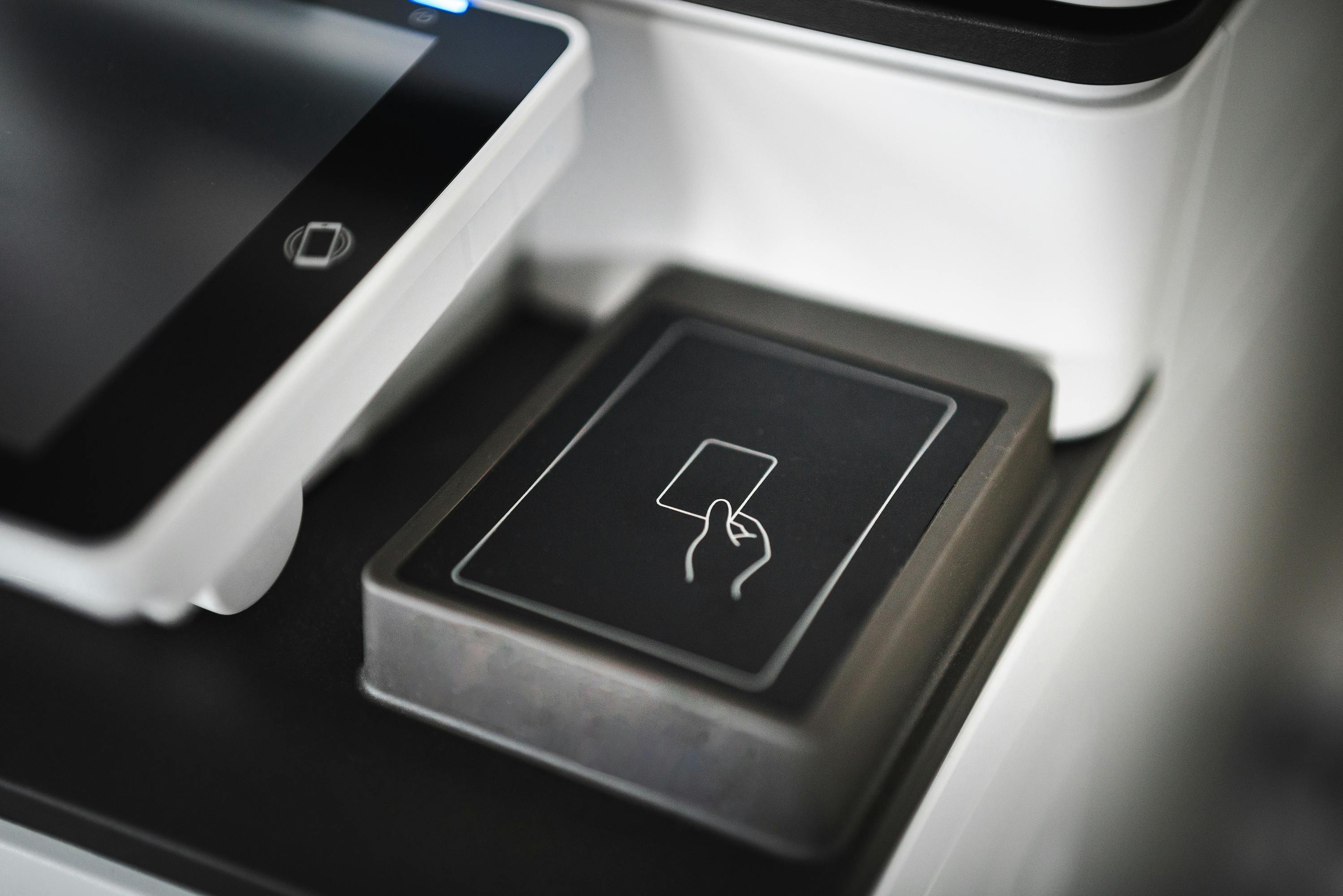
Airwallex’s push into the physical world means it wants to participate in card-present payments, not just online checkout and API-led finance. That includes payment terminals, in-store acceptance, merchant onboarding, settlement, and the messy plumbing that lives behind the counter. It sounds simple. It is not.
Most people hear “payments” and think of a clean software layer, maybe a checkout button or a mobile wallet. That is the easy part. The physical world is different because it involves hardware failures, terminal logistics, regional card schemes, chargebacks, receipt printers, store-level support, and the fact that cashiers do not read product roadmaps. I have reviewed enough payment stacks to know that the real battlefield is operational, not rhetorical.
Airwallex already has credibility in cross-border payments, foreign exchange, treasury, and global merchant accounts. The smart play is obvious: if it can move from online merchants to in-person commerce, it can deepen revenue per customer and reduce the chance that a merchant uses one provider for API payments and another for terminals. That split hurts retention. It also weakens data visibility.
Here’s the kicker. Physical payments are sticky because hardware changes slowly. Once a merchant installs a terminal fleet, trains staff, and wires the checkout flow into POS software, switching costs go up. Stripe built its empire by making internet payments painless. Airwallex is signaling that it wants the same kind of control where the card is tapped, dipped, or swiped on the counter.
That brings it into direct competition with companies like Stripe, Adyen, Square, and traditional acquirers. Each has different strengths. Stripe owns developer mindshare. Adyen owns enterprise retail credibility. Square owns small-business hardware familiarity. Airwallex has global payments and cross-border reach. The question is whether it can combine those into a clean merchant proposition without turning into a pile of half-integrated features.
And yes, there is a deeper point here. Commerce is not just software efficiency. It is people buying food, tools, clothes, and services in real places. Technology ought to support honest exchange and responsible stewardship. When payments work well, business owners spend less time fighting systems and more time serving customers. That is the right order of things.
Core benefits and why this matters
Airwallex entering physical payments is important for a few concrete reasons. Let’s be real: most industry coverage turns every expansion into a grand narrative. This one deserves a colder look.
- Higher merchant stickiness: If Airwallex can offer both online and in-person acceptance, merchants are less likely to split services across vendors. One platform means one account team, one settlement view, one compliance workflow. That is boring. It is also valuable.
- More payment volume: Card-present volume can be enormous, especially for retail, hospitality, clinics, and services. Online-only providers miss that revenue unless they build hardware and in-store rails.
- Better data across channels: When a merchant uses the same provider for web and store transactions, the platform can see customer behavior across both worlds. That can improve fraud checks, reconciliation, and reporting.
- Cross-border advantage: Airwallex has a real strength in international commerce. Physical merchants with tourists, imported goods, or multi-market operations may care more about that than a trendy dashboard.
- Bundling potential: Payments, FX, issuing, treasury, and terminals can become one commercial package. That may sound like sales jargon, but it is actually a strong business model if the integration is solid.
- More control over the merchant relationship: Whoever owns the checkout usually owns the merchant. Terminals bring recurring touchpoints, support requests, and upgrade cycles. That matters more than people outside the industry think.
Now the contrarian bit. Physical-world expansion is not automatically good. It can chew through cash, drag support teams into endless device issues, and create a half-baked product if the company chases logos instead of reliability. I’ve seen plenty of fintech firms confuse “new surface area” with “new value.” That is how you end up with a terminal nobody loves and a sales deck nobody believes.
Still, if Airwallex does this properly, it can close a real gap. Many merchants want a single provider, but they do not want one that fails when the Wi-Fi gets weird or the reader battery dies. That is why the combination of software, hardware, and service matters. Not because it is fashionable, but because business owners need systems that work on Tuesday afternoon when the line is out the door.
There is also a stewardship angle. Good payment infrastructure saves labor, reduces waste, and helps merchants use resources wisely. That is not abstract virtue signaling. It is basic honesty about what tech should do: make human work less chaotic, not more.
Step-by-step: how Airwallex can compete in physical payments
Winning physical payments is not about announcing “we now do POS.” Anyone can say that. The work is uglier.
- Build reliable terminal hardware or partner well
Airwallex needs devices that merchants trust. That means durable battery life, stable connectivity, sane thermal design, and minimal setup pain. If it outsources the hardware, the partner must be boringly dependable. Flashy industrial design is irrelevant if the reader fails during lunch rush. - Integrate with major POS systems
Merchants do not want another island. They want support for checkout software, inventory sync, tip management, refunds, and reconciliation. This is where APIs matter, but only if they reduce friction instead of creating another integration project. - Expand acquiring coverage region by region
Physical payments are local even when the brand is global. Airwallex must secure acquiring partners, card network certifications, and country-specific compliance. The boring back-office work determines whether the front end is useful. - Offer sane onboarding and KYC
Merchant underwriting cannot feel like a tax audit with a pretty logo. If setup takes too long, small businesses will walk. If risk controls are too loose, fraud will spike and margins will vanish. The balance is hard. - Tie terminals to financial products
This is where Airwallex can be clever. A merchant using terminals may also need multicurrency accounts, payout tools, cards for staff spending, or treasury management. Bundle the services without making the merchant feel trapped. - Support actual merchants, not just enterprise buyers
The store owner with three locations and no IT staff is often the real prize. They need onboarding, replacement devices, quick settlement, and fast human support. Not a chatbot that pretends to be helpful. - Measure failure rates obsessively
Device uptime, declined transaction rates, settlement speed, chargeback handling, and support response time matter more than vanity metrics. I wish more fintech founders respected that. The numbers tell the truth whether marketing likes it or not. - Keep pricing clear
Merchants hate hidden fees. Monthly terminal rentals, interchange markups, and FX spreads should be visible. Confusing pricing may pad short-term revenue, but it destroys trust. Honest pricing is good business and, frankly, good ethics.
When I evaluate payment systems, I look for whether they reduce the number of decisions a merchant must make each day. Good systems disappear into the workflow. Bad systems keep announcing themselves like a squeaky wheel.
Comparison table: Airwallex vs Stripe in physical payments
| Category | Airwallex | Stripe |
|---|
| Core strength | Cross-border payments, FX, global finance | Developer-first online payments, APIs |
| Physical payments focus | Emerging push into terminals and in-person acceptance | Established hardware and in-person offerings in many markets |
| Merchant profile | Global businesses, exporters, cross-border operators | Internet businesses, software platforms, omnichannel merchants |
| FX and multicurrency | Strong emphasis | Available, but not the central brand identity |
| Hardware ecosystem | Developing / expanding | More mature and widely recognized |
| Enterprise appeal | Strong for international operations | Strong for software-led commerce |
| Complexity | Can be broad, depending on rollout | Broad ecosystem, but often easier to adopt online |
| Biggest risk | Overextending before support and hardware maturity catch up | Losing focus if physical and software products diverge too far |
The table makes the point plainly. Airwallex is not trying to beat Stripe at Stripe’s own game, at least not yet. It is trying to move from a finance platform into an all-channel payments platform. That is a tougher climb. It also opens more doors.
Stripe remains the benchmark because it made payment APIs feel clean, modern, and developer-friendly. But developers are not the only buyers anymore. Retail operators, hospitality teams, franchise managers, and finance departments care about uptime, reconciliation, settlement timing, and whether devices survive real-world abuse. The physical world punishes weak assumptions.
Airwallex’s advantage, if it can execute, is that it can tell a broader story around international commerce. A merchant selling in Sydney, Singapore, and San Francisco may want one system for online, in-store, treasury, and payouts. That sounds neat. It is also brutally hard to deliver.
Common mistakes to avoid when judging this move
People make the same mistakes when analyzing payments expansions. Every time.
- Confusing announcements with product maturity: A press release is not a rollout. A demo is not a merchant fleet. A few pilot customers are not proof of scale.
- Ignoring support burden: Physical payments create device swaps, failed terminals, network issues, and account escalations. Support costs rise fast. Anyone pretending otherwise is selling something.
- Overweighting brand names: Being compared with Stripe sounds great. It means little if the actual checkout flow is clumsy or the settlement process is slow.
- Forgetting regional complexity: Card networks, local payment methods, tax rules, and compliance requirements differ by market. A single global narrative often hides a pile of local headaches.
- Assuming merchants want more features: Merchants usually want fewer problems. They care less about a long feature list and more about whether payments clear, inventory syncs, and the drawer closes correctly.
- Treating hardware as a side quest: It is not. Hardware changes the support model, the economics, and the customer relationship. If the terminal experience is bad, the whole stack gets judged as bad.
Here’s what nobody tells you. Many tech companies chase “physical” because they think it makes them look inevitable. The real reason to move into physical commerce is simple: merchants still live there. They still ring up sales in person. They still need dependable systems, not glossy claims.
I’m skeptical of any fintech that treats the physical channel like a checkbox. The physical world is where trust becomes concrete. If the reader fails, the line backs up. If the settlement delays, payroll gets tense. If fraud controls are too aggressive, good sales get blocked. These are not edge cases. They are everyday pain points.
That is also why responsible tech matters. In a decent commercial order, tools should serve work, not dominate it. A payment platform that respects the merchant’s time, customer, and dignity is doing something worthwhile. That may sound old-fashioned. It is also true.
Frequently asked questions
Is Airwallex competing directly with Stripe?
Yes, but not in exactly the same way. Stripe is still strongest in online payments and developer-led adoption, while Airwallex is trying to expand from cross-border finance into physical acceptance, terminals, and broader merchant infrastructure.
Why are physical payments harder than online payments?
Because hardware breaks, stores have different setup needs, networks fail, staff turnover is real, and support has to be immediate. Online APIs are cleaner. Physical commerce is messier and far less forgiving.
What would make Airwallex successful in the physical world?
Reliable hardware, strong acquiring coverage, simple onboarding, clear pricing, and tight POS integrations. The company also needs support that can handle merchants who are not technical.
Does physical payment growth matter to merchants?
Yes. If a provider can handle both online and in-store payments, merchants can simplify operations, improve reporting, and reduce vendor sprawl. That said, the service has to actually work. Nice pitch decks do not process sales.
Final thought
Airwallex’s move into physical payments is interesting because it reveals something the industry sometimes forgets: commerce is not just code. It is counters, queues, card readers, store managers, and the daily grind of getting paid without drama. That is where the real competition lives.
If Airwallex gets this right, it could become more than a cross-border specialist. It could become a broad merchant platform with real reach. If it gets it wrong, it will join the long list of fintech firms that mistook ambition for readiness.
I’ve seen enough payment products to know the rule is simple. The winners make money quietly, reduce friction, and leave merchants with one less headache. That is good business. It is also, in a modest way, good service to people who are trying to do honest work.
FAQPage Schema
{
  "@context": "https://schema.org",
  "@type": "FAQPage",
  "mainEntity": [
    {
      "@type": "Question",
      "name": "Is Airwallex competing directly with Stripe?",
      "acceptedAnswer": {
        "@type": "Answer",
        "text": "Yes, but not in exactly the same way. Stripe is strongest in online payments and developer-led adoption, while Airwallex is expanding from cross-border finance into physical acceptance, terminals, and broader merchant infrastructure."
      }
    },
    {
      "@type": "Question",
      "name": "Why are physical payments harder than online payments?",
      "acceptedAnswer": {
        "@type": "Answer",
        "text": "Physical payments are harder because hardware breaks, stores have different setup needs, networks fail, staff turnover is real, and support must be immediate. Online APIs are cleaner, but in-person commerce is far less forgiving."
      }
    },
    {
      "@type": "Question",
      "name": "What would make Airwallex successful in the physical world?",
      "acceptedAnswer": {
        "@type": "Answer",
        "text": "Reliable hardware, strong acquiring coverage, simple onboarding, clear pricing, and tight POS integrations would make Airwallex more competitive. It also needs support that can help merchants who are not technical."
      }
    },
    {
      "@type": "Question",
      "name": "Does physical payment growth matter to merchants?",
      "acceptedAnswer": {
        "@type": "Answer",
        "text": "Yes. A provider that handles both online and in-store payments can simplify operations, improve reporting, and reduce vendor sprawl, as long as the service actually works and remains dependable."
      }
    }
  ]
}