Claude is not just another chatbot. It sits inside a messier story about AI safety, hallucinations, user trust, and the plain fact that powerful tools can help...
Claude, OpenAI Safety, and AI Hallucinations: What Actually Matters
Claude is not just another chatbot. It sits inside a messier story about AI safety, hallucinations, user trust, and the plain fact that powerful tools can help people or harm them, depending on how they are built and used. Most tech coverage turns this into hype or panic. The better question is simpler: what do these systems actually do, where do they fail, and why should ordinary users care?
Key Takeaways:- AI chatbots can sound confident while being wrong.
- Safety policy matters because real people get hurt when systems fail.
- Claude, ChatGPT, and other large language models are useful, but they are not truth machines.
- Common AI terms like hallucination, LLM, and alignment are not jargon for the sake of it; they describe real technical limits.
- The right way to use AI is as a tool for assistance, not authority.
What is Claude and why is everyone talking about AI safety?
Claude is Anthropic’s family of large language models, built to generate text, analyze images, write code, and answer questions. The reason it keeps showing up in news cycles is not because people enjoy vendor drama. It is because Claude sits in the middle of a bigger debate about how modern AI should behave, what guardrails it needs, and what happens when those guardrails fail. That matters.
A large language model, or LLM, predicts the next word in a sequence based on patterns it learned during training. That sounds tidy. It is not. These systems can produce useful summaries, drafts, and code snippets, but they can also fabricate facts, miss context, or reinforce a user’s mistaken belief with polished nonsense. That last part is the nasty bit. If a tool speaks with confidence, users often assume it has earned that confidence. It usually has not.
When I look at Claude, OpenAI’s ChatGPT, Google’s Gemini, or any other major model, I do not see an oracle. I see a statistical engine with good manners. That distinction is important. Humans are wired to trust fluent language, which is why AI safety is not some academic hobby for researchers in conference badges. It is a practical question about persuasion, error, and responsibility. And yes, responsibility is the word people avoid because it sounds old-fashioned. Too bad. It is still the right one.
The recent news about Anthropic temporarily banning OpenClaw’s creator from access to Claude shows how quickly access and policy can become part of product governance. Meanwhile, the report about a stalking victim suing OpenAI over claims that ChatGPT reinforced delusions is a grim reminder that misuse is not hypothetical. You can read more about the broader pattern in Reuters’ coverage of AI risk and legal claims, and in OpenAI’s own GPT-4o announcement, which makes plenty of capability claims but, naturally, cannot make truth guarantees. For grounding on how these systems actually work, Anthropic’s Claude 3 family overview is worth a look, if only to remind you that every company dresses its models in optimistic language.
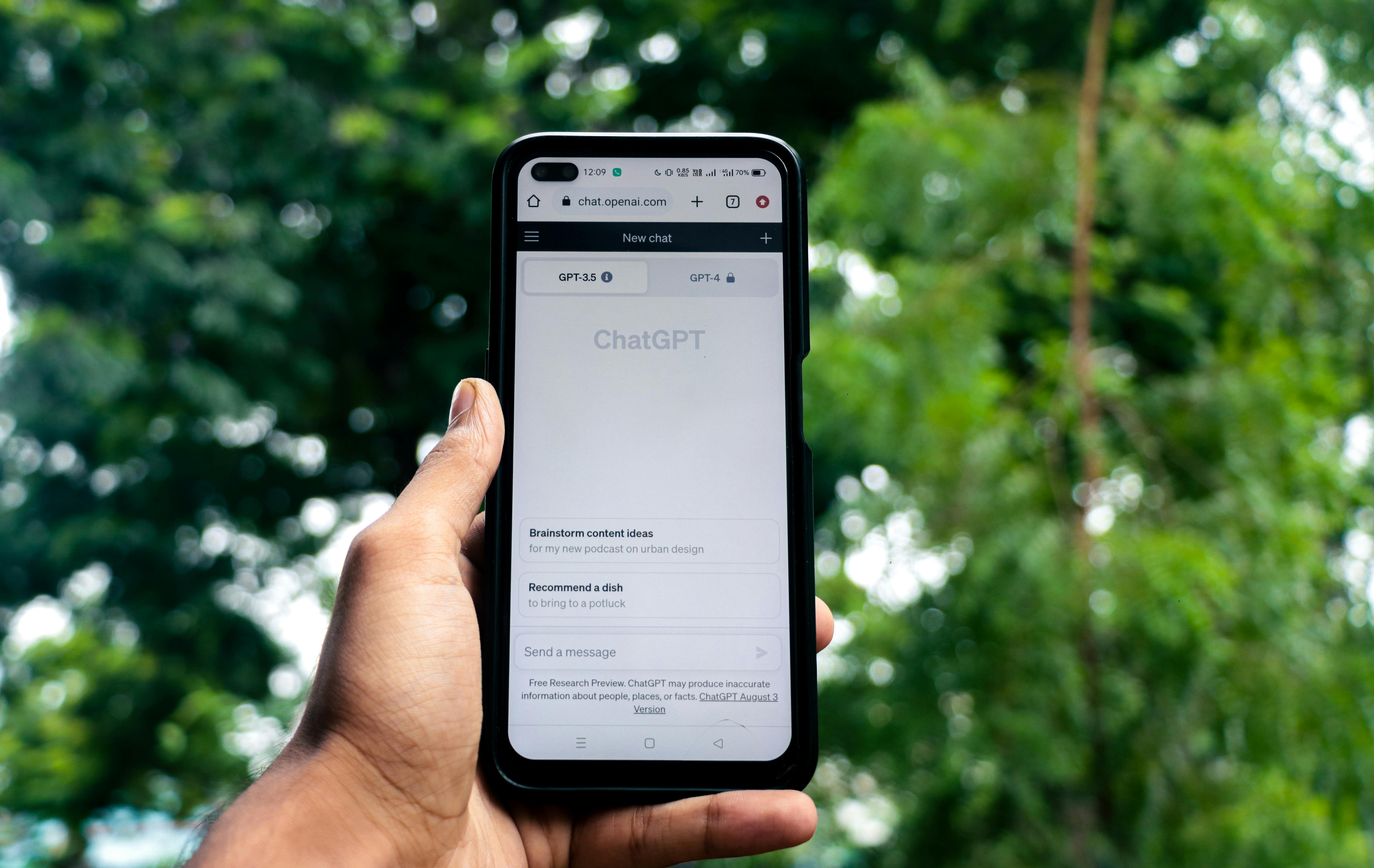
The important thing is this: AI safety is not just about stopping bad actors. It is also about limiting accidental harm, preserving human judgment, and making sure tools serve people instead of nudging them into confusion. That is basic stewardship, the kind of common-good thinking we should expect from any serious technology company. Not lofty. Just decent.
Core benefits and why the topic matters
The chatter around Claude, OpenAI, and AI hallucinations is not just industry noise. It affects how people work, study, shop, diagnose problems, and make decisions. A chatbot that gets a paragraph wrong is annoying. A chatbot that gets a vulnerable person deeper into a delusion, or gives a false answer in a high-stakes setting, is something else entirely.
Here is the kicker: the usefulness of AI and the risk of AI come from the same trait. These models are very good at producing plausible language. That helps with drafting emails and brainstorming code. It also means they can fabricate citations, invent details, and present speculation as fact. You cannot separate the upside from the downside with a neat software patch.
Why this matters to regular users
- Speed: AI can summarize long documents quickly, saving real time.
- Drafting help: It can produce first drafts, outlines, and code scaffolds.
- Support work: Customer service, internal knowledge search, and note-taking all benefit.
- Accessibility: Good models can make content easier to read and adapt.
- Decision support: Used carefully, AI can surface options and patterns humans might miss.
Why skepticism is healthy
Most AI marketing treats every feature like a miracle. It is not. When I test systems like Claude or ChatGPT, the real question is not “Can it answer?” The question is “Can I trust it when it sounds certain?” Often, the answer is mixed. A model can generate a brilliant explanation and then stumble on a simple date, policy detail, or citation. That is why hallucinations are not a footnote; they are the central defect.
To be fair, the term hallucination is a little sloppy. It does not mean the model “sees” anything. It means the system emits false or unsupported information while sounding confident. That is enough trouble on its own. OpenAI has discussed this problem in its own work on model behavior, and independent reporting has repeatedly shown how quickly errors can spread when people copy AI output without checking it. The article from TechCrunch on AI terms is useful here, and so is Reuters’ reporting on courtroom and safety issues. Read both, then trust neither blindly. That is the sane approach.
There is a moral dimension here, even if the tech press rarely admits it. Human ingenuity is a gift, but gifts are meant to be used well. If these tools magnify confusion, manipulate the weak, or replace careful thinking with cheap output, then they are being misused. If they help people learn faster, work cleaner, and serve others better, then they are doing what good tools ought to do. Simple as that.
Step-by-step guide to using Claude and other AI tools more safely
You do not need to become a machine learning engineer to use AI well. You do need a process. Most users do the opposite: they ask one vague question, accept the answer, and move on. That is lazy, and laziness is exactly how hallucinations get into reports, emails, and decisions.
- Start with a narrow task
Ask for one thing at a time. If you want a summary, say so. If you want a draft email, say so. If you want code help, specify the language, the version, and the constraint. I have found that vague prompts create vague outputs, which is no surprise to anyone who has ever read a badly written spec. Precision helps more than clever wording.
- Ask for sources, then verify them
Do not accept citations at face value. Models can invent references or mix real ones with fake details. If a chatbot gives you a source, open it. Check the title, date, author, and claim. For general background on common AI failure modes, the Wired explainer on AI hallucinations is useful, and Reuters has tracked both policy responses and legal complaints around misuse. Verification is boring. Good. Boring keeps you out of trouble.
- Use the model as a draft, not a judge
This is where people get smug and then make mistakes. A model can help you shape an answer, but it cannot be the final authority in medicine, law, finance, security, or personal safety. If the answer affects someone’s health, money, rights, or well-being, involve a human expert. No exceptions. Not because the technology is evil, but because it is incomplete.
- Watch for emotional overreach
This is the part people ignore. AI systems can mirror emotion, reinforce beliefs, and sound deeply attentive. That is useful in some settings and dangerous in others. If a vulnerable person is asking whether they are being tracked, persecuted, or selected for a secret mission, a responsible system should avoid escalating the claim. The recent OpenAI lawsuit report is a harsh reminder that tone matters, not just accuracy. Polite nonsense can still do harm.
- Compare two models when stakes are real
Try Claude and ChatGPT side by side. I do this often. One model may write better prose, another may follow instructions more cleanly, and a third may be worse at citations but stronger at code. Comparison exposes weakness. It also cuts through brand loyalty, which is mostly theater. If one tool produces cleaner reasoning and fewer invented details on your task, use that one. No ceremony required.
- Keep a human review step
Always. Before anything AI-assisted goes out the door, have a person read it. Not a fast skim. A real read. That extra pass catches factual errors, weird phrasing, unsupported claims, and logic gaps. It is mundane work, but it is how responsible teams operate. Frankly, any organization that skips human review in high-stakes settings is telling you what it values, and it is not prudence.
- Set boundaries for personal use
This matters more than people admit. Do not use chatbots as therapists, judges, or spiritual authorities. They are tools. They can help you organize thoughts, but they should not replace real human care, expertise, or conscience. The point of technology is to serve the human person, not flatten him into a bundle of prompts and outputs. That principle is old, and it is still right.
Comparison table: Claude vs. ChatGPT
People love team sports. Fine. But the real comparison is about reliability, control, and the kind of work each system handles best.
| Feature | Claude | ChatGPT |
|---|
| Primary strength | Long-context reading, drafting, and analysis | Broad consumer reach, multimodal tools, strong ecosystem |
| Safety posture | Anthropic emphasizes helpfulness, honesty, and harmlessness | OpenAI emphasizes capability plus safety layers |
| Hallucination risk | Still present, though often well-mannered in tone | Still present, sometimes more verbose and assertive |
| Best use cases | Long documents, policy summaries, writing assistance | General chat, coding help, image input, everyday productivity |
| Weak spot | Can still be wrong with confidence | Can still be wrong with confidence |
| User experience | Calm, organized, less flashy | Feature-rich, broad, sometimes noisier |
| Enterprise appeal | Strong for controlled workflows | Strong for platform breadth and integrations |
Claude and ChatGPT both sit in the same class of product, and both depend on the same basic language-model trick: predicting plausible text from patterns. That means neither is a truth engine. It also means you should care less about fanboy arguments and more about which system is better for a specific job.
If your work involves long documents, policy review, or careful drafting, Claude often feels less scattered. If you want a wider set of features and a larger ecosystem, ChatGPT usually offers more surfaces to work with. Neither advantage erases the central flaw. Hallucinations remain a problem. Safety policy remains necessary. Human review remains essential.
A useful outside reference here is Anthropic’s own Claude 3.5 Sonnet post, which shows how the company frames performance and safety together, and OpenAI’s product pages, which do the same from the other side. Take both seriously, but not literally. Vendor claims are starting points, not verdicts.
Common mistakes to avoid
Most bad AI use comes from ordinary carelessness, not villainy. That is the part that should worry you.
1. Treating output like fact
This is the big one. A clean paragraph is not proof. A confident answer is not evidence. If the model names a law, a product spec, a medical claim, or a company policy, check it against a primary source. Every time. Skipping this step is how polished errors get recycled into reports and presentations.
2. Using the wrong model for the task
Not all models are equal. A chatbot that writes snappy marketing copy may be a poor choice for legal review. A code assistant may be weak at narrative nuance. Choose tools based on task fit, not brand hype. That sounds obvious, but clearly it needs saying because many people still use a hammer for every screw.
3. Asking open-ended questions and expecting precision
Garbage in, garbage out. If you ask, “What should I know about AI?” you will get a vague overview. If you ask, “List the three main failure modes of LLMs in customer support, with examples and mitigation steps,” you will get something more useful. Models respond to structure. Feed them structure.
4. Ignoring emotional manipulation
This one gets missed because it looks soft. When a system mirrors your tone too well, it can feel more trustworthy than it is. That is not benign. It can encourage overreliance, especially for lonely or distressed users. Safety design should reduce that risk, not exploit it for engagement. There is a reason serious products avoid pretending to be wise companions.
5. Using AI where human judgment should lead
Some jobs are not for software first. If you are dealing with a child, a patient, a grieving family, a vulnerable user, or a major financial decision, use AI only as a support tool. Not as the lead voice. Technology should stay in its lane. That is not anti-innovation; it is common sense.
6. Forgetting policy and privacy
A shiny prompt can still leak data. Do not paste confidential files, personal records, or proprietary plans into tools unless your organization has clearly approved it. Review retention, training, and access policies. If the rules are fuzzy, assume risk. That is not paranoia. It is basic hygiene.
For more context on AI term definitions and how they map to real-world use, the TechCrunch AI glossary guide is a decent plain-English reference, and Reuters remains one of the better sources for reporting on legal and safety developments.
Frequently asked questions
What is an AI hallucination?
An AI hallucination is when a model produces false, unsupported, or invented information while sounding confident. It is not a conscious lie. It is a failure of pattern-based generation. That distinction matters, but the damage can look the same to the user.
Is Claude safer than ChatGPT?
Safer in some contexts, maybe. Safer in every context, no. Both systems use safety layers and policy filters, and both can still produce errors or harmful advice. The right question is which one behaves better for your task, with human review in place.
Why do large language models make things up?
Because they are built to predict likely text, not to verify truth in the way a fact-checker or database does. They generate plausible continuation, and plausibility is not the same thing as accuracy. That gap is the whole problem.
Should I trust AI for research?
Only with verification. Use AI to find leads, organize notes, or draft summaries, then confirm everything through primary sources. If you need something reliable, cite the source directly, not the chatbot’s memory of it.

Final thought
The best AI tools are not the ones that sound smartest. They are the ones that know their limits, or at least are surrounded by systems that enforce those limits. Claude, ChatGPT, and the rest are impressive because they compress a lot of language work into a simple interface. That is genuinely useful. It is also exactly why people should be cautious.
I have tested enough of these systems to say this without drama: the danger is rarely a robot uprising. The danger is ordinary overtrust. A manager copies an AI summary without checking it. A stressed person leans on a chatbot that confirms a bad idea. A team ships output that looks polished but rests on a false claim. That is how harm happens. Quietly. Repeatedly.
The better path is not fear, and not credulity. It is disciplined use. Ask better questions. Verify claims. Keep humans in charge. Use the machine for what it does well, and refuse to let it pretend to be more than it is. That is what responsible stewardship looks like in practice, and frankly, it is the only sane way to keep useful technology from becoming sloppy technology.