Common AI terms confuse people because the industry loves acronyms and sloppy marketing. An <strong>LLM</strong> is a large language model trained on huge text...
Common AI Terms Explained: LLMs, Hallucinations, Tokens, and More
Common AI terms confuse people because the industry loves acronyms and sloppy marketing. An LLM is a large language model trained on huge text datasets; a hallucination is when the model says something that sounds right but is false; a token is a chunk of text the model reads or writes. That’s the simple version. The longer version matters if you want to separate real capability from hype, because most AI talk is fog unless you know the vocabulary.
Key Takeaways- LLM means large language model.
- Hallucination means a confident wrong answer.
- Tokens are the units AI systems process.
- Training data shapes what the model knows and messes up.
- Prompting is how you ask the model for output.
- A little skepticism saves time, money, and embarrassment.
What is common AI terminology?
Common AI terminology is the basic vocabulary people use to talk about modern machine learning systems, especially generative tools like chatbots, image models, and coding assistants. It includes words such as model, training data, fine-tuning, inference, parameters, tokens, prompt, context window, hallucination, and alignment. These are not buzzwords if you actually need to use the tools. They are the difference between understanding a system and nodding politely while someone sells you nonsense.
An LLM is the headline term because it explains what powers many chat-based assistants. It is a statistical model trained to predict the next token in a sequence. That sounds dry because it is dry. But the result can look startlingly fluent. The catch is that fluent text is not the same as true text. I’ve reviewed enough products to say this plainly: the machine can sound certain while being utterly wrong.
A hallucination is the best-known failure mode, though the word itself is a bit lazy. The model is not dreaming like a person. It is generating plausible text from patterns, and when the pattern breaks, you get a polished mistake. OpenAI explains this general risk in its documentation and research notes, while Stanford’s AI Index keeps showing that capability growth does not erase basic reliability problems; see Stanford HAI AI Index and OpenAI research. That matters because people keep treating these systems like oracles instead of tools.
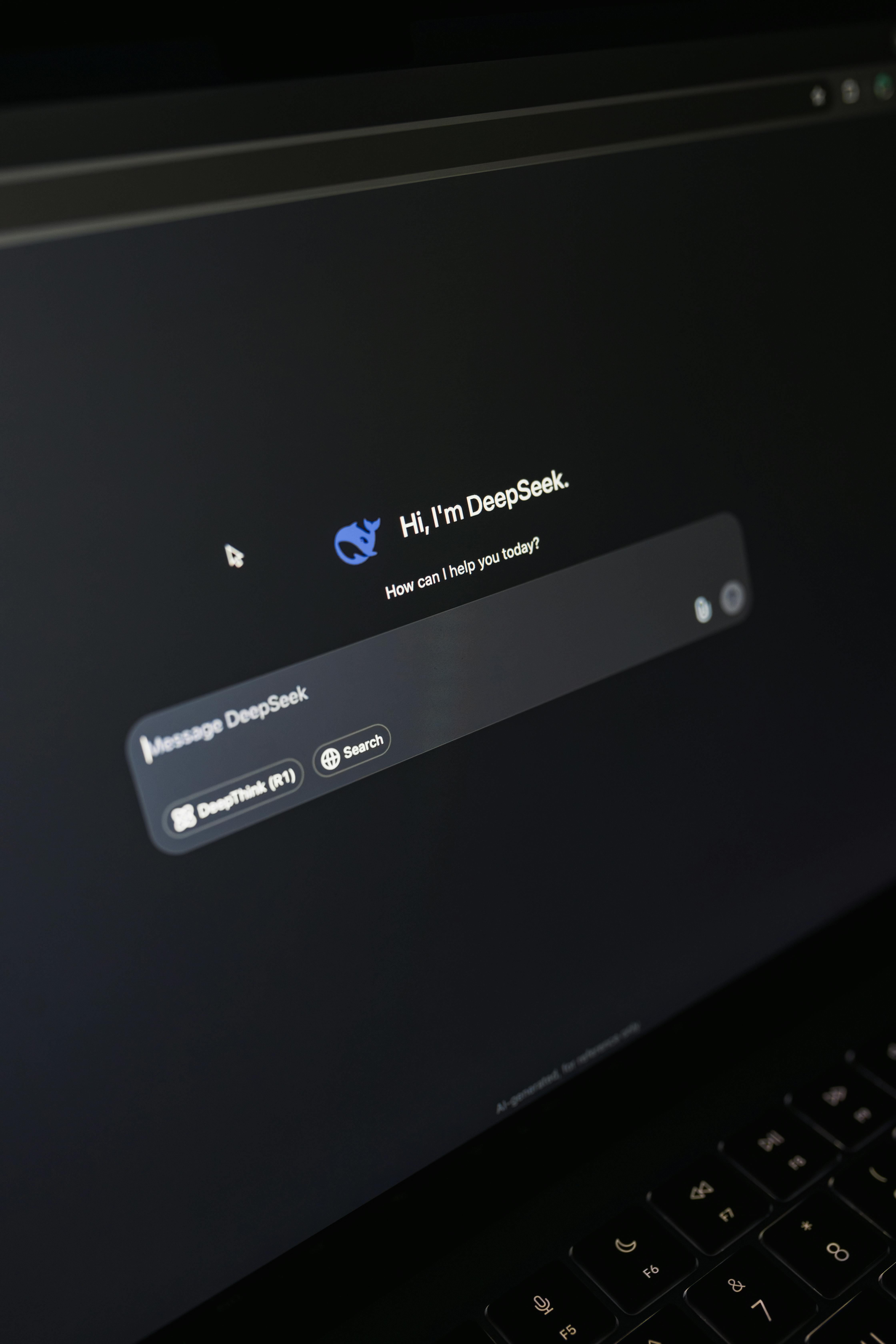
Then there are tokens. Roughly speaking, tokens are pieces of text, not whole words in every case. A short sentence may use a handful; a long report can chew through thousands. That affects cost, speed, and the size of the context window, which is the amount of text the model can consider at once. If you’ve ever wondered why some AI tools cut off long conversations, now you know. No magic. Just limits.
The most useful terms are the ones that explain behavior. Training data tells you what fed the model. Fine-tuning means adapting a model for a narrower task. Inference is the moment the model actually produces output. Parameters are the internal weights learned during training. And alignment refers to making the system behave in ways humans actually want, which is harder than the glossy demos imply. Frankly, that last one is where the industry gets philosophical very fast, because once you make a tool that can speak, you also inherit the duty to aim it at the common good, not just profits or applause.
Core benefits and why these terms matter
Knowing AI terminology pays off because it keeps you from making expensive mistakes. It also helps you use the tools better, which is the whole point. Most people do not need a PhD. They need a working map.
- Better buying decisions: If a vendor says their product uses an LLM, you can ask which model, what data it was trained on, and whether it supports your use case. That cuts through sales fluff fast.
- Cleaner prompting: If you know what a context window is, you can write prompts that fit inside it and reduce messy output.
- Lower risk of bad outputs: If you understand hallucinations, you are less likely to copy AI text into legal, medical, financial, or technical work without checking it.
- Smarter workflow design: If you know the difference between training and inference, you stop expecting a chat model to magically learn from each conversation unless the product is actually built that way.
- Better cost control: Tokens drive pricing in many systems. Fewer wasted tokens means less waste. Simple arithmetic, not wizardry.
- Realistic expectations: The hype crowd loves to talk as if AI can replace judgment. It cannot. It can speed up drafts, summarize content, sort information, and automate routine tasks. It cannot replace responsibility.
Here’s the kicker. The best users are not the ones who worship the tool or sneer at it. They are the ones who know its limits. I’ve seen people waste hours blaming a model for bad results that came from bad prompts, poor data, or vague goals. That is not a model failure. That is user error wearing expensive shoes.
There is also a deeper point. Technology should serve people, not flatten them into data points. A sound view of AI keeps human dignity in the picture, especially when models are used in hiring, education, customer service, or health screening. The Catholic habit of stewardship fits here without any sermonizing: if a tool is powerful, you are responsible for how you use it, and for whom. That is the correct burden, not a nuisance.
For more practical comparisons, it also helps to read a straight guide like TechRadar’s AI coverage or Tom’s Guide AI section, where the difference between model capabilities and marketing claims is usually less smeared with nonsense.
Step-by-step: how to understand and use AI terms correctly
If you want to talk about AI without sounding like you swallowed a press release, use a simple method. It works. I’ve done this across product reviews, workplace demos, and vendor briefings, and it saves time every single time.
- Start with the model type.
Ask whether the tool is an LLM, an image model, a speech model, or a multi-modal system. The label tells you what kind of outputs to expect. If the answer is evasive, that is already useful information. - Check the training source.
Find out what data it learned from, whether that is public web text, licensed corpora, internal documents, or a mix. This matters because data quality shapes output quality. Garbage in, polished garbage out. - Look at the task, not the demo.
Vendors show their best prompt. Real use is uglier. Ask what happens with ambiguous requests, long documents, unusual jargon, or conflicting instructions. That is where the truth lives. - Measure the context window.
If you plan to summarize contracts, codebases, or research notes, the window size matters. A tiny window means the model forgets earlier context. Then the output starts drifting, and users blame “AI weirdness.” - Identify the failure modes.
Hallucinations, stale knowledge, overconfident phrasing, and brittle reasoning are common. If the model cites facts, verify them. If it gives numbers, check the source. If it sounds too clean, be suspicious. - Use prompts with structure.
Say what you need, what format you want, what to avoid, and what success looks like. Good prompting is not trickery. It is clear communication. That should not be controversial, but apparently it is. - Test with real examples.
Feed it actual documents, real customer questions, or genuine edge cases. Do not evaluate a tool with canned marketing examples unless you enjoy being fooled in public. - Decide where human review stays mandatory.
Some tasks are fine for first drafts. Others need a second set of eyes no matter what. Anything that affects money, health, rights, or reputation deserves human oversight. This is not old-fashioned sentiment. It is basic prudence. - Track cost and latency.
A model that is brilliant but slow and pricey can still be the wrong tool. If a workflow needs instant responses, speed matters. If a team processes thousands of requests, token cost matters even more. - Revisit the terms after using the tool.
Vocabulary sticks when it maps to experience. Once you’ve seen a hallucination, a context limit, or a poor prompt firsthand, the terms stop being abstract.

That process is boring. Good. Boring is efficient. Everyone talks as if software should be mysterious. It should not. Good tools are understandable enough to trust, and limited enough to question. That balance is healthy.
If you want more background on the building blocks of modern AI systems, Google’s plain-language explainers are useful, especially for model concepts and machine learning basics: Google Cloud AI overview. For a more research-centered view, Anthropic’s safety and model docs also help clarify why output can go sideways: Anthropic research.
Comparison table: common AI terms vs. the biggest misconception
| Term | What it actually means | Biggest misconception | Why it matters |
|---|
| LLM | A model trained to predict and generate language | It “understands” like a person | Shapes expectations and risk |
| Hallucination | A plausible but false output | It is rare and harmless | Affects trust and verification |
| Token | A unit of text used by the model | It is the same as a word | Impacts pricing and context limits |
| Context window | How much text the model can consider | Bigger always means better | Determines how much the model can “remember” |
| Fine-tuning | Adapting a model to a narrower task | It fixes all quality problems | Limited improvement, not magic |
| Inference | The model generating output | It is the same as training | Important for speed and cost |
| Alignment | Steering outputs toward human goals | It means the model is safe in every case | Safety is partial, not total |
For a practical comparison point, many people ask whether a chatbot is “better” than a search engine. That is the wrong question. A search engine retrieves sources; an LLM generates text. Those are different jobs. If you want evidence, use search and then read the sources. If you want a draft or summary, use the model—but verify the claims. The difference sounds small until you watch someone cite a chatbot like it is a law library.
Common mistakes to avoid
The biggest mistake is treating AI terminology like decoration. Words matter because they correspond to real system behavior. Once you ignore that, you start believing nonsense, and nonsense scales quickly.
- Confusing fluency with accuracy: A polished answer can still be wrong. Pretty text is not proof.
- Assuming “AI” means one thing: It does not. Recommendation systems, vision models, speech tools, and LLMs are different animals.
- Ignoring the data source: If you do not know what the model was trained on, you do not know what biases, gaps, or stale facts are baked in.
- Using the wrong task for the wrong tool: Chatbots are not always the right choice for extraction, classification, or source-backed research.
- Skipping verification: This is the classic blunder. The model is helpful, not holy.
- Overtrusting vendor claims: Marketing will say “smart,” “safe,” and “enterprise-ready” whether the thing is solid or junk. Ask for benchmarks, error rates, and documentation.
- Ignoring human review: The more important the output, the more likely you need a person in the loop.
Here’s what nobody tells you: many AI failures come from bad process, not dramatic technical collapse. A team feeds weak prompts into a weak workflow, then acts surprised when the output is weak. I’ve seen this in product demos, newsroom experiments, and office automation pilots. The machine is not always the problem. Sometimes the plan is lazy.
Another common error is using AI to skip thinking. That is a bad trade. Good tools should reduce drudgery, not erase judgment. A society that hands over discernment too cheaply usually regrets it later. That is true in tech, finance, and, frankly, almost every human field.
If you want a broader consumer-facing reality check, WIRED’s AI coverage and The Verge’s AI section often expose where product claims meet rough edges in actual use.
Frequently asked questions
What does LLM mean in AI?
LLM stands for large language model. It is a model trained on large text datasets to generate, rewrite, summarize, and respond in natural language. It does not “know” things the way a person does, which is why verification still matters.
What is an AI hallucination?
An AI hallucination is a wrong answer that sounds confident and plausible. The model is producing text by pattern, not by direct truth-checking. That is why a clean sentence can still contain a bad fact.
What are tokens in AI?
Tokens are the chunks of text a model processes. They can be whole words, parts of words, or punctuation marks. Token count affects cost, speed, and how much text the model can handle at one time.
Why do AI models make mistakes?
They make mistakes because they predict likely text, not guaranteed truth. They also inherit flaws from training data, prompts, and context limits. The tool can be useful without being perfect. That is the honest answer.
Final thought
AI vocabulary matters because language shapes judgment. If you know the terms, you can ask sharper questions, spot weak claims, and use these tools without kneeling to them. That is the sane middle ground. Not panic. Not worship.
I’ve tested enough devices and software to know that most problems start when people confuse labels for understanding. The industry loves impressive words because impressive words sell. But the real work is quieter: verifying facts, setting limits, choosing the right tool, and keeping a human conscience in the loop. That last part is not an add-on. It is the point.
A useful AI system should help people think, work, and serve others better. If it only accelerates noise, it is not progress. It is clutter with a logo.