The government wants equity in AI. That is not a small shift. If Washington starts taking stakes in leading AI firms, the debate stops being about regulation...
The government wants equity in AI. That is not a small shift. If Washington starts taking stakes in leading AI firms, the debate stops being about regulation alone and turns into ownership, control, incentives, and who really benefits when the machines get smarter.
Key Takeaways- Government equity in AI firms changes the rules, not just the rhetoric.
- Ownership can align public goals, but it can also warp markets and chill competition.
- The real issue is not whether AI matters. It is who controls the upside and the risk.
- Most talk about “national interest” skips the harder question: what keeps power from drifting into a few hands.
- Stewardship matters here. Innovation should serve people, not reduce them to collateral.
What is Etzioni on AI: Uncle Sam Wants a Stake in Leading AI Companies — What Could Possibly Go Wrong?
This debate is about public ownership, or partial ownership, in major AI companies. It comes from a simple but unsettling idea: if AI is strategic, should the state own a piece of it? That sounds tidy until you remember that governments are not famous for clean incentives, fast pivots, or staying out of the way once they get a seat at the table.
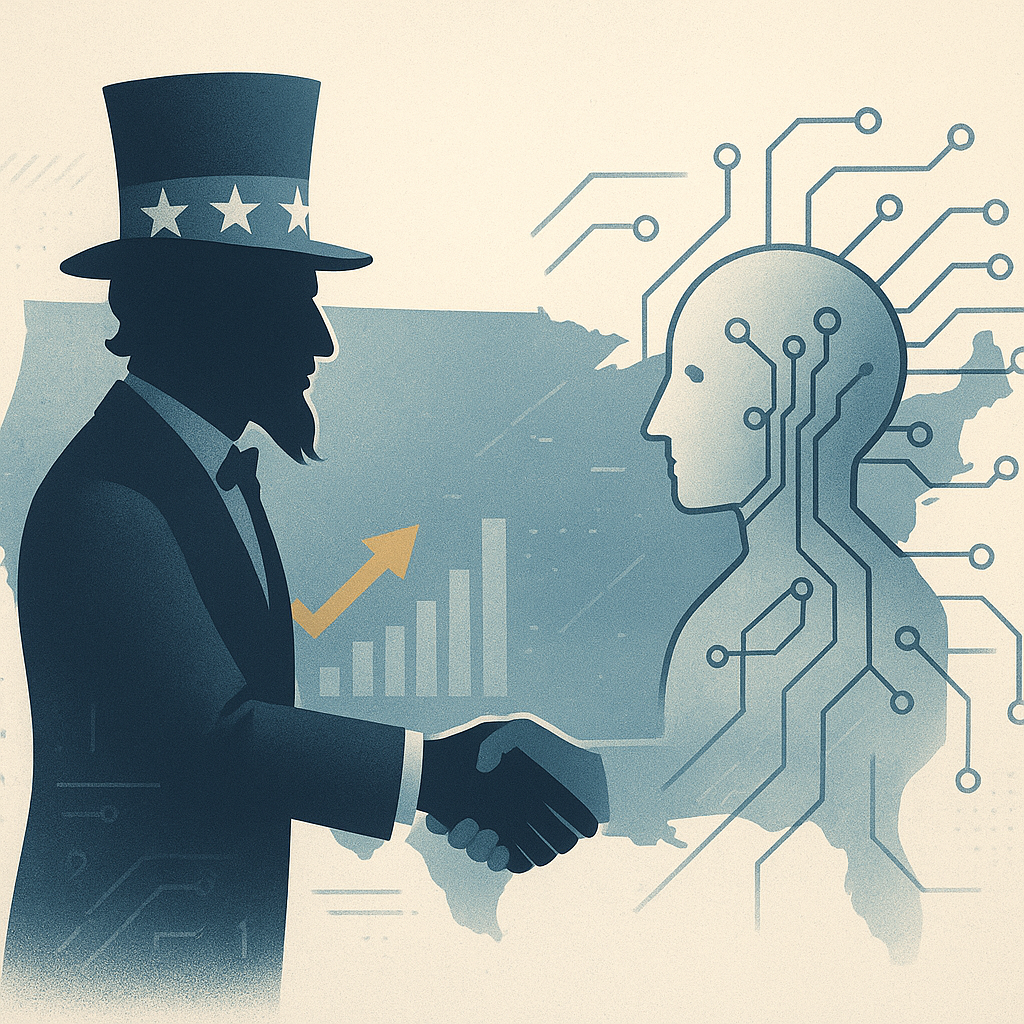
The phrase points to a policy argument with teeth. It asks whether the U.S. government should take equity stakes, warrants, revenue shares, or other financial claims in frontier AI firms in exchange for grants, subsidies, infrastructure support, or national security backing. That is different from rules, audits, or procurement. Ownership changes behavior. It changes who gets access, who bears risk, and who calls the shots when the stakes get ugly.
I have reviewed enough tech policy debates to know this much: people love strategic talk until incentives get real. Then the abstract slogans fall apart. A government stake could, in theory, protect taxpayers and align AI development with public goals. It could also create a quiet mess of favoritism, political pressure, and market distortion. Both can be true.
This is why the discussion matters now. AI is no longer a lab hobby. It affects productivity, surveillance, defense, education, labor markets, and the daily grind of software itself. If the state starts acting like a venture capitalist, the line between public interest and industrial policy gets blurry fast. And blurry lines are where bad decisions breed.
For a broader take on the hardware and economic side of AI systems, see The Verge, Reuters Technology, and policy analysis from Brookings AI. Those sources do not always agree, which is exactly the point.
Core Benefits and Importance
There is a serious case for public stakes in AI. Serious, not magical. The first argument is leverage. If taxpayers fund a portion of the R&D, compute, or infrastructure behind frontier systems, it is fair to ask whether the public should share in the gains. That is not radical. It is basic arithmetic.
Another argument is strategic resilience. AI models sit on top of massive data centers, advanced chips, energy supply, and scarce engineering talent. When a few firms control that stack, national priorities can become hostage to private boardrooms. A public stake could, in theory, secure some influence over where the tools go, especially in sectors like healthcare, defense, and public services.
But let’s be real. Benefits on paper do not pay the bill if execution is sloppy.
- Public upside: Taxpayers could share in extraordinary gains if a company built on public support becomes wildly profitable.
- National security leverage: The state may gain a stronger hand when AI affects defense, cyber, and critical infrastructure.
- Policy alignment: Ownership can make it easier to push safety, access, or transparency rules through firms that otherwise shrug at regulation.
- Market discipline: In theory, public capital might reduce reckless hype by forcing companies to justify large claims.
- Shared prosperity: If AI productivity surges, a public stake could help spread some gains beyond founders and investors.
Here’s the kicker: all of those upsides depend on a government that acts like a careful steward, not a political sugar daddy. Catholic social teaching has a useful instinct here, even if people never name it. Economic power should serve the common good. Human beings are not tools for extraction. Technology should elevate dignity, not flatten it into a line item.
The danger is that state ownership can also undercut the very innovation it hopes to guide. Founders may hesitate. Investors may hesitate more. Competitors may suspect the deck is stacked. And once that suspicion starts, you do not need a scandal to create a chill. You only need the possibility of one.
The market already has a way of punishing weirdness. Add state equity, and you may get less experimentation, not more. That matters because AI progress is still fragile. A bad policy move can slow model training, distort talent flows, or make startups wonder whether the future belongs to whoever is best connected to Washington.
For market context on AI capital flows and competition, read Financial Times AI coverage and CNBC AI. Those reports help show why capital structure matters as much as code.
Step-by-Step Implementation and Guide
If policymakers insist on taking a stake, then at least do it with some discipline. I have seen enough half-baked tech policy to know that good intentions are not a control system.
- Define the public purpose first
Do not start with ownership. Start with the goal. Is the target national security, taxpayer return, domestic capacity, safety oversight, or all of the above? If the mission is vague, the ownership structure will become a political toy. - Decide the instrument carefully
Equity is not the only tool. The government could use warrants, preferred shares, royalty agreements, milestone-based grants, or procurement contracts. Each one carries different incentives. Equity sounds neat, but it can also create pressure to maximize stock price instead of public value. - Separate oversight from management
This is where many schemes wobble. The government should not micromanage product decisions, model releases, or hiring. That road leads straight to bureaucratic sludge. Instead, establish clear guardrails, independent governance, and narrow conditions tied to measurable public outcomes. - Protect competition
If the state backs one firm too visibly, rivals will smell favoritism. They may be right. Antitrust principles should not be decoration. Public stakes must not become a back door for industrial favoritism, especially in a field already dominated by a handful of giants. - Tie support to actual obligations
If public capital is involved, the company should owe something real in return. That could mean safety disclosures, interoperability commitments, public-interest deployment, or domestic workforce investment. Vague “partnership” language is junk. Use measurable terms. - Set an exit plan
The state should not hold forever. Permanent ownership invites political meddling and mission drift. There should be a written path for divestiture, resale, or conversion once the original public purpose is met. - Audit for abuse and spillover effects
This is the part people skip. I would not trust a self-congratulating press release. Require periodic audits, public reporting, and review by independent experts who are not being fed a gravy train.

The truth is, implementation is where noble policy gets bloodied. You can draw a beautiful chart about shared prosperity, then watch it implode because the incentives were never aligned. That is why I keep returning to stewardship. Good use of power means restraint, accountability, and an honest view of human nature. We are not angels with spreadsheets.
For practical coverage of AI governance and regulation, see NIST AI Risk Management Framework, which is a sober reference point compared with the usual hand-waving.
Comparison Table
| Model | Who Owns the Upside? | Market Distortion Risk | Public Control | Best Use Case | Main Weakness |
|---|
| Government equity stake | Taxpayers and the firm | High | Medium to High | Strategic sectors, subsidized frontier R&D | Can distort competition and politicize decisions |
| Traditional regulation | Private owners | Low to Medium | Medium | Safety, privacy, baseline accountability | Weak leverage over incentives |
| Public grants only | Mostly private owners | Medium | Low | Early-stage research, broad innovation support | Taxpayer may not share in upside |
| Public procurement | Private owners | Low | Medium | Government services, defense, health tech | Narrow reach, buyer dependence |
| Tax credits and subsidies | Private owners | Medium | Low | Scaling domestic capacity | Easy to game, hard to police |
A straight comparison makes the tradeoff plain. Ownership buys leverage, but leverage is not free. Regulation is cleaner, but weaker. Grants are useful, but taxpayers often get stuck with the bill and no seat at the table. Pick your poison carefully.
Common Mistakes to Avoid
The worst mistake is pretending state ownership is either pure salvation or pure disaster. That binary thinking is lazy. Real policy is messier. It has costs, and the costs show up later than the campaign slogan.
- Mistake 1: Treating equity like a magic fix. Ownership does not solve alignment problems by itself. If incentives are broken, a share certificate will not heal them.
- Mistake 2: Ignoring competition law. A few favored firms can become a cartel in all but name if the state keeps nudging them forward.
- Mistake 3: Confusing national interest with bureaucratic control. Not every strategic asset needs a government hand on the wheel.
- Mistake 4: Leaving the exit vague. Permanent stakes create permanent temptations.
- Mistake 5: Overpromising public benefits. If the government says it will get safety, jobs, tax revenue, and world domination, skepticism is healthy.
Frankly, the oldest mistake is the simplest one: assuming the people making the policy are immune to politics. They are not. Once money, prestige, and AI headline value mix together, the room gets thick with self-interest. That is why transparent rules matter more than glossy language.
Most tech policy advice also skips the human side. They talk about incentives, then ignore dignity, family stability, labor displacement, and the duty to use power for the common good. That is a poor habit. If AI is going to reshape work, then the burden on policymakers is not only to capture value, but to protect people from becoming disposable.
For additional context on AI labor and market effects, see OECD AI.
Frequently Asked Questions
Is it normal for governments to take stakes in private companies?
Yes, in some sectors and crisis periods. Governments have taken equity stakes in banks, automakers, and strategic firms when public money was on the line. The difference with AI is that the sector is still early, moving quickly, and tied to broad platform power.
Would a government stake in an AI company improve safety?
Maybe, but not automatically. Safety improves when incentives, oversight, and transparency are aligned. Ownership can help if it brings real accountability. It can also become a shallow gesture if the state lacks technical expertise or political courage.
Could this hurt startups?
Absolutely. Smaller firms may worry they cannot compete if the biggest players get public backing plus private capital. That fear alone can change investor behavior. Sometimes markets do not need a formal rule to be distorted. They only need a believable hint.
What is a better alternative to government ownership?
Targeted regulation, procurement, standards, compute access rules, and competition enforcement often work better. They are less dramatic, which is probably why they are less fashionable. But boring tools are often the ones that hold up under pressure.
Final Thought
This debate is not really about whether AI is important. It is. Everyone can see that. The real question is whether the state can take a stake without turning a strategic tool into a political prize. That is where the trouble begins.
I am not allergic to public investment. I am allergic to sloppy incentives dressed up as vision. If the government wants a share in AI, it should earn the right by defining the public good clearly, respecting competition, and planning an exit before the first headline lands. Anything else is just wishful accounting.
The best use of power is restrained, humble, and aimed at the common good. That is true in policy, in business, and in the use of any human gift. We build machines, yes. But we are still responsible for the ends they serve. If we forget that, the bill always comes due.