A digital twin for geothermal wells is not science fiction. It is a live simulation model built from subsurface data, sensor readings, drilling logs, and...
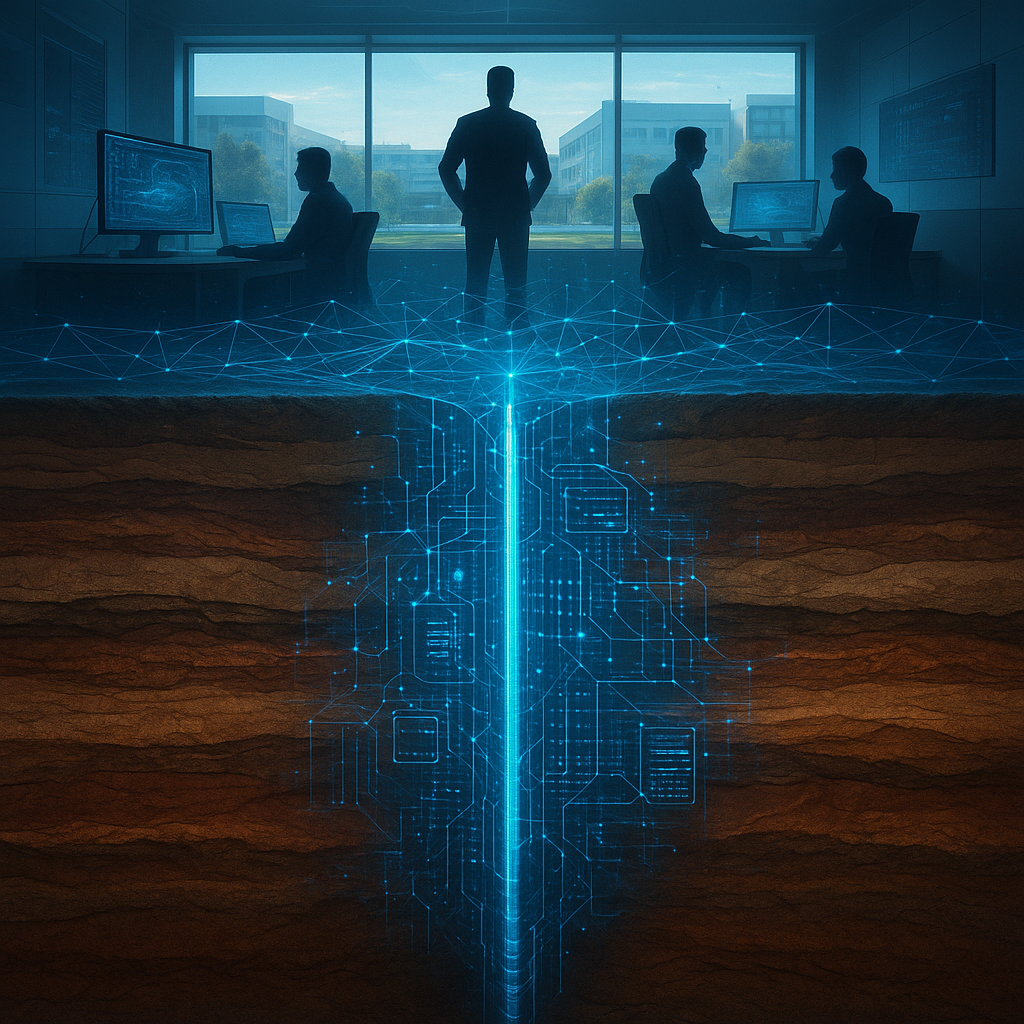
A digital twin for geothermal wells is not science fiction. It is a live simulation model built from subsurface data, sensor readings, drilling logs, and physics-based equations to predict what is happening deep underground, where rock is hot, pressure is brutal, and mistakes cost real money. That matters because geothermal energy is one of the few clean power sources that can run steadily, but only if operators can see enough of the reservoir to drill wisely and produce heat without wrecking the well.
Key Takeaways
- A geothermal digital twin is a high-fidelity model of the underground reservoir, not a shiny dashboard.
- PNNL, Nvidia, and Fervo are mixing AI, simulation, and field data to improve drilling and production decisions.
- The point is less flash and more fewer bad wells, lower cost, and better long-term output.
- The hardest problem is uncertainty: rock is messy, data is incomplete, and the subsurface does not care about marketing.
- This kind of system should serve human needs, energy access, and responsible stewardship, not just engineering ego.
What is a geothermal digital twin?
It is a software model that mirrors a real geothermal system, often including wells, fractures, fluid flow, heat transfer, and pressure changes over time. Unlike a simple 3D map, it tries to estimate how the underground system behaves when you inject water, pull up steam or hot brine, and change operating conditions. That means the model must combine geoscience, machine learning, reservoir simulation, and field telemetry into one working picture.
Most tech stories about AI sound inflated. This one is different because the economics are severe and the geology is unforgiving. When I look at geothermal projects, I do not care about buzzwords. I care about whether the operator can drill the right place, avoid dry zones, preserve reservoir performance, and keep the plant running for decades. If the model cannot help with those tasks, it is just expensive theater.
The PNNL-Nvidia-Fervo effort matters because it aims to shrink the gap between what engineers think is underground and what is actually there. Fervo brings field experience from enhanced geothermal systems. PNNL contributes research muscle in subsurface science and energy systems. Nvidia brings GPU-powered simulation and AI tooling that can chew through large datasets much faster than old desktop workflows. Put together, the goal is a digital twin that does not just look pretty. It needs to predict.
That prediction challenge is the whole ballgame. Deep geothermal reservoirs can sit thousands of feet below the surface, where direct measurement is rare and expensive. A model must infer fractures, permeability, fluid pathways, and thermal decline from incomplete evidence. Frankly, that is a hard problem for human teams alone. AI helps, but only when it is constrained by physics and checked against field reality. Otherwise you get a polished hallucination with a power bill.
At its best, this approach serves a broader good. Energy systems are not toys. They affect households, factories, hospitals, and entire communities. In that sense, responsible innovation looks a lot like stewardship: using sharp tools carefully, improving reliability, and building systems that respect human dignity instead of treating people as afterthoughts. That principle sounds old-fashioned because it is. It is also the right one.
What is the practical value? Better well placement, smarter reinjection strategies, improved forecasting of output decline, and fewer costly surprises during drilling and operation. The biggest win is not glamour. It is reduced uncertainty. And uncertainty, in geothermal, is where money goes to die.
Core Benefits and Importance
- Better drilling decisions. A digital twin can point engineers toward fracture zones and away from dead rock, which can reduce wasted drilling and sidetrack costs.
- More accurate reservoir forecasts. Operators can estimate how heat and pressure will change over months and years, which matters for plant economics.
- Lower operational risk. If the model sees pressure or flow anomalies early, teams can adjust before they damage the reservoir.
- Faster scenario testing. Instead of waiting for slow manual analysis, engineers can compare operating strategies in a simulation environment.
- Improved grid value. Reliable geothermal output supports baseload generation, which helps stabilize a grid that is increasingly strained by intermittent sources.
- Smarter capital spending. Investors hate uncertainty. A credible digital twin can help reduce the risk premium on geothermal projects.
- Better use of scarce expertise. There are not many people who truly understand subsurface geothermal systems. Software can multiply the reach of those experts.
- Longer asset life. If you know how to manage injection and production carefully, you may preserve reservoir performance for more years.
Here’s the kicker: AI is not the hero. Data quality is. If the sensor feed is poor, the geological assumptions are weak, or the model is trained on the wrong field conditions, the output will be neat but wrong. I have seen plenty of flashy systems fall apart because the people building them confused computation with understanding. They are not the same thing.
The biggest advantage of the PNNL and Nvidia angle is speed. GPU-accelerated workflows can run large simulations much faster than older CPU-only setups, especially when paired with AI surrogates that approximate expensive physical models. That does not replace full physics. It trims the time needed to explore options. For geothermal, where each iteration can cost real money, faster iteration is a practical edge.
There is also a quieter benefit that gets ignored: transparency. A good digital twin gives engineers a place to test assumptions. Why did production drop? Did injection move heat away too fast? Did a fracture pathway change? What does the pressure curve imply? Questions like these matter because good stewardship requires more than optimism. It requires careful accounting for what the earth is doing beneath our feet.
One more point. Geothermal is often praised as clean energy, and that is true enough, but “clean” is not the same as “easy.” Drilling, water management, seismic monitoring, and reservoir maintenance still demand discipline. A digital twin can improve decisions, but only if teams treat it as a decision aid, not a magic wand.
Step-by-Step Implementation Guide
- Start with field data. Collect drilling logs, well trajectories, seismic surveys, temperature data, pressure readings, flow rates, and production history. Without this foundation, the twin is guesswork.
- Build the geologic model. Map fractures, rock layers, permeability zones, and thermal gradients. This is where geoscientists earn their keep.
- Add physics-based simulation. Model fluid flow, heat exchange, and pressure response using reservoir engineering methods. A twin needs equations, not just machine learning.
- Train AI components on past behavior. Use machine learning to spot patterns, estimate missing values, and create faster approximations of expensive simulations.
- Validate against real wells. Compare model predictions to actual measured output from active geothermal sites. If the model misses badly, fix the assumptions.
- Connect to Nvidia-accelerated compute. Use GPUs to run large batches, sensitivity tests, and optimization routines quickly.
- Update continuously. Feed new telemetry back into the model so it improves as the field changes.
- Use the twin for decisions, not decoration. Test drilling targets, forecast output, and plan injection strategies before spending money underground.
When I look at successful technical deployments, the pattern is boring but true: start simple, verify constantly, and only then scale. People love to talk about “real-time intelligence.” Fine. Real-time nonsense is still nonsense. In geothermal, every claimed improvement has to survive contact with the rock.
The work also needs governance. Who can change model assumptions? Who signs off on a drilling recommendation? Who checks bias in the data pipeline? These are not abstract questions. They are the difference between a tool that supports prudent action and one that hides responsibility behind a glossy screen. In a well-ordered system, technology serves people. It should not become a substitute for judgment.
Comparison Table
| Approach | Strengths | Weaknesses | Best Use Case |
|---|
| Digital twin with AI + physics | Faster scenario testing, continuous updating, better prediction under uncertainty | Requires strong data, careful validation, serious compute | Optimizing geothermal drilling and reservoir management |
| Traditional reservoir simulation | Grounded in physics, well understood by engineers | Slow, expensive to iterate, harder to adapt to new data | Baseline engineering analysis and compliance work |
| Rule-based field operations | Simple, cheap, easy to explain | Poor at handling complex subsurface behavior | Basic operational routines in stable fields |
| Pure ML prediction model | Can find patterns quickly, useful for interpolation | Can fail badly outside training data, weak physical interpretability | Short-term forecasting on limited data |
The comparison makes one thing plain. The hybrid model is the serious option, but it is also the hardest one to do well. That is not a flaw. It is the price of reality.
Common Mistakes to Avoid
- Treating the twin like a product demo. Pretty visuals are nice. Accurate predictions pay the bills.
- Ignoring physics. If the model is all machine learning and no geothermal science, expect nonsense.
- Using stale data. Underground conditions change. Old inputs produce old mistakes.
- Overtrusting the model. A digital twin should inform engineers, not replace them.
- Skipping field validation. If predictions do not match real wells, the model needs work.
- Confusing scale with accuracy. More data is not always better if the data is noisy or misread.
- Neglecting operational ethics. Energy tools should be designed for safety, reliability, and the common good, not just higher output.
Most advice in this space is too cheerful. The truth is that geothermal digital twins fail for ordinary reasons: bad instrumentation, sloppy assumptions, weak integration between disciplines, and a tendency to overpromise. I have watched technical teams spend months polishing the interface while the model underneath remained fragile. That is backward. Fix the engine before you wax the hood.
Another common error is assuming AI can infer everything from sparse data. No, it cannot. It can help fill gaps, reduce compute time, and find correlations, but it cannot repeal geology. Rock is not impressed by machine learning. If the fracture map is wrong, the predictions will drift. If the sensor placement is poor, the feedback loop gets muddy. If the team does not understand uncertainty bounds, they will mistake confidence for truth.
There is also a social mistake: treating energy innovation as if people do not matter. Communities near geothermal projects care about water use, seismicity, jobs, and reliability. A responsible operator should speak plainly about tradeoffs and design the system to reduce harm. That is not idealism. It is basic decency.

Frequently Asked Questions
Q1: What is the main goal of a geothermal digital twin?
A geothermal digital twin aims to simulate subsurface conditions so engineers can predict drilling outcomes, reservoir performance, and production changes before making costly decisions in the field.
Q2: Why are Nvidia GPUs useful in geothermal AI?
Nvidia GPUs speed up large simulations, parallel processing, and AI model training, which makes it faster to test scenarios and refine forecasts for geothermal wells and reservoirs.
Q3: How is this different from traditional reservoir modeling?
Traditional reservoir modeling relies heavily on physics and can be slow to update. A digital twin blends physics with live data and machine learning so the model can adjust as the field changes.
Q4: Can a digital twin replace field engineers?
No. It can support engineers, highlight risk, and reduce guesswork, but it still depends on expert judgment, real data, and ongoing validation.
Final Thought
The best technology disappears into better decisions. That is the real measure here, not the demo reel, not the press release, and not the breathless talk about AI saving the planet by itself. A geothermal digital twin built with PNNL, Nvidia, and Fervo is interesting because it tackles a hard, grounded problem: how to see more clearly into a hostile place and use that knowledge wisely.
I like this project for one simple reason. It respects reality. It assumes the underground is complicated, the data is incomplete, and the consequences of error are expensive. That is a healthy starting point. It also fits a sane view of innovation: human skill is a gift, but it should be used in service of others, not as an excuse for vanity or waste. If this work helps produce reliable clean power with fewer mistakes and better stewardship, then it is doing something worthwhile.
That is rare enough to matter.
{"@context":"https://schema.org","@type":"FAQPage","mainEntity":[{"@type":"Question","name":"What is the main goal of a geothermal digital twin?","acceptedAnswer":{"@type":"Answer","text":"A geothermal digital twin aims to simulate subsurface conditions so engineers can predict drilling outcomes, reservoir performance, and production changes before making costly decisions in the field."}},{"@type":"Question","name":"Why are Nvidia GPUs useful in geothermal AI?","acceptedAnswer":{"@type":"Answer","text":"Nvidia GPUs speed up large simulations, parallel processing, and AI model training, which makes it faster to test scenarios and refine forecasts for geothermal wells and reservoirs."}},{"@type":"Question","name":"How is this different from traditional reservoir modeling?","acceptedAnswer":{"@type":"Answer","text":"Traditional reservoir modeling relies heavily on physics and can be slow to update. A digital twin blends physics with live data and machine learning so the model can adjust as the field changes."}},{"@type":"Question","name":"Can a digital twin replace field engineers?","acceptedAnswer":{"@type":"Answer","text":"No. It can support engineers, highlight risk, and reduce guesswork, but it still depends on expert judgment, real data, and ongoing validation."}}]}