Indie Artist Apparel Marketplace: What the Ex-Amazon Founders Are Getting Right
An apparel marketplace built for independent artists aims to solve a familiar problem: creators can design a shirt, but turning that design into reliable sales takes more than uploading an image. The Oct. 22, 2026 Startup Spotlight describes an ex-Amazon duo building a better fit between indie artists and apparel buyers. The founders’ identities, marketplace name, fees, and operating details are not included in the supplied headline, so this analysis separates the stated premise from what still needs verification.
What Is an Indie Artist Apparel Marketplace?
An indie artist apparel marketplace is a place where independent creators can list designs on wearable products and sell them to customers, usually with the marketplace or its partners handling some combination of printing, order management, payment, and shipping. The exact setup varies. Some services operate as a storefront and connect to outside printers; others organize product listings, discovery, checkout, and fulfillment in one system. The supplied headline says an ex-Amazon duo is building a marketplace to improve the fit for indie artists, but it does not establish which model this particular company uses.
That distinction matters. A marketplace is not automatically a manufacturer, and a seller platform is not necessarily a printing service. The artist may upload artwork, choose garments, set prices, and promote a shop, while a third party prints and ships each order. In another arrangement, the marketplace may buy inventory or oversee production directly. Each choice affects upfront cost, delivery time, product consistency, and who handles a refund when a print arrives crooked.
I look for the unglamorous parts first. Who owns the design? Can the artist leave and take customer or sales data with them? What happens when an order is lost? If a company cannot answer those questions plainly, the quality of its homepage is beside the point. Frankly, “supporting creators” is an easy claim to make; a transparent contract and predictable payout are harder to fake.
The broader category includes familiar names and separate tools. Etsy offers a broad handmade and creative goods marketplace, while print-on-demand providers can let sellers offer products without purchasing stock in advance. A specialist apparel marketplace might combine those jobs or focus more tightly on artist discovery, curation, product selection, or community. That focus could help buyers find work they would not encounter through generic search, but it also raises a practical question: can the service attract enough shoppers to create sales beyond the artists’ own followers?
There is no need to romanticize the business model. A shirt still has to fit, survive washing, arrive on time, and cost an amount buyers accept. The marketplace earns its place only if it makes that process better for the artist and the customer, rather than adding another fee and another dashboard.
Core Benefits and Why They Matter
A specialized marketplace can offer useful benefits, but none should be assumed before the company publishes its terms and demonstrates its service. The headline gives the broad ambition, not verified performance figures. So the sensible approach is to examine the value such a platform must deliver.
- Less operational overhead. If printing, packing, and shipping are handled by a service partner, an artist can spend less time folding garments and buying mailing labels. This is especially useful for creators who have an audience but no spare room for boxes of inventory. The trade-off is reduced control over production and a margin shared with the provider.
- A more relevant shopping experience. A marketplace designed around independent artists could make browsing by style, medium, theme, or creator easier than searching a large general marketplace. Better discovery helps only if the recommendations are understandable and do not bury smaller artists behind paid placement or popularity loops.
- A lower-risk way to test demand. Print-on-demand can reduce the need to order a large batch before knowing whether a design sells. That does not make the product free to launch: samples, artwork preparation, marketing, and platform fees still cost time or money. A creator should test one or two designs before building a sprawling catalog.
- A stronger artist identity. Product pages can tell shoppers who made the work and what it represents. This gives a customer more context than a bare graphic and helps distinguish an artist’s original design from generic merchandise. It also creates a duty to verify claims about authorship and sourcing.
- Potentially simpler customer service. One checkout and a clear order page can reduce confusion when a buyer wants to ask about sizing or delivery. But “centralized support” only helps if the support team resolves problems rather than sending buyers and artists in circles.
Here’s the kicker: the most important benefit may be a better match, not a bigger catalog. An artist needs customers who value the work; a shopper needs a garment worth wearing after the novelty fades. A thoughtful marketplace could make those two groups easier to find each other. It cannot guarantee demand, and it should not imply that a listing alone turns creative work into dependable income.
The platform also has a responsibility to treat creative labor as more than raw material for a feed. Technology and commerce are most useful when they serve people and communities, not merely when they extract more attention or data. That principle has practical consequences here: clear consent, honest attribution, and reasonable control over a creator’s work belong in the product design.
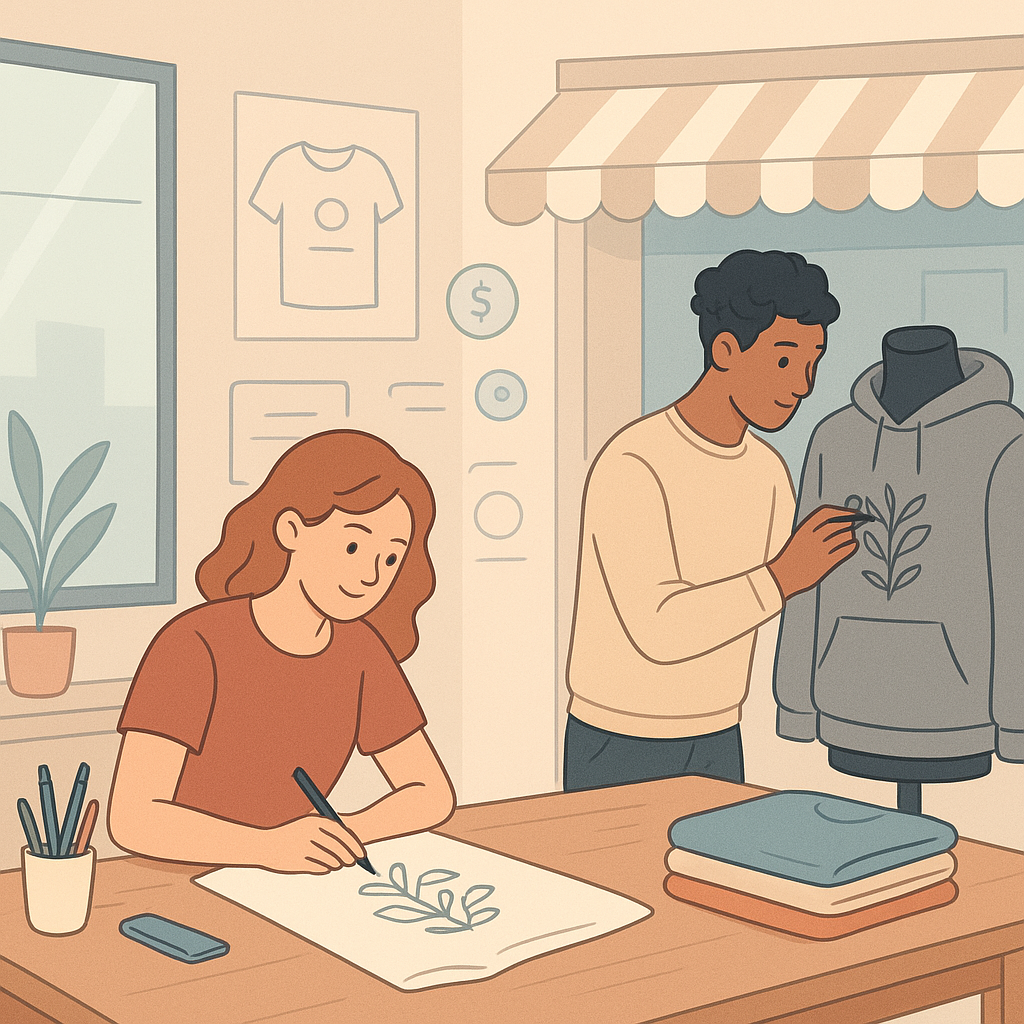
Step-by-Step: How Artists Should Evaluate and Use a Marketplace
The following process works whether the service in the headline is already available to sellers or is still developing. I would not build a whole business around a platform before testing its basic mechanics.
- Confirm the business model. Find out whether the marketplace prints products, contracts with a print partner, or simply hosts listings. Ask who is the seller of record, who collects payment, who ships orders, and who answers the buyer. Those are separate jobs, even if one website presents them as a single service.
- Read the fee schedule before uploading. Identify listing fees, transaction charges, payment processing costs, production costs, shipping charges, advertising fees, and any withdrawal minimum. Etsy’s fee schedule is a useful example of the kind of document to inspect. Calculate what remains after every deduction, not just the difference between retail price and blank garment cost.
- Check ownership and licensing language. The artist should retain ownership of original artwork while granting only the permissions necessary to display, print, and promote it. Read for broad clauses that permit reuse after a listing ends or give the platform rights beyond fulfilling orders. The U.S. Copyright Office copyright overview is a sensible starting point, though it is not a substitute for legal advice.
- Order a sample. A mockup is not a shirt. Inspect the fabric, seams, print placement, color, and sizing; wash it according to the care label and see what changes. If the provider will not let sellers sample the product, treat that as a serious limitation. I have found that this ordinary test tells you more than a dozen glossy product renders.
- Build a small, coherent listing. Use accurate garment details, clear size information, honest images, and a short artist note. Avoid loading a shop with dozens of near-identical designs before you know which product and audience respond. A smaller collection is easier to check for quality and easier for a buyer to understand.
- Set a price with the full cost in view. Include production, platform charges, shipping policy, taxes where applicable, discounts, and the artist’s desired return. A price that looks competitive but leaves no room for a replacement or customer service is not a good price. Compare like with like: garment weight and print method matter as much as the number on the product page.
- Run a limited launch. Share a few products with a real audience and record visits, conversion, questions, refunds, and delivery issues. Do not treat likes as sales data. If customers repeatedly ask about fit or shipping, improve the listing before spending more on promotion.
- Review the relationship periodically. Check payout records, policy changes, support response times, product consistency, and whether the marketplace still sends useful traffic. Keep copies of artwork and sales records. If the arrangement stops working, know how to close listings and move to another channel without losing access to your own creative files.
For sellers comparing a hosted shop with a print-on-demand workflow, Shopify’s print-on-demand guide outlines common operational choices. Provider explanations are useful for understanding the mechanics, but remember that they are written by businesses selling services. Read the contract, not just the sales page.
Comparison: Specialist Artist Marketplace vs. Etsy
The supplied headline provides no verified company name, pricing, traffic, or product specifications. The table therefore compares the proposed specialist model described by the headline with Etsy as an established general marketplace; it does not claim that the unnamed startup has particular features. A seller should confirm current terms directly before making a decision.
| Factor | Specialist indie-artist apparel marketplace | Etsy |
|---|
| Main focus | Potentially curated apparel and independent artists; actual scope is not stated in the headline | Broad marketplace for handmade, vintage, and creative goods |
| Artist discovery | Could offer narrower browsing and creator-led discovery if the service builds those tools | Large general catalog; visibility depends on search, listings, competition, and promotion |
| Production | Unknown; may offer or connect to apparel production and fulfillment | Sellers manage fulfillment or use production partners under Etsy’s rules |
| Upfront inventory | Depends on the company’s model; verify whether products are made to order | Depends on seller setup; Etsy itself is not a universal apparel printer |
| Fees | Not provided in the headline; require a full written schedule | Public fee documentation is available, though sellers should check current terms |
| Audience | Unknown; a niche can improve relevance but may have less shopper reach | Established broad marketplace, with competition across many product types |
| Best reason to choose it | A demonstrably better artist-to-buyer fit, product quality, or service | Existing marketplace reach and familiar seller tools |
| Main risk | Unproven demand, unclear operations, or dependence on a young platform | Crowded listings, platform dependence, and fees that affect margins |
There is no universal winner. Etsy has the advantage of being an established, broad marketplace, but that breadth can make a single artist harder to find. A specialist service could improve curation and product presentation, yet a narrow focus does not automatically produce enough buyer traffic. The startup would need to show evidence: real listings, transparent economics, workable returns, and repeat customers—not just a founder story.
If the company includes production, sellers should compare fabric, print method, sizing, fulfillment estimates, and return handling against independent print-on-demand providers. Printful’s print-on-demand overview is one reference for how on-demand production typically works. It describes a provider’s own service, not the unknown startup’s specific arrangement. That distinction is important.
Common Mistakes to Avoid
Assuming “no inventory” means no cost. On-demand production can reduce the cash tied up in unsold stock, but it does not erase sampling, design work, platform fees, promotion, taxes, or the time spent resolving customer problems. A seller who prices only against the blank shirt may discover too late that each order barely covers the work.
Believing a marketplace automatically brings buyers. A marketplace may have an audience, or it may rely heavily on creators to send traffic. Ask for concrete information about how shoppers find products and how listings are ranked. If the answer is “the algorithm will take care of it,” ask what inputs influence ranking and whether paid promotion is involved. Algorithms do not pay artists; customers do.
Skipping a physical sample. Digital mockups conceal texture, print feel, and garment shape. A design that looks centered on a screen can sit oddly on a real shirt. Order a sample, check the sizing, and inspect the item in ordinary light. If you would not give it to a friend, do not ask customers to buy it.
Treating copyright as a box to tick. Artists must have permission to use the images, fonts, photographs, and other materials in a design. A platform’s upload button is not proof that the work is lawful. The FTC’s online advertising guidance offers a useful reminder that commercial claims should be truthful and supported. That matters when a listing makes claims about materials, origin, or environmental impact.
Confusing followers with customers. Social engagement can help a launch, but applause is not a purchase order. Test a product with a small release, track completed orders and returns, then decide what to make next. Do not order a large batch or spend heavily on advertising because one post performed well.
Ignoring the contract because the founder story sounds compelling. Former experience at a major retailer may be relevant, but it cannot replace transparent terms. Verify who controls customer information, what happens to a listing if the company closes, how long payouts take, and which party bears the cost of a defective product. A polished origin story is not a service-level agreement.
Letting low prices do all the selling. Competing only on price can squeeze the artist and encourage disposable merchandise. Buyers should be able to judge fabric, fit, print, and creator story, not just a discount badge. The point is not to charge more for its own sake; it is to price honestly for a product that deserves to be worn and kept.
Failing to plan for problems. Lost parcels, misprints, size exchanges, and delayed production happen in commerce. A good seller has clear policies and a realistic buffer for support. A good marketplace makes it obvious who owns each issue. If every exception becomes a blame game, the platform has not simplified the work; it has merely moved it.
Frequently Asked Questions
What is the marketplace described in the Oct. 22, 2026 headline?
The headline describes an apparel marketplace founded by two former Amazon employees and aimed at independent artists. It does not name the company or provide its specific features, costs, launch status, or policies. Those details should be confirmed through the company’s own announcement and terms rather than inferred from the headline. This article assesses the business model, not unverified claims about a particular product.
How does an apparel marketplace make money for artists?
An artist typically earns the difference between the sale price and the relevant costs, which may include garment production, fulfillment, shipping, payment processing, marketplace fees, and advertising. The precise calculation depends on the service’s contract. Before listing, ask for an example payout at a realistic retail price and check whether discounts or refunds change the amount. “You set your own price” is not enough information to judge earnings.
Is print-on-demand better than holding inventory?
It depends on demand, cash, storage, and the seller’s priorities. Print-on-demand can avoid buying a large quantity upfront and can make it easier to test designs. Holding inventory may offer more control over quality, packaging, and delivery, and it can improve per-item economics at sufficient volume. Neither method is automatically superior; compare actual costs and sample quality before choosing.
What should an artist check before joining a new marketplace?
Review fees, payout timing, production partners, product samples, return rules, customer support, data access, and the licensing terms for artwork. Confirm whether the platform offers meaningful shopper discovery or expects the artist to supply most traffic. Keep copies of design files and sales records. Start with a small test and expand only after the service proves reliable.
Final Thought
The promise in this startup spotlight is sensible: independent artists need ways to sell wearable work without becoming full-time warehouse managers, and buyers benefit when good art is easier to find. But a marketplace does not become artist-friendly by naming artists in its pitch. The evidence is in the details: a product that feels worth its price, a payout artists can calculate, a support process that solves ordinary problems, and rules that respect the people whose work gives the shop its character.
The former Amazon connection may suggest experience with commerce at scale, but the headline alone cannot tell us whether this new service has earned trust. A small, focused platform can serve its users well; it can also be another intermediary between creator and customer. The difference comes down to how it handles ownership, discovery, production, fees, and the inevitable imperfect order. Those are the facts worth watching as the company shares more information.
For artists, the practical advice is plain: test a sample, calculate the whole margin, read the contract, and begin with a limited collection. For shoppers, look beyond the mockup and check who made the design, what the garment is like, and what the seller promises. For the founders, the real measure will be whether creators can build durable relationships with buyers instead of renting a temporary corner of somebody else’s storefront. Good technology should help people do worthwhile work well. It should not make the people doing that work harder to see, harder to pay, or easier to replace.