Laplace Intelligence Is Red-Teaming Robots and Self-Driving Cars Before They Meet the Real World
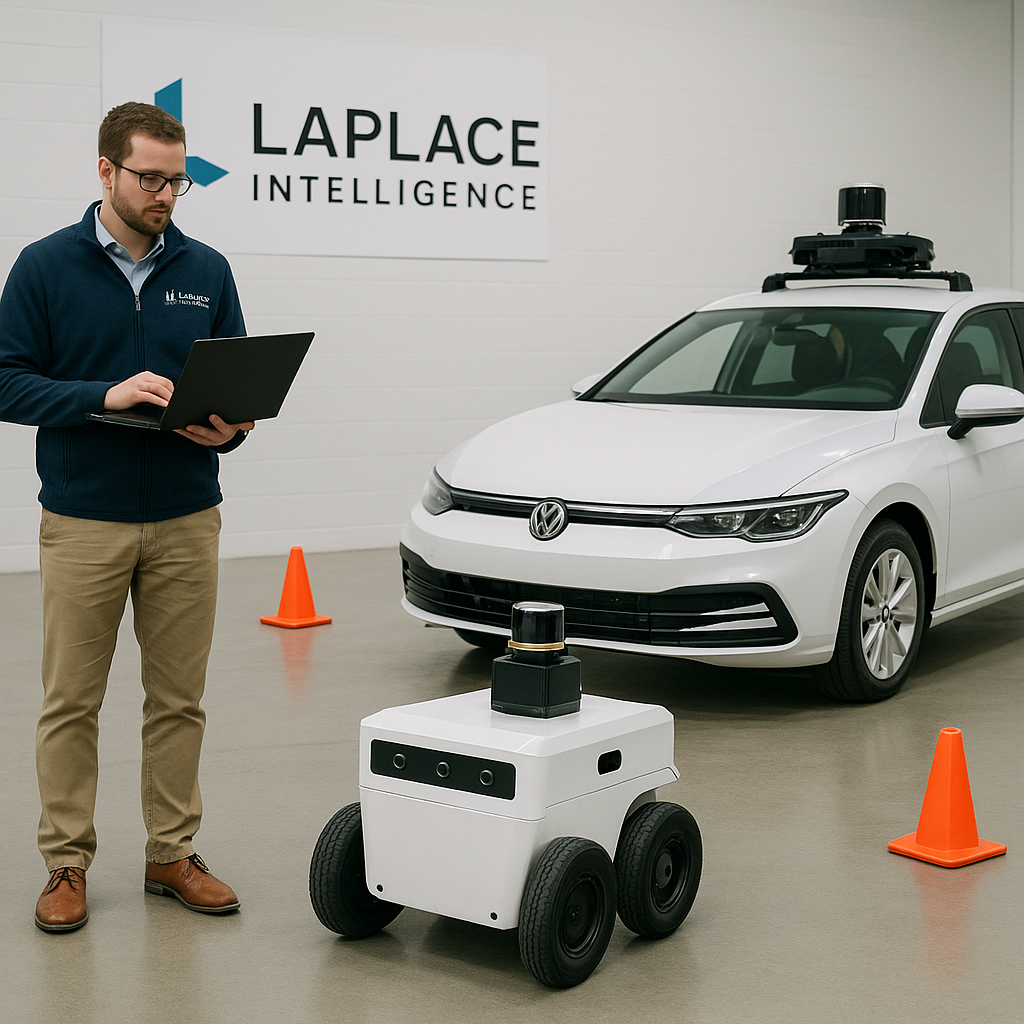
Laplace Intelligence is drawing attention to a stubborn problem in robotics and autonomous driving: machines can pass planned tests and still fail when real people, messy surroundings, and unexpected events enter the picture. Red-teaming probes those systems for weaknesses before deployment, helping developers find dangerous gaps while they can still fix them. The approach matters, but it is not a substitute for sound engineering, independent oversight, or careful rollout.
What Is Laplace Intelligence’s Red-Teaming Work?
The headline is brief: Laplace Intelligence red-teams robots and self-driving cars before they hit the real world. That describes a timely and important kind of safety work, but it does not tell us the company’s precise methods, customers, test results, or operating model. Those details should not be guessed. The useful question is what red-teaming means in this sector, and what a serious evaluation ought to examine.
A red team deliberately looks for ways a system could fail, be misled, or behave unsafely. In software security, that might mean trying to break into a service. For a robot or an automated vehicle, it can mean testing whether a machine notices an obstacle, interprets a confusing scene correctly, responds safely to a person, and recovers when a component behaves unexpectedly. The work challenges assumptions that ordinary product tests may leave untouched.
Robots and self-driving cars rely on several connected layers. A sensor collects information; perception software estimates what is nearby; planning software selects an action; and control systems translate that choice into movement. A failure in one layer can spread through the others. A camera may miss an object, a model may classify it incorrectly, or a controller may not respond as intended. The result is not always a dramatic crash. It might be a robot blocking a corridor, a vehicle stopping in a hazardous place, or a machine requiring a human to intervene at the wrong moment.
This is why a polished demonstration proves little on its own. Developers usually know the test route, timing, and expected conditions. A red team asks what happens when those conditions change: glare, rain, unusual objects, temporary construction, a distracted pedestrian, a stale map, or an unexpected combination of ordinary events. Frankly, ordinary is where many consequential failures hide.
The goal is not to embarrass engineers or declare a technology inherently unsafe. It is to expose weak assumptions early, document how a failure occurs, and give the people responsible for the product evidence they can act on. NIST’s AI Risk Management Framework offers a useful reference for treating AI risk as something to identify, measure, manage, and revisit—not a box to tick once. For Laplace Intelligence specifically, the supplied report establishes the red-teaming focus; additional claims about its tools or track record would need direct confirmation.
Why Red-Teaming Matters
A machine that works reliably in a clean test environment may still be brittle in a busy public setting. That gap matters because robots and automated vehicles operate near people, property, and public infrastructure. Red-teaming is valuable when it finds the gap before routine use, rather than after an avoidable incident.
- It tests assumptions, not just features. A product team may test whether a vehicle follows a route or whether a robot can pick up an object. A red team asks what happens when the route is partly blocked, the object is unfamiliar, or the person nearby behaves differently than expected. That changes the test from “Does it work?” to “Under what conditions does it stop working?”
- It can reveal interaction failures. A robot does not operate in a vacuum. People may misunderstand its signals, approach it from an unexpected direction, or assume it has noticed them. Testing should consider how the machine communicates its intentions and how a person can safely pause, redirect, or override it.
- It can expose weak recovery behavior. Systems will encounter faults. A useful assessment asks whether the machine enters a safe state, alerts an operator, preserves essential records, and avoids turning a minor problem into a dangerous one. The ability to fail safely is more meaningful than a claim that failure never happens.
- It helps teams prioritize repairs. A long list of edge cases is not automatically useful. Findings need context: severity, likelihood, affected users, operating conditions, and whether an existing safeguard limits harm. Without that analysis, a report can be alarming but not actionable.
- It supports more honest deployment decisions. Testing can identify where a system is ready, where it needs changes, and where it should not be used yet. The important word is “where.” Safety is shaped by location, weather, speed, task, supervision, and the people nearby—not just by a product name.
There is a catch: red-teaming cannot certify that a system is safe in every imaginable situation. The number of possible combinations of weather, road design, lighting, objects, and human behavior is enormous. A test program must therefore combine representative scenarios, risk-based selection, repeatable procedures, and real-world monitoring. The National Highway Traffic Safety Administration’s automated-vehicle safety information is a useful reminder that vehicle safety is a broader public and regulatory concern, not merely a software benchmark.
The broader principle is straightforward. Technical skill is most valuable when it serves people responsibly. That means treating bystanders as stakeholders, protecting their dignity and safety, and being willing to delay deployment when evidence is thin. Faster release is not always progress.
How to Evaluate a Red-Teaming Program
The report headline does not provide a step-by-step description of Laplace Intelligence’s work. The following is a practical framework for evaluating any group that tests physical AI. It also gives product teams a sensible way to prepare. I look for clear boundaries, repeatable evidence, and findings that lead to specific changes—not a dramatic demo built for publicity.
- Define the system and its operating limits. Write down what the robot or vehicle is designed to do, where it may operate, what conditions it should avoid, and when a human must take over. Include hardware versions, software builds, sensors, connectivity, and any third-party components. If the intended environment is vague, the test plan will be vague too.
- Map the people and possible harms. List who could be affected: passengers, pedestrians, workers, maintenance staff, remote operators, and people whose data the system collects. Consider physical injury, property damage, privacy exposure, service disruption, and unequal performance across different surroundings or users. A machine can be technically operational while still creating an unreasonable burden for the people around it.
- Build scenarios from hazards and evidence. Start with known failure modes, incident reports, near misses, operational records, and engineering assumptions. Then vary conditions in a controlled way: lighting, weather, clutter, road markings, sensor obstruction, connectivity, and human movement. Include combinations, not just isolated changes. An object that is easy to identify in daylight may be harder to detect when partly obscured at dusk.
- Test the full chain, not one model score. A perception benchmark may show whether a system recognizes objects, but it does not show whether the vehicle brakes in time or whether a robot communicates its next action. Follow data through sensing, interpretation, planning, control, human notification, and recovery. The failure that matters often appears between components.
- Use simulation carefully, then test in controlled physical settings. Simulation can cover many variations quickly and safely. It is useful for finding candidate weaknesses, checking software changes, and repeating rare scenarios. But simulated sensors, physics, and human behavior are imperfect representations. Move promising tests to controlled physical environments, with safeguards, trained staff, and clear stop conditions.
- Record failures in a form engineers can reproduce. Each finding should identify the system version, conditions, starting state, observed behavior, expected behavior, severity, and evidence. Include video or sensor records where appropriate and lawful. A vague note such as “the robot was confused” is not a useful engineering result. A reproducible sequence is.
- Agree on severity and remediation. Rank findings by plausible harm and exposure, not by how striking they look in a presentation. Assign an owner, a deadline, and a fix or documented mitigation. Retest the same scenario after changes, then check for regressions elsewhere. A patch that repairs one behavior but breaks another has not solved the problem.
- Set release gates and keep watching after deployment. Before public operation, establish measurable criteria for unresolved high-severity findings, human oversight, incident reporting, and operational limits. After launch, monitor field performance and near misses, protect sensitive information, and make it possible to pause or roll back a system. I have found that teams often focus on the first test and underfund the follow-up; that is backwards for products operating around people.
For autonomous driving, terminology matters. The SAE’s J3016 standard on driving automation distinguishes levels of driving automation and clarifies the roles of the human driver and the system. It is not a safety certificate, but it helps prevent loose claims about what a vehicle can do and who remains responsible.

Red-Teaming vs. Standard Validation
The most relevant comparison is not Laplace Intelligence against a named rival. The information provided does not identify a single “biggest competitor,” nor does it give comparable performance data. A more honest comparison is between adversarial red-teaming and conventional, developer-led validation. They serve different purposes and work best together.
| Dimension | Red-teaming | Conventional validation |
|---|
| Main question | How could this system fail, be misused, or behave unsafely? | Does the system meet its specified requirements in planned tests? |
| Test perspective | Deliberately skeptical; seeks weak points and unexpected interactions | Usually organized around expected functions and acceptance criteria |
| Scenario selection | Includes adversarial, unusual, and combined conditions | Often emphasizes defined, repeatable operating conditions |
| Typical value | Finds assumptions and failure modes that deserve investigation | Measures performance against requirements and supports regression checks |
| Main limitation | Cannot exhaust every possible real-world condition | Can miss failures outside the planned test set |
| Best use | Independent challenge, risk discovery, and targeted follow-up | Routine verification, performance measurement, and release checks |
The two approaches are not enemies. A red team can uncover a hazard, while the product team uses conventional tests to reproduce it, verify a repair, and check related functions. The best programs share evidence without letting the team responsible for delivery quietly redefine a serious failure as acceptable.
“Independent” also needs a little scrutiny. A separate testing group can bring useful distance, but independence is not magic. Ask who selected the scenarios, who pays for the work, whether the evaluator can report unwelcome results, and whether the findings include enough detail for another qualified team to reproduce them. A glossy report without methods is mostly advertising.
The practical measure is not how many edge cases a group claims to have tested. It is whether the tests match credible hazards, whether severe findings are addressed, and whether the system’s limits are communicated plainly. Avoid unearned precision: no responsible comparison can put a single percentage on safety without defined conditions, sample sizes, and a clear method.
Common Mistakes to Avoid
Mistake 1: Treating a successful demo as proof of safety. A demo shows that a system performed under a particular set of conditions. It does not establish how it handles a different environment or a failure in a supporting component. Ask what was tested, what was excluded, and how many times the scenario was repeated. The kicker is that a flawless demonstration may simply mean the demonstration was carefully controlled.
Mistake 2: Testing only spectacular edge cases. Unusual scenarios attract attention, but common operational conditions deserve serious attention too. Poor lighting, temporary obstructions, confusing markings, and awkward handoffs can create more practical risk than a cinematic stunt. Prioritize scenarios by plausible harm and exposure, not by how shareable the footage might be.
Mistake 3: Confusing object recognition with safe behavior. A system can identify a pedestrian and still choose an unsafe action, react too slowly, or fail to communicate. Review the complete chain from sensor input to movement and human oversight. A neat model score does not tell a family member whether the machine will stop when it should.
Mistake 4: Assuming simulation replaces physical tests. Simulation offers repeatability and breadth, but it can inherit incorrect assumptions about sensor noise, friction, weather, or human behavior. Use it to screen and explore. Then confirm important findings in controlled physical conditions and monitor them in the field.
Mistake 5: Treating a red-team report as a one-time clearance stamp. Software updates, hardware changes, new routes, and changed operating policies can alter risk. Re-test after meaningful changes and keep watching performance after deployment. A result belongs to a particular system version and test scope, not forever.
Mistake 6: Ignoring privacy and security while testing safety. Test data may include faces, locations, voices, or workplace activity. Collect only what is needed, restrict access, set retention limits, and document how recordings are used. Security testing should also consider unauthorized access or manipulation, without publishing instructions that make abuse easier.
Mistake 7: Believing every finding must be solved with more AI. Sometimes the right fix is a clearer physical boundary, a slower operating speed, a better emergency stop, a revised workflow, or a human operator. Technology is a tool, not a moral excuse to shift risk onto workers and bystanders. Let’s be real: a simple, reliable safeguard can beat an elaborate model when the stakes are physical.
Frequently Asked Questions
What does red-teaming mean for robots and self-driving cars?
It means deliberately probing a system for weaknesses before or during deployment. Evaluators test whether sensors, software, controls, and human oversight behave safely under difficult or unexpected conditions. The aim is to find actionable failure modes, not to prove that every possible scenario has been covered.
What is Laplace Intelligence doing?
The supplied report says Laplace Intelligence red-teams robots and self-driving cars before they enter the real world. The brief does not specify its exact methods, customers, test results, or business model. Those details should be confirmed from the company or the full reporting rather than inferred from the headline.
Can red-teaming guarantee that a robot or autonomous vehicle is safe?
No. Testing can reduce uncertainty and reveal weaknesses, but real environments contain too many changing conditions for any finite program to guarantee perfect safety. Credible assurance combines testing, engineering controls, clear operating limits, human oversight, incident reporting, and ongoing monitoring.
How is red-teaming different from regular product testing?
Regular validation checks whether a system meets specified requirements under planned conditions. Red-teaming deliberately challenges assumptions and searches for unanticipated failures or unsafe interactions. Good teams use both: one finds and explores hazards, the other verifies requirements and confirms that fixes work.
Final Thought
Putting robots and self-driving cars into public settings is not just a technical milestone. It is a decision about who carries the risk when a system misreads a scene, loses a connection, or behaves in a way its designers did not expect. That makes honest testing more than a quality-control exercise. It is part of treating people as people rather than as background conditions in a product demo.
The headline about Laplace Intelligence points to a useful idea: challenge machines before ordinary users encounter their weaknesses. But scrutiny should apply to the testers, too. Ask what the evaluation covered, what it left out, whether serious findings were repaired, and how the system will be monitored after release. Don’t settle for a claim that a robot was “tested” without knowing what that word means.
The right goal is not zero risk on paper. It is a system whose limits are understood, whose failures are anticipated as far as practicable, and whose operators can intervene when reality stops matching the plan. That calls for technical craft, clear communication, and the modesty to admit that no model sees everything. When a machine serves people safely and reliably, innovation has done something worth keeping. When evidence is missing, waiting is not a failure of ambition. It is good judgment.