Meta’s Muse Spark is not a doctor. It can parse numbers, summarize lab panels, and spit out confident-sounding suggestions, but confidence is not competence...
Meta’s Muse Spark is not a doctor. It can parse numbers, summarize lab panels, and spit out confident-sounding suggestions, but confidence is not competence, and a model that reads health data without real clinical context can steer people wrong fast. The real issue is not just privacy; it is bad advice wrapped in slick software.
Key Takeaways:
- AI can summarize health data, but it cannot replace clinical judgment.
- Raw lab results without context are easy to misread.
- Privacy risks matter, especially with sensitive medical records.
- Good health tech should support care, not pretend to be care.
- The safest use of AI is as a helper for questions, not a final authority.
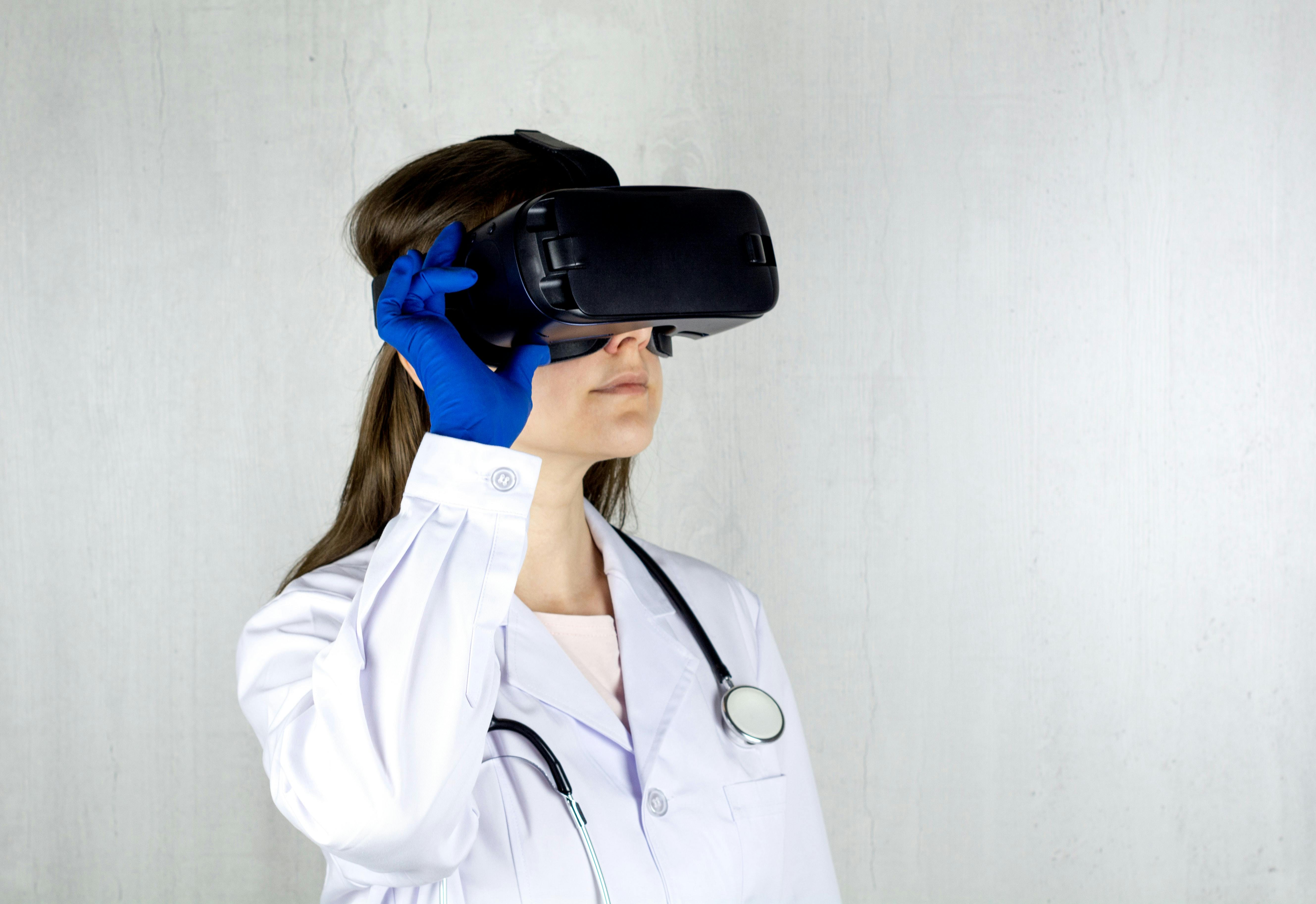
What makes this more irritating is that the pitch sounds reasonable at first. Upload a lab report, get a plain-English explanation, maybe a few next steps. Fine. Except health data is messy, personal, and easy to misread outside a proper exam, which means a system like Muse Spark can sound useful while missing the actual problem. I’ve reviewed enough tech to know the trick: if a tool speaks smoothly, people assume it thinks clearly. It often does not.
Frankly, that is the central failure here. Medical advice is not just pattern matching. A doctor weighs symptoms, history, medications, age, family risk, timing, and the million tiny details that never fit neatly into a prompt box. AI can help sort paperwork. It cannot feel a swollen joint, notice the way you describe pain, or tell when a result is a false alarm. And when the stakes are human health, “pretty good” is not good enough.
There is also a moral angle people like to skip. If technology is a tool, then it should serve the person, not reduce the person to a row of data. That is basic stewardship. We are supposed to use ingenuity for the common good, not hand over dignity to a model because it is cheaper and faster than a clinician. That sounds lofty, but it is really just common sense with a backbone.
The kicker? Most users will not know the difference between a decent explanation and a dangerous one until something goes sideways. That is why this topic matters. Meta’s Muse Spark is a useful case study in what happens when consumer AI wanders into medical territory without enough guardrails, enough context, or enough humility.
What is Meta’s Muse Spark?
Meta’s Muse Spark, then, is an AI system designed to analyze user-provided health information, including lab results, and return insights in plain language. On paper, that sounds handy. In practice, it sits in the same awkward zone as many health-focused chatbots and wellness apps: fast, fluent, and often overconfident. The software may recognize terms like cholesterol, hemoglobin A1C, or creatinine, but recognizing a word is not the same as understanding a patient.
Most tech coverage gives these systems too much credit. The marketing copy says they “analyze,” but the real question is what they analyze against. A blood test can mean very different things depending on hydration, recent illness, medication use, pregnancy, age, chronic disease, or even the time of day. A single lab number is a clue, not a verdict. Any tool that forgets that is acting like a loud intern with access to a printer.
I’ve seen enough product reviews to know the pattern. First comes the demo, which looks polished. Then comes the real world, where ambiguity shows up and the system starts to wobble. Health data is full of ambiguity. That is why Mayo Clinic’s testing and procedures resources and similar clinical references matter more than any slick AI output. They are written around actual medicine, not user engagement.
Muse Spark also raises a familiar software problem: the interface can encourage trust before the system has earned it. If a user sees a confident explanation next to their lab results, they may assume the advice is grounded in medical reality. But an LLM can summarize and still be wrong, incomplete, or wildly context-free. That is not a bug in the cosmetic sense. It is the core limitation.
This is why the comparison with a real doctor is not even close. A physician does not just read values. They ask follow-up questions, examine symptoms, compare trends, and decide what matters now versus what can wait. Good care is relational and iterative. AI, by contrast, is often a one-shot text generator that cannot be relied on to know what it does not know.

The underlying technology is still impressive in the narrow sense. Natural language processing can make scary jargon legible, and that can genuinely help people prepare for appointments. But the moment the tool starts implying diagnosis or treatment, the line gets thin. Too thin. The smart move is to keep AI in the role of translator, not authority.
There is a reason reputable health organizations stay cautious. The World Health Organization’s guidance on AI for health warns that systems must be safe, transparent, and human-centered. That is not bureaucratic fluff. It is the bare minimum. If a model can influence decisions about medication, follow-up care, or whether someone delays seeing a doctor, then it needs more than a shiny UI and a privacy policy nobody reads.
Core Benefits and Importance
The core benefits of AI in health tech are real, but smaller than the hype claims.
- Plain-language summaries: Users often need help translating dense medical jargon into readable terms.
- Faster triage of paperwork: AI can sort large volumes of data more quickly than a human inbox can.
- Appointment preparation: A good system can generate questions to ask a clinician.
- Trend spotting: It may highlight changes over time, especially in repeated lab values.
- Accessibility support: Some users need text-based explanations more than a printed report full of clinical shorthand.
But here’s the contrarian part. Those benefits are useful only when the system stays humble. If the AI starts sounding like it knows your body better than your doctor, the value collapses. That is the sort of failure that looks small in a demo and enormous in the real world.
Another practical benefit is emotional, though no one likes to say it plainly: people panic less when confusing results are explained well. That matters. But calming someone down with a bad explanation is not kindness; it is a polished mistake. The best health tech reduces confusion without pretending to replace expertise. That distinction is everything.
There is also a wider social point. Good technology should lighten the burden on busy clinicians, not tempt patients into self-diagnosis loops. If AI can draft a summary for a nurse, organize a patient’s questions, or help someone understand what “reference range” means, fine. That is helpful. If it nudges people into treating medical care like a chatbot conversation, then it is doing more harm than good.

Step-by-Step Implementation Guide
If you want to use a tool like Muse Spark without being foolish, the workflow matters more than the model name.
- Start with the source data.
Read the actual lab report, not just the AI summary. Check the reference ranges, units, and date of the test. A number without units is almost useless. - Ask the AI for translation, not diagnosis.
I would phrase prompts like, “Explain these results in plain English,” or “What questions should I ask my doctor?” That keeps the tool in its lane. - Compare against trusted medical sources.
Use references such as MedlinePlus laboratory test guidance or your clinic’s patient portal notes. If the AI says something dramatic, verify it. - Watch for overconfident wording.
If the model says “you have” when the data only suggests “may be worth checking,” that is a red flag. Most models are too eager to sound certain. - Bring the output to a clinician.
The best use of AI is as a prep tool for real care. Print it, save it, and bring questions to your doctor. - Never share more than needed.
Health data is sensitive. Uploading every record to a consumer AI service is not smart stewardship, no matter how polished the app looks. - Never share more than needed.
Health data is sensitive. Uploading every record to a consumer AI service is not smart stewardship, no matter how polished the app looks. - Treat urgent symptoms as urgent.
If something feels serious, do not wait for a model to finish typing. Get help from a human.
When I test software like this, I look for three things: accuracy, restraint, and honesty. Accuracy is obvious. Restraint means the tool knows when to stop. Honesty means it admits uncertainty instead of dressing up guesses as guidance. Most consumer AI systems fail at least one of those. Health tools should pass all three, or they do not deserve your trust.
Comparison Table
The comparison with a true medical workflow is not subtle.
| Feature | Meta’s Muse Spark | Real Doctor / Clinical Care |
|---|
| Data interpretation | Summarizes provided inputs | Reviews history, symptoms, exams, and context |
| Diagnostic ability | Limited and error-prone | Trained to diagnose using clinical judgment |
| Privacy control | Depends on platform policies | Governed by medical confidentiality standards |
| Follow-up care | Static responses | Ongoing monitoring and adjustment |
| Risk of overconfidence | High | Lower, because uncertainty is managed clinically |
| Human empathy | None | Present, and often decisive |
The table says what the hype never will. AI can compress information, but it cannot replace the judgment that comes from training, experience, and direct human contact. That is why the comparison is useful only as a cautionary measure.
Common Mistakes to Avoid
There are also common mistakes people make when trusting AI with health data.
First, they assume every result has a single meaning. It does not. Lab values depend on context, and context is the whole game. Second, they treat a plausible explanation as a verified one. Big mistake. A confident paragraph is not a second opinion. Third, they upload too much personal information because the app is convenient. That is how privacy leaks start.
Another bad habit is using AI to self-diagnose in place of care. Let’s be real: nobody wants to spend a day in a waiting room. But convenience is not a medical argument. A tool that saves time while increasing the chance of error is a lousy trade. If a product encourages delay, fear, or false certainty, it is not helping. It is just moving risk around.
There is a subtle but serious issue with bias, too. Health data systems are often trained on uneven datasets, and that can distort outputs across different populations. If the model has gaps in training or poor representation, its advice can look universal while being narrow. That is dangerous. Human dignity requires more than statistical confidence. It requires fairness, caution, and the discipline to say “I do not know” when that is the truth.
I also distrust any pitch that says AI will “democratize health knowledge” without mentioning medical literacy. Information is not understanding. You can hand someone a chart full of numbers and still leave them confused, frightened, or misled. Real education takes patience. It also takes respect for the fact that people are not spreadsheets.
Common mistakes to avoid:
- Treating AI output as diagnosis.
- Ignoring the actual lab reference ranges.
- Sharing full medical histories with consumer apps.
- Assuming “plain English” means “clinically correct.”
- Using AI to replace follow-up with a professional.
- Panicking over isolated numbers without trend data.
If you want a trustworthy workflow, the human order should be simple: gather data, verify with sources, talk to a clinician, then use AI only as a helper for explanation or organization. Anything else is backwards.
Frequently Asked Questions
Can AI explain lab results accurately?
Sometimes, yes, in a limited sense. It can translate terminology and point to common patterns. But it cannot reliably interpret results without full clinical context, so accuracy drops fast when the case is complicated.
Is it safe to upload health data to an AI app?
Not automatically. Safety depends on the company’s storage, retention, sharing, and security practices. Read the policy, and be stingy with sensitive details. If the app does not explain data handling clearly, that is a bad sign.
Should AI ever replace a doctor?
No. Not for diagnosis, treatment decisions, or urgent medical judgment. It can support education and preparation, but real care still needs a qualified human being.
What is the best use of AI in healthcare?
Probably administrative help, patient education, summarization, and triage support, as long as the system stays within tight boundaries and humans remain responsible.
For a broader perspective on related health-tech risks, it is worth reading the Nature Medicine discussion of AI in clinical settings, which shows how easily models can mislead when the input is messy or incomplete. That is not anti-technology. It is pro-reality.
There is a lot to like about useful software, and I am not one of those reflexive cynics who thinks every new tool is rotten. Good gear and good software can genuinely make life better. But health is not a smart speaker setting. It is not a streaming queue. It is a human person, with all the complexity that implies. If a company wants to build medical-adjacent AI, it should act like a steward, not a carnival barker.
The truth is, better technology usually looks less magical than the ads claim. It is quieter. It is more careful. It knows where it ends. That restraint is not a weakness; it is a virtue. In health, as in most things that actually matter, the tools that serve people best are the ones that remember they are tools.
Meta’s Muse Spark may be able to summarize your lab values. It may even make them easier to read. But the moment it starts pretending that readable is the same as reliable, it crosses a line. Use AI for clarity. Use clinicians for care. That division is not old-fashioned. It is wisdom earned the hard way.