Sonic the Hedgehog is still fast. That is the point.
Sonic the Hedgehog is still fast. That is the point.
A weekend exhibit in Seattle about Sega's blue blur is not just nostalgia bait, and it is not just a pile of pixel memories, either. It is a compact case study in how a game character can outlast hardware cycles, console wars, bad spin-offs, and a shocking number of questionable design decisions. Thirty-five years in, Sonic still draws crowds, fan art, debate, and a stubborn kind of affection.
Key Takeaways- Sonic's appeal is bigger than speed; it is about identity, style, and memory.
- Fan art gives the franchise extra life that marketing alone cannot buy.
- A Seattle exhibit is part history lesson, part community gathering, part cultural cleanup.
- The best exhibits show why a game character still matters after decades.
- Real value comes from craft, not hype. That applies to games, art, and pretty much everything else.
What is the Sonic the Hedgehog exhibit in Seattle?
It is a fan and history showcase. Plain enough.
The Seattle exhibit centers on Sonic the Hedgehog's 35-year run, showing art, memorabilia, and community-made pieces that trace the character from Sega's 16-bit era to his modern appearances across games, films, and merchandise. The point is not merely to gawk at old cartridges or stare at posters. The point is to show how a character can become a shared language across generations.
When I look at exhibits like this, I see two things at once. I see the official story, the one brands like to tell about milestones, releases, and marketing wins. Then I see the unofficial story, which is usually better: the fans who kept the character alive when the series stumbled, then argued about it on forums, drew him in sketchbooks, remixed the music, and turned a mascot into a cultural object. That second story is the real one.
Frankly, most gaming retrospectives are a bit too polished. They flatten the rough edges. Sonic deserves the opposite. The franchise survived because it was a strange mix of attitude, music, motion, and attitude again. Yes, I said attitude twice. It matters. A character with that much swagger leaves marks in art, cosplay, and memory.
If you want a broader sense of how gaming history is preserved, look at archives and museum-style coverage from outlets like The Strong National Museum of Play, which treats games as cultural artifacts rather than disposable toys. That approach fits Sonic better than a lot of people admit. The same goes for retrospective coverage from IGN's Sonic history pieces and Sega's own anniversary materials such as Sega news, which show how much the company leans on the character's legacy.
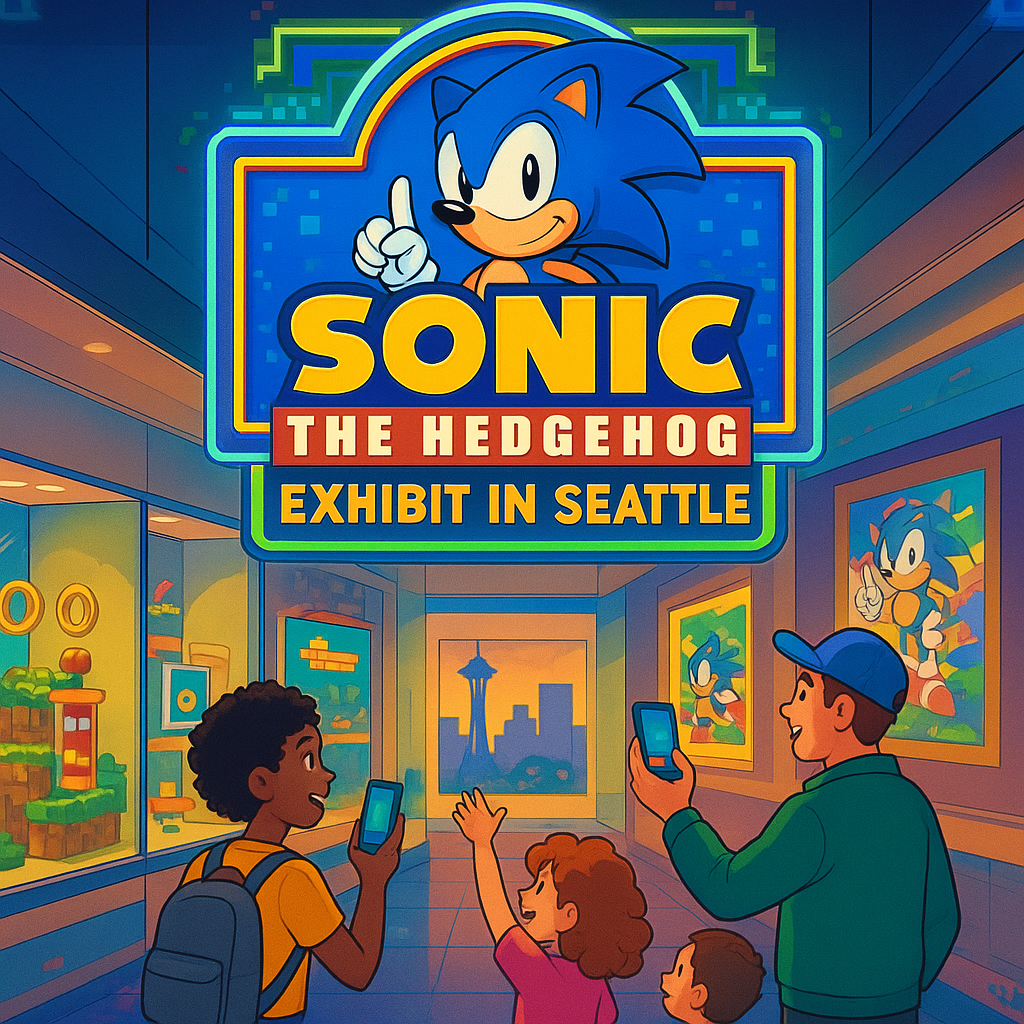
What makes the Seattle angle interesting is the setting. A weekend run creates urgency. You do not get a long museum season or a permanent installation. You get a short window, and that changes how people experience it. They arrive with intent. They bring kids, partners, old friends, and a few carefully guarded childhood memories. The exhibit becomes less like a showroom and more like a gathering.
And yes, that matters. Human creativity should serve more than noise. A well-built exhibit can do that quietly, by honoring work, memory, and play without turning everything into a sales pitch. That is a decent standard. It is also a rare one.
Why does Sonic's 35-year history still matter?
Because most characters do not last this long. Simple.
Sonic has survived across hardware shifts, design overhauls, company pivots, and the brutal churn of internet mockery because the franchise kept touching a few things people actually care about: motion, music, competition, style, and a clear visual identity. The hedgehog is not subtle. He does not need to be. That blunt design is one reason he still works in an exhibit format.
Here is the kicker: longevity in games is not the same as quality in every era. Sonic has had highs, lows, and some releases that fans mention with a sigh and a wince. But that unevenness is part of why the Seattle exhibit is worth talking about. It does not just praise the winners. It shows the whole arc, and that is healthier than pretending every chapter was gold.
- Cultural continuity: Sonic ties the 1990s to the present without needing a lecture.
- Fan participation: Fan art gives the franchise a second life outside corporate control.
- Cross-generational appeal: Parents who played on Genesis can bring kids who know the movies or newer games.
- Design literacy: Visitors get to see how pixel art, animation, box art, and branding evolved.
- Community memory: Events like this preserve the social side of gaming, not just the products.
Most tech and entertainment coverage talks about numbers. Units sold. Box office. Downloads. Fine. But those figures only explain part of the story. A character becomes durable when people keep making meaning around it. That is not corporate magic. That is human behavior.
I have reviewed enough media products to be suspicious of hype cycles. When a franchise still produces art, commentary, remixes, and display-worthy nostalgia after 35 years, that is not an accident. It means the character has become a container for memory and identity. That is a stronger thing than a quarterly sales pitch.
There is also a stewardship angle here, and it is not heavy-handed. If culture is a gift, then preserving it well is part of responsible use. You do not have to call it sacred to treat it with care. A good exhibit respects creators, fans, and the ordinary people who found joy in a cartridge, a soundtrack, or a Saturday afternoon run through Green Hill Zone.
For more context on how game characters age in public memory, see reporting from Polygon's Sonic coverage and retrospective lists from GameSpot. Both make the same broad point: Sonic is not just a mascot, he is a recurring argument about what video games can be.
How do you get the most out of a Sonic exhibit visit?
Do not rush it. That is rule one.
A good exhibit visit is not about checking a box and leaving. It is about reading the room, looking at the objects, and noticing the details that most people miss. If the Seattle run includes fan art, original design references, timeline panels, and maybe some hands-on displays, then the smart move is to slow down and compare old Sonic to new Sonic. The differences tell you more than any placard will.
- Start with the timeline. Read the history panels first. They set the frame, and without them the art can feel random. Sonic's path from 1991 to now covers more than games, so you need the skeleton before the skin.
- Study the fan art closely. This is the real treasure in many modern exhibits. Fan work shows what people absorb, distort, admire, and reinterpret. Some pieces are playful. Some are sharp. Some are better than official promotional art, and yes, that stings a little.
- Compare eras, not just images. Look at Genesis-era illustrations next to modern 3D interpretations. Note the speed lines, the pose language, the color palette, and how Sonic's attitude changes with each era.
- Listen for the soundtrack in your head. Music is half the franchise. Maybe more. If you grew up with Sonic, the sound design probably lives rent-free in your memory. That's not nostalgia fluff. That's durable design.
- Read the captions skeptically. Exhibits are curated. They choose what to say and what to omit. Ask what is missing. Were the rough years mentioned? Are fan communities treated as contributors or as decoration? The best exhibits do not hide the messy bits.
- Bring someone younger or older. Cross-generational viewing makes the event better. One person remembers blast processing ads; another knows the character through film or streaming-era memes. The conversation is the point.
- Take notes or photos with restraint. Capture the pieces that matter, but do not turn the experience into a phone exercise. The best memory aid is still the one between your ears.

I have found that the most useful event advice is boring. Stand still. Read the signs. Ask what the object is doing there. What you get back is usually better than whatever the event flyer promised.
If the exhibit offers interviews, printed notes, or scans of concept art, treat those like primary sources. They are. For a wider view on Sonic history and design, Sega's own anniversary pages and press materials are useful starting points, while long-form history coverage from VG247 often gives helpful context on how the series keeps changing without fully losing itself.
And yes, bring patience. Crowds move slowly at exhibits like this. Good. Slowness helps people notice details. Efficiency is not always the highest good, despite what every productivity app on earth tries to whisper at you.
Sonic vs. the competition: how does the franchise compare?
Not every mascot survives this long.
The obvious comparison is Mario, because of course it is. Nintendo's plumber is the bigger commercial giant, the cleaner icon, the safer bet. Sonic, by contrast, lives on edge. He is faster, louder, more style-driven, and sometimes a mess. That tension is part of his charm and part of why exhibits about Sonic feel different from museum-style displays about more polished franchises.
| Category | Sonic the Hedgehog | Biggest Competitor: Mario |
|---|
| Core identity | Speed, attitude, music, motion | Precision, polish, platforming, broad appeal |
| Visual style | Angular, high-contrast, bold colors | Clean, familiar, approachable |
| Fan culture | Highly expressive, art-heavy, remix-friendly | Massive, but often more mainstream |
| Best-known legacy | Sega Genesis era, character branding, fan devotion | Console dominance, long-running platform legacy |
| Exhibit appeal | Strong nostalgia plus fan art and design evolution | Strong history, but less chaotic cultural drama |
| Risk factor | Uneven game quality over time | Safer brand consistency |
| Cultural tone | Rebellious, weird, energetic | Friendly, stable, universal |
The table says what the crowd already knows. Sonic is messier, and that messiness is useful. It gives curators and fans something to discuss besides corporate polish. When a character has visible scars, the exhibit has texture. Without texture, you get a lobby display and a press release. Nobody needs more of those.
Here is the practical difference. Mario represents long-term consistency. Sonic represents reinvention under pressure. Those are not the same thing. Mario fits neatly into a display case. Sonic kicks the case open and runs circles around it, then dares you to keep up.
I am not saying one is better. I am saying they serve different purposes. That matters in an exhibition setting because the audience is not just looking for facts. They are looking for a story about persistence, taste, and how fandom keeps a property alive when the official product stumbles. Sonic's fandom has always been loud about what it loves and what it hates. That honesty is healthy, even if it gets noisy.
If you want a broader market view on how long-running entertainment properties keep value through audience participation, coverage from The Verge's gaming section is useful, especially when it covers the overlap between game design, fandom, and business reality. Same for Nintendo's official history materials when you want a contrast in brand tone.
The honest takeaway? Sonic's competition is not just other mascots. It is forgetfulness. Exhibits like Seattle's fight that off by making memory visible.
What mistakes do people make when attending or judging Sonic exhibits?
They expect a shrine. Wrong model.
A Sonic exhibit is not there to confirm every childhood feeling. It is there to organize artifacts, fan work, and history into something coherent enough to think about. People often show up either too cynical or too sentimental. Both approaches miss the point.
- Mistake 1: Treating the exhibit like a merchandise aisle. Sure, there may be collectibles. But if you only look for stuff to buy, you will miss the historical and artistic pieces that actually matter.
- Mistake 2: Assuming fan art is secondary. It is not. In many franchises, fan art is the record of continuing relevance. Fans do not wait for permission to create meaning.
- Mistake 3: Ignoring the bad years. Every long-running series has them. Pretending otherwise turns history into fluff. Sonic survived because people kept caring even when the output was uneven.
- Mistake 4: Judging the exhibit only by big-name nostalgia. The small details are usually the point: sketch variations, regional art, packaging, and side-by-side comparisons.
- Mistake 5: Assuming cultural preservation is boring. It is only boring if you think memory is optional. It is not.
Let's be real, a lot of mainstream commentary on game history is lazy. It says, "Remember this?" and stops there. A decent exhibit does more. It shows why a thing was made, how it changed, who kept it alive, and what that says about the people around it.
I also think people underestimate how moral the act of preservation can be. Not moral in a preachy sense. Moral in the sense that careful remembering resists waste. It says this work had value, those fans mattered, and the craft deserved better than disposal. That is a very old idea, and a very sane one.
If you want more grounded history and design context, check coverage from Encyclopaedia Britannica for the franchise's origins, then compare it with long-running retrospective pieces from IGN's Sonic game hub. The contrast between origin story and fan memory is where the interesting stuff lives.
Frequently Asked Questions
Why does Sonic still attract fans after 35 years?
Because the character combines speed, style, and clear visual identity with a fan culture that never really quit. Sonic also appears across games, film, merchandise, and art, so the brand keeps showing up in new forms. That matters more than people think.
Is the Seattle exhibit only for longtime Sega fans?
No. Longtime fans will get the deepest hit of nostalgia, but newer visitors can still appreciate the artwork, history panels, and design evolution. In fact, newcomers often notice the fan art and presentation details more clearly because they are not trapped in their own memory loops.
Why is fan art such a big part of Sonic culture?
Because Sonic fans have always been active creators. The franchise's style invites remixing, parody, redesign, and personal interpretation. Fan art keeps the character moving when official releases slow down. That is not a side note. It is part of the franchise's survival.
What makes Sonic exhibits different from ordinary game displays?
They usually have more visual energy and more fan-made material. Sonic is a character built on motion and attitude, so exhibits often reflect that with bold layouts, timeline comparisons, and community work. The result feels less like a cabinet of relics and more like a conversation.
Final Thought
Sonic lasts because he still means something.
That is the plain answer, and it is enough. A character born in the 16-bit era should have faded by now, but Sonic keeps finding new rooms to run through because people keep giving him attention, criticism, art, music, and memory. The Seattle exhibit is just one weekend stop, yet it says a lot about how culture survives: not by accident, but by repeated acts of care.
I think that is the part worth keeping. Not the merch, not the hype, not the cheap nostalgia hit. The care. Fans show up, artists keep drawing, curators gather the pieces, and a city hosts the result for a few days. That is how a fictional hedgehog becomes more than a mascot. It becomes a shared object of memory, made useful by ordinary people who decided it still deserved a place in the room.
That seems like a better standard for technology culture too. Build things well. Keep what matters. Let the rest go.