SpaceX could be heading for one of the largest public listings ever. A confidential IPO filing, if the report holds up, would not just be another Wall Street...
SpaceX could be heading for one of the largest public listings ever. A confidential IPO filing, if the report holds up, would not just be another Wall Street event—it would be a hard test of valuation, governance, and whether public markets are still capable of pricing moonshot companies without getting drunk on the story.
Key Takeaways:
- A confidential IPO filing lets SpaceX explore public markets without full early disclosure.
- A reported $1.75 trillion valuation would place the company in rarefied air, above most public firms.
- The real questions are not rockets. They are cash flow, governance, and dilution.
- SpaceX’s Starlink business may matter as much as launch revenue.
- Investors should separate engineering excellence from fantasy pricing.
What is the SpaceX IPO filing?
A SpaceX IPO filing means the company has reportedly begun the process of going public, but in a confidential way, which is standard for large private firms that want room to negotiate terms before the market starts shouting. Confidential filings allow a company to share financials and risk details with regulators first, then go public later if the timing and pricing look acceptable.
Frankly, that matters.
Most headlines fixate on the shiny number—$1.75 trillion, if the report is accurate—but valuation is not a medal for being famous. It is the market’s estimate of future cash flows, risk, and scarcity, all wrapped into one very human guess. When I analyze tech listings, the first mistake people make is treating a big valuation as proof of value. It is not. It is only a price, and prices can be silly when the room is full of enthusiastic buyers.
SpaceX is different from a normal rocket company. It combines launch services, satellite broadband through Starlink, and a deep stack of manufacturing capability, plus a reusable rocket system that has cut launch costs more effectively than nearly anyone expected a decade ago. That gives the company several possible revenue engines. It also means the IPO would not be about rockets alone. It would be about whether investors believe SpaceX is a transportation firm, a telecom firm, a defense-adjacent infrastructure company, or some strange hybrid that does three jobs at once.
Here’s the kicker: public markets do not pay for genius in the abstract. They pay for earnings, margins, growth, and credible control over execution. SpaceX may have the engineering edge, but the market still wants the boring stuff—audited numbers, governance, legal clarity, and a path to returns that do not depend on cosmic optimism. For a company like this, stewardship matters too. Big technological gifts should serve the common good, not just a tiny circle of insiders. That is not moralizing; it is basic sanity.
For broader context on how investors should think about high-profile tech narratives, see CNBC’s coverage of Starlink expansion, Reuters Technology, and the SEC’s own EDGAR filing system for how disclosure works in practice.
Core benefits and importance
A SpaceX IPO would matter for reasons that go beyond ticker symbols and trading-day theatrics. If it happens, the listing could reshape how markets value private aerospace, broadband infrastructure, and dual-use industrial technology. It could also expose just how much of Silicon Valley’s valuation logic is built on narrative rather than cash.

- Liquidity for insiders and early holders. An IPO creates a real market for shares, which matters to employees, early investors, and anyone who has been sitting on paper wealth for years. That said, liquidity is not the same as wisdom. People confuse the two all the time.
- Price discovery. Private valuations can drift for years in a fog of negotiated funding rounds. A public listing forces the market to assign a daily price, which can be brutal but useful.
- Capital access. Public companies can raise money more efficiently, though they also face harsher scrutiny and more paperwork. No free lunch.
- Validation of Starlink. If investors buy into the telecom-like cash potential of satellite broadband, that could justify a huge share of the valuation. But satellites are expensive, regulated, and vulnerable to competition.
- Signal for aerospace. A major IPO would tell the market that space infrastructure is no longer a niche experiment. It is industrial policy territory, defense adjacent, and strategically serious.
The contrarian view is worth hearing. A giant valuation can actually be a problem, not a prize. The higher the expectation, the less room there is for ordinary performance. If SpaceX prices at levels that imply near-perfection, then even very good results may disappoint. Investors hate that. They call it “multiple compression” later, after the damage is done.
There is also a larger ethical angle, and it is not fluffy nonsense. Technologies that shape communication, transport, and national capacity should be built with accountability. A company that can move satellites, support emergency connectivity, and lower launch costs has a duty to use that power well. Human ingenuity is a gift, but gifts are for service, not vanity. That principle is old, and still useful.
For a sober read on the financial mechanics of public offerings, the SEC’s IPO guide at Investors.gov is worth your time. For market context, The Wall Street Journal Markets often frames valuation reality better than most breathless coverage.
Step-by-step: how to think about a SpaceX IPO
If you want to assess this filing like an adult, not a fan account, use a simple process. The headlines will be loud. The numbers need to be louder.
- Separate the filing from the rumor. A confidential filing is not the same as a priced offering. It means SpaceX is testing the waters, not handing out stock certificates.
- Check what the valuation actually includes. A reported figure may reflect secondary sales, private market chatter, or optimistic estimates, not the final IPO range.
- Look at the revenue mix. Launch services matter, but Starlink may be the bigger story if it scales. Ask how much revenue is recurring, how much is one-off, and how much depends on customer concentration.
- Study margins and capital intensity. Rocket work is expensive. Satellite networks are expensive. Manufacturing is expensive. The key question is whether scale creates durable free cash flow or just bigger bills.
- Inspect governance. Public investors will care about board structure, voting control, disclosure, and founder influence. A lot. Maybe more than the product geeks like to admit.
- Watch the lockup and dilution terms. Early holders, employees, and the company itself may all have different incentives. When I review growth listings, dilution math is where enthusiasm goes to die.
- Compare against public peers. Not because SpaceX is ordinary—it isn’t—but because valuation without a comparator is just noise. Check defense, satellite, telecom, and launch-adjacent names, then see what the market is paying for actual earnings.
- Ask what problem the IPO solves. Is this about raising capital, creating liquidity, funding Starship, or meeting investor demand? The answer changes the entire interpretation.

If you want a grounded view of satellite connectivity economics, the IEA’s work on data transmission networks gives useful infrastructure context, while NASA remains a reminder that space hardware is still hard, expensive, and unforgiving. Also useful: Britannica’s overview of rocket systems for readers who need the basics without the marketing glitter.
The practical truth is simple. If SpaceX goes public, the question is not whether it is impressive. Of course it is. The question is whether the public is buying a durable business or a polished story with some real steel underneath. Those are not the same thing.
Comparison table: SpaceX vs. its biggest public-market competitor
SpaceX does not have a clean direct public equivalent, so the closest practical comparison is with Rocket Lab as a public space company benchmark. It is smaller, simpler, and much easier for markets to price. That is precisely why the comparison helps.
| Metric | SpaceX | Rocket Lab | Why it matters |
|---|
| Business model | Launch, Starlink, spacecraft, defense-adjacent infrastructure | Launch, spacecraft systems, space services | SpaceX is broader and harder to value |
| Revenue profile | Larger, diversified, partly recurring via Starlink | Smaller, more concentrated | Diversification can support valuation |
| Profitability visibility | Not fully public | Public filings show financial detail | Public investors prefer clarity |
| Capital intensity | Very high | High | Space hardware eats cash |
| Market perception | Premium narrative, premium pricing | More grounded, lower valuation base | Valuation multiples diverge fast |
| Competitive moat | Reuse tech, scale, launch cadence, Starlink network | Niche engineering and mission focus | Moats matter, but are not invincible |
| Investor risk | Governance, valuation, execution | Size, concentration, growth pace | Different flavors of pain |
The table tells the story.
SpaceX is not just a launch provider, and that is why the valuation could stretch so far. If Starlink becomes a major broadband cash engine, then the market may treat SpaceX more like an infrastructure platform than an aerospace contractor. That would explain the oversized number. But public markets are not obligated to agree. They can be brutally unimaginative when earnings wobble.
A public competitor like Rocket Lab gives investors a cleaner read on what the space sector can support in a listed form. It has more transparent financials, but less scale and less strategic breadth. SpaceX may deserve a premium. Fine. A gigantic one, though, requires proof, not faith.
For comparison shopping across public-company disclosures, see Rocket Lab’s investor relations site and its SEC filings. That is where the real numbers live, not on social media threads.
Common mistakes to avoid.
The first mistake is worshiping the headline valuation.
A giant number sounds thrilling, but it tells you almost nothing unless you know the assumptions behind it. Was the figure based on private secondary trades, an optimistic forecast, or some banker’s model with heroic margins? Most tech coverage skips that part because precision is less exciting than spectacle. That habit is lazy.
The second mistake is treating SpaceX like a pure-play rocket stock.
That is wrong. Launch matters, sure, but Starlink may dominate the long-term debate. If you ignore the broadband side, you are missing the point. If you ignore the launch side, you are missing the moat. You need both.
The third mistake is assuming public markets will reward technical brilliance automatically.
They won’t. Public shareholders want governance, accountability, and a path to cash generation. I have seen plenty of excellent products fail to support ugly stock performance because the financial structure was a mess. Engineering excellence is necessary, but it is not enough. Never has been.
The fourth mistake is confusing national importance with investment merit.
A company can be strategically vital and still overpriced. Those are separate questions. Investors mix them because it feels patriotic or exciting, but the market does not hand out medals for sentiment. It prices risk.
The fifth mistake is skipping competitor benchmarks.
If a company’s valuation is truly special, that should show up in comparison with peers on revenue, margins, growth, and control of the customer relationship. Without that, the conversation becomes fog.
The final mistake is forgetting the human side.
Technology should serve people, not turn them into spectators paying for spectacle. That is where a more grounded worldview helps. Innovation is a real good, but it is meant for order, usefulness, and the common benefit. When markets lose sight of that, they eventually pay for the confusion.
For a good reality check on public-company disclosure, revisit the SEC’s IPO guidance at this guide. If you want to see how serious financial reporting looks after listing, browse EDGAR and compare it with the rosy projections in tech press coverage. The contrast is often embarrassing.
Frequently asked questions
Is SpaceX really filing for an IPO?
According to the report, SpaceX has filed confidentially, which means the process may be underway but is not fully public yet. That is not a final offer, and it can still change or stall.
Why would SpaceX go public now?
There are several plausible reasons: raising capital, creating liquidity for insiders, funding expansion, and giving the company a more permanent financing base. If Starship and Starlink continue to demand enormous investment, public equity becomes a practical tool.
How could SpaceX be worth $1.75 trillion?
That kind of valuation would likely depend on belief in huge Starlink revenue, durable launch dominance, and long-term strategic value. It would also require very strong assumptions about growth and margins. In plain English, it would take a lot of future success to justify today’s number.
What risks should investors watch?
Watch governance, dilution, execution risk, regulatory pressure, competition, and the challenge of turning heavy-capex space infrastructure into stable free cash flow. Those are the real hazards. Rockets are only the visible part.
Final thought
SpaceX may be one of the most important industrial companies on earth, and that is exactly why an IPO should be judged with discipline instead of awe. A public listing would force the company into a harsher kind of truth, where brilliant engineering meets quarterly reporting and hard capital markets. That is healthy.
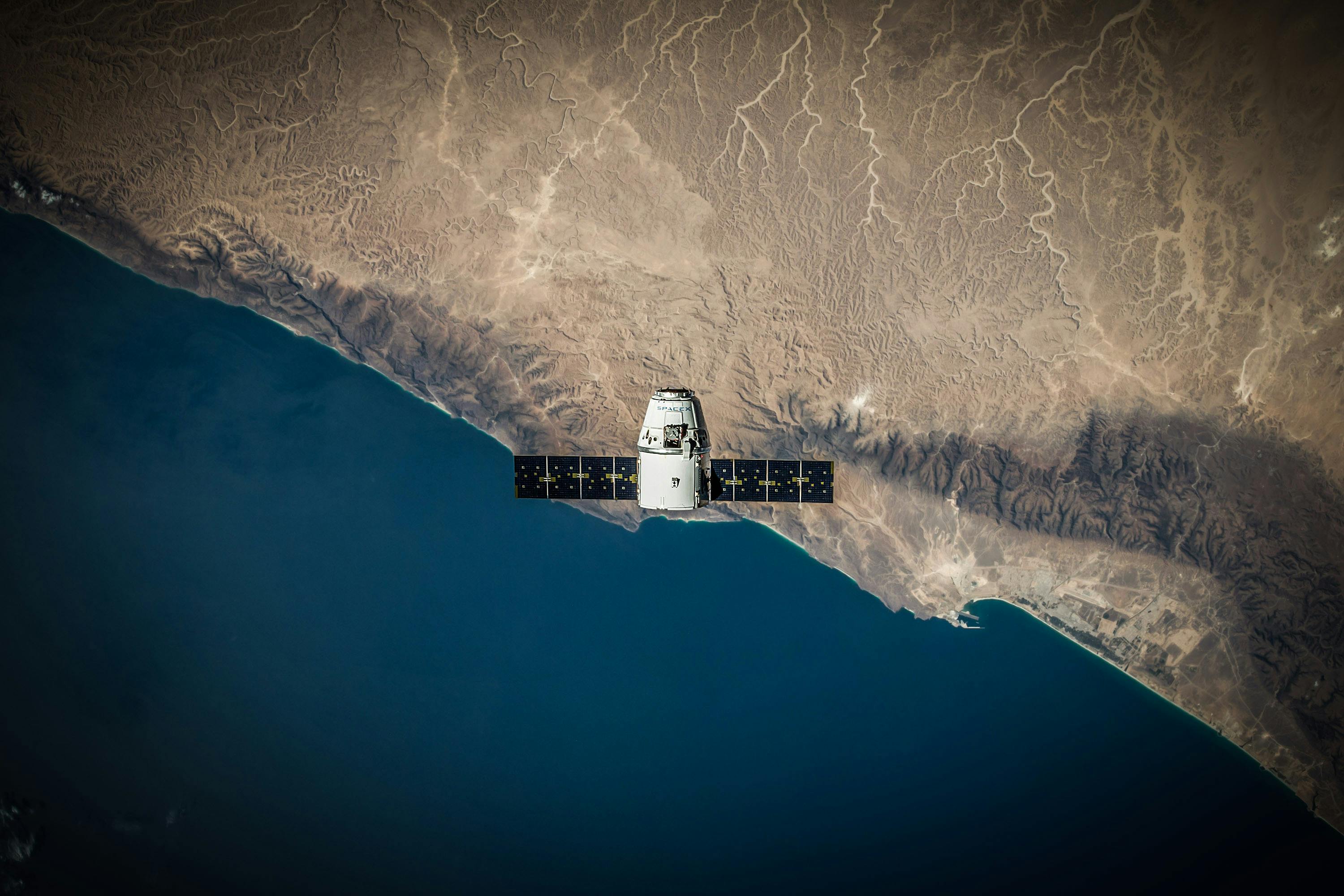
If the reported valuation proves real, investors will have to decide whether they are buying a business with durable cash generation or merely paying for the privilege of saying they owned the future. I know which side I trust more. Useful technology, when ordered rightly, should serve people first, enrich a few second, and never pretend that scale alone is virtue. That old principle still keeps the books honest.