TerraPower’s reactor matters because it tackles the one thing AI data centers keep tripping over: steady, carbon-free power at huge scale. The pitch is...
TerraPower’s reactor matters because it tackles the one thing AI data centers keep tripping over: steady, carbon-free power at huge scale. The pitch is simple, and a little audacious. Pair a fast-reactor design with serious heat storage, and you get electricity that can serve round-the-clock loads without treating the grid like a punching bag.
Key Takeaways- AI data centers need firm power, not just cheap power.
- TerraPower’s Natrium design pairs a sodium-cooled reactor with molten-salt energy storage.
- Storage helps the plant shift output to match demand peaks, which matters for data center loads.
- The real test is not the demo. It is licensing, construction, fuel supply, and operating cost.
- Nuclear can fit AI growth if the industry treats it like infrastructure, not a slogan.
What is TerraPower’s reactor?
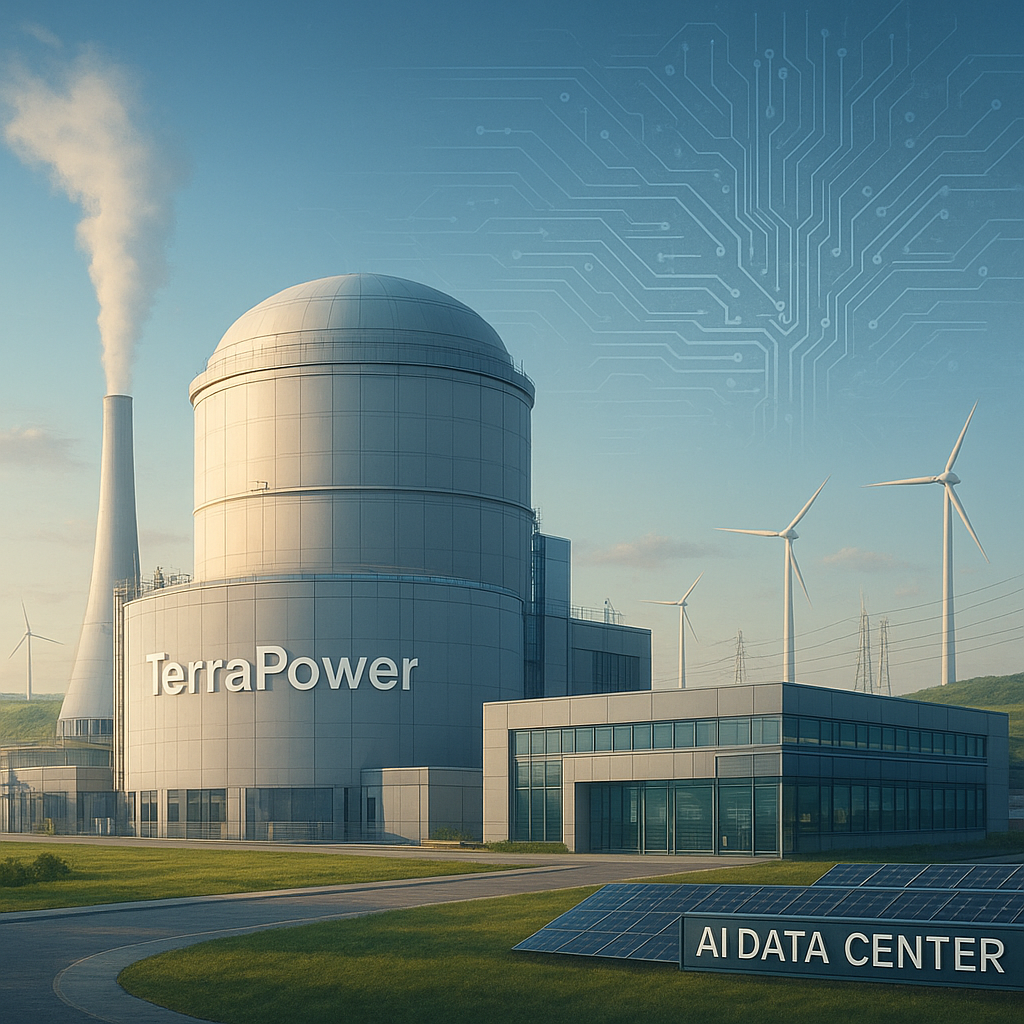
TerraPower’s flagship design is the Natrium reactor, a sodium-cooled fast reactor paired with a molten-salt thermal energy storage system. That combo is the whole trick. The reactor makes heat, the storage tank holds excess heat, and the plant can then send more electricity when demand spikes. Frankly, that is a cleaner idea than pretending solar panels and batteries alone can babysit a giant AI campus around the clock.
The reactor itself is not a cute lab toy. It is a utility-scale power plant aimed at replacing retiring coal capacity and serving heavy industrial loads. In practice, that means data centers, manufacturing, and the sort of nonstop electrical appetite that grows when companies keep adding GPUs by the warehouse-load. I have reviewed enough tech infrastructure claims to know that “clean” and “reliable” are usually not the same thing. TerraPower is trying to make them less incompatible.
Here’s the kicker. AI data centers do not just need megawatts. They need firm capacity, predictable ramping, and low-carbon electricity that won’t disappear when clouds roll in or gas prices spike. Natrium’s storage gives it a shot at load following, which is unusual for nuclear. Most reactors run best as baseload workhorses. This one is designed to be a bit more flexible.
If you want the sober version, nuclear is not magic. It is engineering, regulation, and long timelines. Still, the appeal is obvious. The digital economy keeps growing, and someone has to power the silicon cathedral without turning every utility bill into a hostage note. Used well, this is stewardship in the plain sense: making serious power serve people, not the other way around.
How the reactor works
TerraPower’s design uses a sodium-cooled fast reactor instead of the more common light-water approach. Sodium transfers heat efficiently, and the fast reactor spectrum can improve fuel use. That sounds fancy, and it is, but the plain-language point is better: the plant can get very hot, very efficiently, and hand that heat to a storage system.
The molten-salt storage acts like a thermal battery. When electricity demand is lower, the plant can store heat. When demand rises, that stored heat helps generate more electricity. This matters because data centers hate unpredictability. Workloads surge, cooling loads spike, and operators want a power source that can keep up without a drama parade.
Most people hear “nuclear” and picture a fixed-output plant. That mental picture is out of date. TerraPower is trying to make a nuclear unit behave more like a dispatchable grid asset. Not perfectly, mind you. Nothing in power systems is perfect. But the design aims to bridge a real gap between round-the-clock digital loads and the messy physics of generation.
If you are comparing this with conventional gas, the main advantage is carbon and fuel stability. If you are comparing it with renewables, the main advantage is firmness. Neither comparison is fair on its own, of course. The grid needs a mix. The problem is that AI growth is moving faster than the usual planning cycle, and that is why nuclear is suddenly back in the conversation.
Core benefits and why it matters
- 24/7 power stability: AI training clusters cannot afford frequent interruptions. A plant that can provide firm output has obvious appeal.
- Peak shifting: Storage lets the plant send more electricity during high-demand periods, which is useful when data center loads swing hard.
- Lower carbon intensity: Compared with fossil generation, nuclear offers a much cleaner electricity profile over the full operating cycle.
- Land efficiency: One compact site can produce a large amount of power. That matters when you are not trying to sprawl over half a county.
- Grid support: A flexible nuclear plant can ease pressure on local transmission and reduce dependence on gas peaker plants.
- Industrial pairing: Data centers, desalination, hydrogen, and manufacturing all need reliable heat or power, and nuclear can serve as a backbone.
Let’s be real. A lot of “AI infrastructure” talk is just a hunt for cheaper electricity. Nothing wrong with that. But the better argument is resilience. If digital systems are becoming essential to commerce, medicine, education, and public services, then their power supply deserves the same seriousness we expect from water lines or bridges. That is basic prudence.
I also like one understated point: nuclear power has long operating lives. That makes it a better fit for infrastructure thinking than the quarterly churn of software hype. You build it once, maintain it carefully, and expect it to serve for decades. That is a healthier model than building digital castles on fuel volatility and hoping for the best.
Step-by-step: how this kind of plant fits AI data centers
- Start with the load profile. Before anyone talks reactors, the operator needs to measure actual demand, including training bursts, inference loads, and cooling overhead. I have seen too many power plans built on fantasy numbers.
- Match firm capacity to critical load. The plant should cover the base demand that absolutely cannot fail. Extra load can still come from the grid or other sources.
- Use storage for peaks. The thermal storage is what makes the design interesting. It helps the plant send more power when the workload spikes.
- Plan interconnection early. Transmission is where good ideas go to die if you ignore it. You need lines, permits, and utility coordination long before the ribbon cutting.
- Design for redundancy. Data centers still need backup systems, because no sane operator puts every egg in one basket.
- Account for fuel and licensing timelines. Nuclear projects do not move at startup speed. If your AI growth plan depends on instant availability, you are already in trouble.
- Treat water, cooling, and siting as first-class problems. The plant and the data center both need thoughtful siting. Physics does not care about slides.
When I look at these projects, the pattern is always the same. The technology is only half the battle. The other half is boring stuff: regulators, civil works, supply chains, and operators who know how to keep a complex machine from becoming a very expensive headache.
Comparison table: TerraPower Natrium vs. natural gas plant
| Feature | TerraPower Natrium | Natural Gas Plant |
|---|
| Carbon emissions | Very low during operation | High during operation |
| Fuel price exposure | Lower, but fuel supply chain still matters | High and volatile |
| Output flexibility | Improved by thermal storage | Strong, especially for ramping |
| Construction complexity | Very high | High, but more familiar |
| Public perception | Mixed to skeptical | Familiar, but climate pressure is rising |
| Best fit | Long-term firm clean power | Fast deployment and dispatch |
The comparison is not meant to crown a winner. It is meant to show tradeoffs. Gas is easier to build in many places, and utilities know how to run it. Nuclear offers better carbon performance and long-term fuel resilience, but it demands patience and discipline. That’s the part corporate pitch decks tend to skip.
Common mistakes to avoid
- Assuming nuclear solves everything. It doesn’t. You still need grid upgrades, cooling strategy, and demand management.
- Ignoring timelines. If a project needs power next quarter, a reactor is not your answer. Period.
- Treating storage as a magic wand. Thermal storage helps, but it does not erase all operational constraints.
- Overhyping AI demand. Some load forecasts are inflated because everybody wants to sound important. I’ve seen plenty of that.
- Forgetting local consent and safety. Communities are not props. If a project cannot respect residents, it deserves pushback.
Here’s what nobody tells you: the best tech projects are the ones that fit real human limits. Not just engineering limits. Social limits. Economic limits. Moral limits. A power plant that serves data centers should also serve the common good, not just the appetite of a few companies chasing inference margins.
Frequently asked questions
Q: What makes TerraPower’s reactor different?
A: The key difference is the sodium-cooled fast reactor paired with molten-salt thermal storage. That storage adds flexibility, which is useful for varying electricity demand.
Q: Can nuclear power really support AI data centers?
A: Yes, if the project is sized and sited correctly. AI facilities need firm, round-the-clock electricity, and nuclear can provide that better than many intermittent sources.
Q: Is TerraPower’s design commercial today?
A: Not at full scale for broad commercial use yet. It still faces licensing, construction, and supply chain hurdles, which is typical for first-of-a-kind nuclear systems.
Q: Why not just use gas or batteries?
A: Gas is easier to deploy but has higher emissions and fuel volatility. Batteries help with short-duration storage, but they are not a full substitute for long-duration firm power.
Final thought
AI is hungry. Power systems are stubborn. The future belongs to the companies that stop pretending those two facts will sort themselves out. TerraPower’s reactor is interesting because it treats electricity like infrastructure, not theater. That is the right instinct.
I’m skeptical by habit, and you should be too. Big claims in energy usually arrive wearing polished shoes and carrying a pile of assumptions. Still, this one deserves attention because it respects reality. It respects the grid. It respects the need for stable power. It also hints at a better rule for technology: build things that can bear the weight of real life, and do it in a way that serves people well.
That’s not flashy. It’s just serious.