Fitbit still makes sense. Not because it is trendy, and not because every spec sheet screams revolution, but because it keeps the basics intact: reliable...
Fitbit still makes sense. Not because it is trendy, and not because every spec sheet screams revolution, but because it keeps the basics intact: reliable activity tracking, decent sleep data, and a battery that usually lasts longer than a day and a half. If you want a wearable that watches your health without turning your wrist into a tiny distraction machine, Fitbit remains worth a hard look.
Key Takeaways:
- Fitbit models are best for people who want simple health tracking, not smartwatch clutter.
- The right choice depends on display, battery life, GPS, sleep features, and whether you want a budget tracker or a more capable smartwatch.
- Fitbit’s app is still one of the easiest ways to review steps, heart rate, sleep stages, and workouts.
- If you want deep app support or a flashy watch, Apple Watch and Garmin often do more.
- If you want something practical, quiet, and useful, Fitbit is still very much in the running.
What is a Fitbit model, exactly? It is a wearable fitness tracker or smartwatch built to measure everyday health data, then present it in a format normal humans can use without a manual and three coffee breaks. That sounds obvious, but most tech reviews bury the point under shiny nonsense. I’ve reviewed enough wearables to know the difference between a device that gets worn and one that ends up in a drawer.
Fitbit’s line-up is not one thing. It includes slim bands like the Inspire series, midrange trackers like the Charge series, and fuller smartwatches such as the Sense and Versa family. Each one targets a different kind of user. That matters more than the marketing copy suggests. A runner, a desk worker, a sleep tracker, and a parent trying to keep tabs on daily movement do not need the same gadget.
Here is the kicker. Most people do not use 80 percent of a wearable’s features. They check steps, glance at heart rate, maybe look at sleep, and ignore the rest. So the real question is not "which Fitbit has the most features?" It is "which Fitbit fits your life without becoming another thing to manage?" That is the honest standard, and it keeps the whole buying decision from drifting into gadget theater.
Fitbit still has a place because it stays focused on health basics, and because the company has spent years refining its app, alarms, reminders, and battery behavior. That is not glamorous. It is useful. There is a difference, and the difference matters when technology is supposed to serve the person instead of the other way around. Human dignity first. Fancy widgets second.
What is Fitbit and Which Models Matter?
Fitbit is a consumer electronics brand centered on wearable health tracking. The core idea is straightforward: measure movement, heart rate, sleep, and workout activity, then turn that data into plain-English feedback. Some models also add built-in GPS, skin temperature tracking, ECG, stress tools, and basic smartwatch features like notifications and contactless payments.
The line-up has a simple ladder. The Fitbit Inspire models are the compact, budget-friendly option. The Fitbit Charge series sits in the sweet spot for most users, because it balances size, display quality, battery life, and features. The Fitbit Versa family is a more watch-like device with a larger screen and more app-like behavior. The Fitbit Sense models aim at people who want more health sensors and a better view of stress and wellness metrics.
I think the Charge line usually gets the best balance for ordinary buyers. That is not because it is the prettiest. It is because it avoids the trap of doing too much poorly. Most people want accurate-enough tracking, easy charging, and a screen they can read without squinting. That is the real product. The rest is ornament.
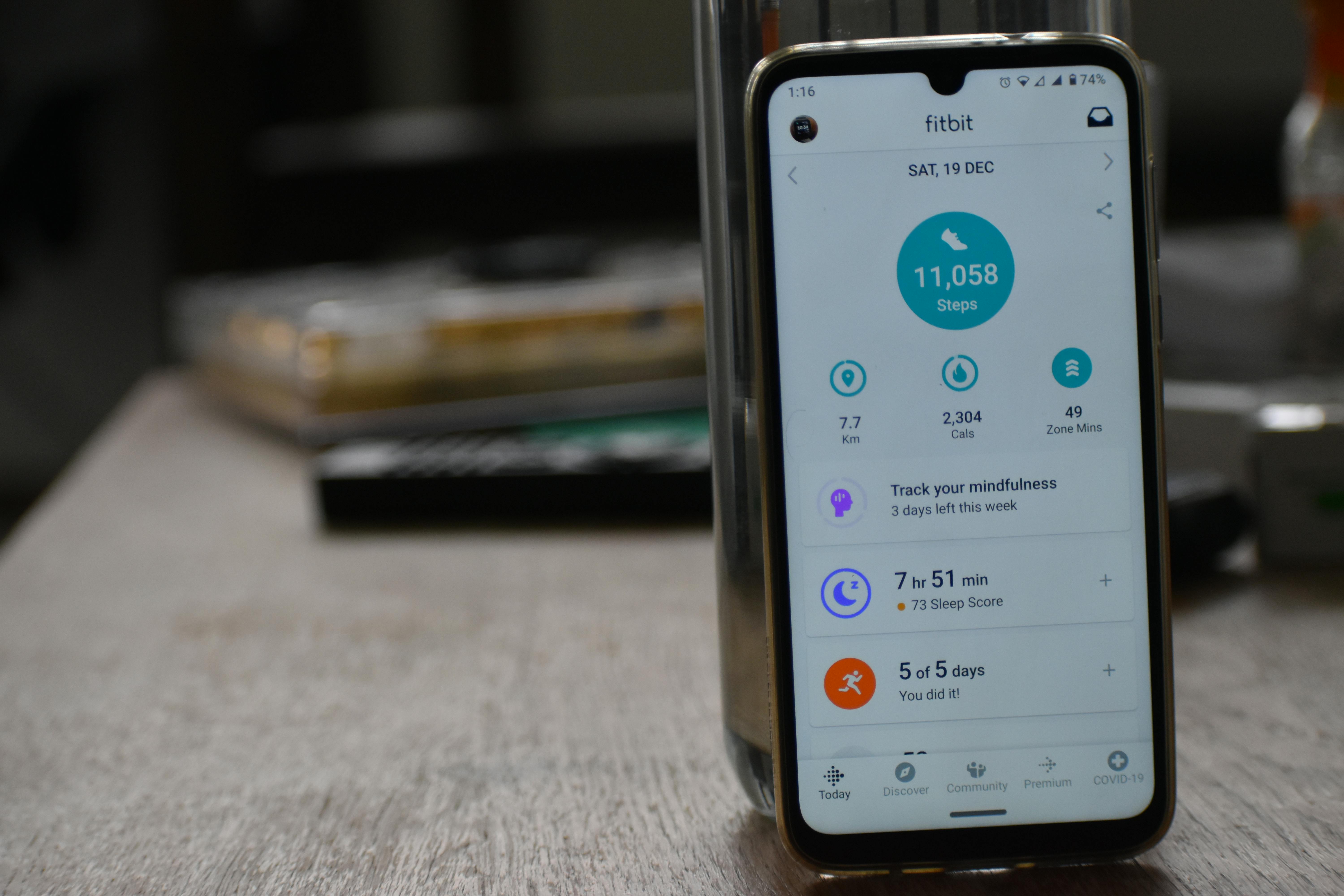
Fitbit’s software matters just as much as the hardware. The Fitbit app organizes daily metrics in a way that does not punish you for being a normal person with a job, errands, and a life. It covers steps, active zone minutes, sleep score, heart rate trends, menstrual health, and weight trends if you want to log them. For many users, that is enough.
Of course, there are limitations. Fitbit devices are not the king of third-party apps, and they are not the best choice if you want the sprawling app store behavior of an Apple Watch. They are also less satisfying than some Garmin watches for serious athletes. But that criticism needs context. Most buyers are not training for triathlons. They are trying to walk more, sleep better, and keep an eye on their health without buying a mini computer they barely use.
If you want a broader sense of how wearables fit into daily life, useful comparisons can also be found in reports like WIRED’s fitness tracker roundups and broader health-tech coverage from CNET. Those sources reinforce what the specs already suggest: the best device is the one you will actually wear.
Core Benefits and Why Fitbit Still Matters
Fitbit still survives because it solves plain problems well. That is rare enough to be notable. Most tech brands keep adding extras while quietly making the basics worse, like a chair that comes with cupholders but ruins your back.
- Simple daily tracking: Fitbit makes it easy to see steps, heart rate, sleep, and workouts without wading through junk.
- Good battery life: Many Fitbit models last several days, and some do far better than full-featured smartwatches.
- Comfortable design: Thin bodies and light straps make them easier to wear all day and night.
- Strong sleep tracking: Fitbit remains one of the better consumer brands for sleep stages, sleep score, and overnight trends.
- Easy-to-read app: The app is less intimidating than some competitors, which helps actual humans use it.
- Health-first focus: It is built around wellness, not app overload.
- A good fit for routine users: If you care about habit-building, Fitbit keeps the feedback loop tight and clear.
Now the contrarian part. More features are not always better. A giant watch face, dozens of apps, and complicated menus can make a wearable feel impressive in the store and annoying in week three. I have seen plenty of people stop wearing expensive devices because they became tiny obligations. A good tracker should disappear into the day, not demand a tutorial every morning.
Fitbit also has value because it makes self-monitoring feel manageable. That matters in a culture that often treats the body like a machine and forgets that health is not just a pile of metrics. Good stewardship means using tools to support the person, not reduce the person to numbers. That is a healthier way to think about wearables, and frankly a more sane one.
Another advantage is consistency. Fitbit’s step counts, heart rate trends, and sleep summaries are usually easy to compare over time because the interface does not keep reinventing itself. People underestimate that. Consistent data is more useful than dazzling data.
For users interested in more health-specific detail, Fitbit’s own support pages and product listings are useful references, and review outlets like Tom's Guide’s best Fitbit roundups and TechRadar’s Fitbit coverage help show which models are actually worth the money. That is the part most shoppers need, not glossy promises.
Step-by-Step Guide: How to Choose the Right Fitbit
Choosing a Fitbit is easier when you stop pretending all models are equal. They are not. The smart move is to match features to habits, not to fantasy versions of yourself who allegedly does 10,000 steps before breakfast.
- Start with your main goal
Decide whether you care most about steps, sleep, workouts, heart rate, or smartwatch features. If you only want the basics, an Inspire model is enough. If you want a balanced device, the Charge line usually wins. If you want a more watch-like experience, look at Sense or Versa. - Check battery life first
Battery matters more than most buyers admit. A tracker that dies daily becomes a chore. I always recommend choosing the device you can charge comfortably every few days, not the one with the prettiest brochure. - Think about display and size
Small screens are fine if you mostly use the app. Larger, brighter displays help if you want to check stats on the wrist. If your eyesight is not great, do not pretend a tiny display is "minimalist." It may just be annoying. - Decide whether you need built-in GPS
If you run or walk without your phone, built-in GPS is useful. If you nearly always carry your phone, phone-connected GPS might be enough and save money. - Compare health features honestly
ECG, stress tracking, SpO2, and temperature sensing sound impressive. But if you will never use them, do not pay for them. Spend where it counts: comfort, battery, and readability. - Look at the app experience
Fitbit’s app is a major part of the product. If you dislike software clutter, Fitbit’s cleaner approach is a point in its favor. If you want a giant app ecosystem, look elsewhere. - Consider subscription needs
Some deeper insights live behind Fitbit Premium. That can be useful, but do not let recurring costs creep in unnoticed. A device should fit your budget for the long haul. - Try before you buy when possible
Wrist comfort is not optional. A device can have great specs and still feel wrong after three hours. That is not a defect in your wrist. It is a clue.
When I test wearables, the winners are usually the ones that get boring in a good way. They track the data, they stay charged, and they do not beg for attention. That is the standard. Not hype.
For a deeper view of tracking accuracy and feature tradeoffs, authorities like Consumer Reports and PCMag are worth reading. They tend to cut through the nonsense faster than brand pages do.
Comparison Table: Fitbit vs Apple Watch
Here is the practical comparison most shoppers actually need. One is a dedicated health tracker with long battery life. The other is a full smartwatch with broader features and a heavier battery tax.
| Feature | Fitbit Charge / Sense / Versa | Apple Watch |
|---|
| Primary focus | Health tracking and wellness | Smartwatch ecosystem and fitness |
| Battery life | Usually several days | Usually about a day |
| App ecosystem | Limited | Extensive |
| Sleep tracking | Strong and simple | Good, but less battery-friendly |
| Comfort for 24/7 wear | Generally better | Good, but heavier on charging |
| Best for | Routine users, wellness tracking | iPhone users wanting apps and smartwatch depth |
| Built-in GPS | On some models | Yes, on most models |
| Price range | Lower to midrange | Midrange to premium |
| Learning curve | Mild | Steeper |
| Fitness detail | Good for general users | Strong, but more complex |
The table makes the point. Fitbit is not trying to be everything. That is a virtue, not a weakness. The Apple Watch is the better choice if you want a wrist computer, app support, and a deeper Apple ecosystem. Fitbit is better if you want a wearable that mostly stays out of the way.
The biggest competitor for Fitbit is not always Apple, though. For serious endurance users, Garmin often wins on training depth, mapping, and battery life. For people who want a health-first device with fewer bells and whistles, Fitbit still has a sharper practical angle. It’s the difference between a scalpel and a toolbox.
If you want broader market context, see WIRED and RTINGS fitness tracker coverage. Those reviews show how battery, comfort, and accuracy consistently outrank flashy extras.
Common Mistakes to Avoid
The first mistake is buying the wrong tier. People pick a premium model because it sounds more advanced, then use only steps and sleep. That is wasteful. Do not pay for sensors you will never check.
The second mistake is ignoring comfort. A wearable that pinches or slips gets abandoned. Specs do not matter if the device feels like a nuisance after lunch. I have seen this happen over and over, and it is almost always self-inflicted.
The third mistake is expecting medical-grade results. Fitbit can help you observe trends, but it is not a replacement for a clinician or proper diagnostic equipment. That line matters. Technology is a tool, not an oracle.
The fourth mistake is obsessing over tiny accuracy differences. Yes, step counts vary, and yes, wrist-based heart rate has limits. But for most people, trend data is what counts. If your weekly movement rises, the device is doing its job. Stop treating it like a lab instrument.
The fifth mistake is ignoring software and subscription costs. The hardware price is only part of the bill. If you want advanced insights, check what requires Fitbit Premium before you buy. Hidden costs are where buyer’s remorse breeds.
The sixth mistake is overvaluing features you will never use. GPS, ECG, stress tools, SpO2, and advanced sleep analytics are useful for some people, irrelevant for others. The smarter move is to choose the shortest feature list that still solves your actual problem.
And here is the one people dislike hearing: not every health problem can be optimized with a gadget. A wearable can support exercise, sleep hygiene, and awareness, but it cannot substitute for discipline, rest, or good habits. No watch can replace responsibility. That is just reality.
Frequently Asked Questions
Which Fitbit is best for most people?
For most buyers, the Fitbit Charge line is usually the best balance of features, comfort, and battery life. It is the least dramatic answer, which is often the correct one.
Is Fitbit better than Apple Watch for fitness tracking?
It depends on what you mean by better. Fitbit is usually better for battery life, sleep tracking simplicity, and comfort. Apple Watch is better if you want a broader smartwatch experience and deeper app support.
Do Fitbit devices need a subscription?
Not always. Basic tracking works without a subscription, but some deeper insights and guided content may require Fitbit Premium. Check the model and feature set before buying.
Are Fitbit devices accurate?
They are accurate enough for most consumer use, especially for tracking trends over time. They are not medical devices, and they should not be treated like one.
Which Fitbit has the best battery life?
Battery life varies by model, but the lighter trackers often last longer than the larger smartwatch-style devices. If battery is your top concern, look closely at the Inspire and Charge series.
A few final facts are worth keeping in mind. Fitbit is not the flashiest brand in wearables. It does not need to be. It is still one of the better answers for people who want a straightforward health tracker that respects their time, their wrist, and their patience. That is more valuable than a hundred gimmicks.
What matters in a wearable is not whether it looks futuristic on day one. It is whether you still trust it on day one hundred. The best Fitbit models earn that trust by staying useful, staying comfortable, and staying out of the way. That is good design. That is good stewardship. And in a market full of noisy gadgets, that is rare enough to matter.