TikTok’s Campus Hub is a college-focused feature set that bundles group chats, campus feeds, and student discovery tools into one place. It is not just...
TikTok’s Campus Hub is a college-focused feature set that bundles group chats, campus feeds, and student discovery tools into one place. It is not just another shiny button. It is TikTok trying to become the place where students talk, trade updates, and waste less time searching across apps. Does that sound useful? Yes, if it stays useful.
Key Takeaways- Campus Hub focuses TikTok on college life, not just entertainment.
- It combines group chats, feeds, and campus discovery in one interface.
- The real value is convenience, not magic.
- Privacy, moderation, and student verification matter more than the marketing copy.
- If done well, it could replace some chaotic group-text sprawl.
- If done badly, it becomes another noisy tab people ignore.
What is TikTok’s Campus Hub?
TikTok’s Campus Hub is a college-oriented layer inside the app that groups students by school and lets them interact through campus feeds and chat-style spaces. That sounds simple because it is simple. The point is to create a place where campus news, social posts, event chatter, and class-adjacent banter live together instead of getting scattered across text messages, Instagram DMs, Discord servers, and whatever else students are forced to babysit.
I’ve reviewed enough consumer tech to know the trick here. Platforms love calling ordinary bundling an innovation. Still, this one has a clear use case. College life is fragmented by nature. Students need to coordinate rides, share deadlines, compare notes, and find out which dining hall is serving something edible. A campus-linked social layer can actually help, provided it does not turn into a spam pit.
The better comparison is not some grand social revolution. It is more like a digital bulletin board with group-chat muscle. TikTok already knows how to sort people by interest using video recommendations. A Campus Hub extends that logic into geography and school identity. That makes sense. It also raises the usual questions: who gets in, who moderates, and who benefits when everything gets folded into one attention machine?
For a broader look at how platforms keep adding social features, see this sort of thing discussed in our guide to social apps and group chat tools. If you want the hardware side of the college grind, a good laptop matters more than any campus feed, as noted in best laptops for students. And for the people trying to keep their notes, tasks, and classes straight, a clean setup like the one in productivity apps for students usually beats hype.
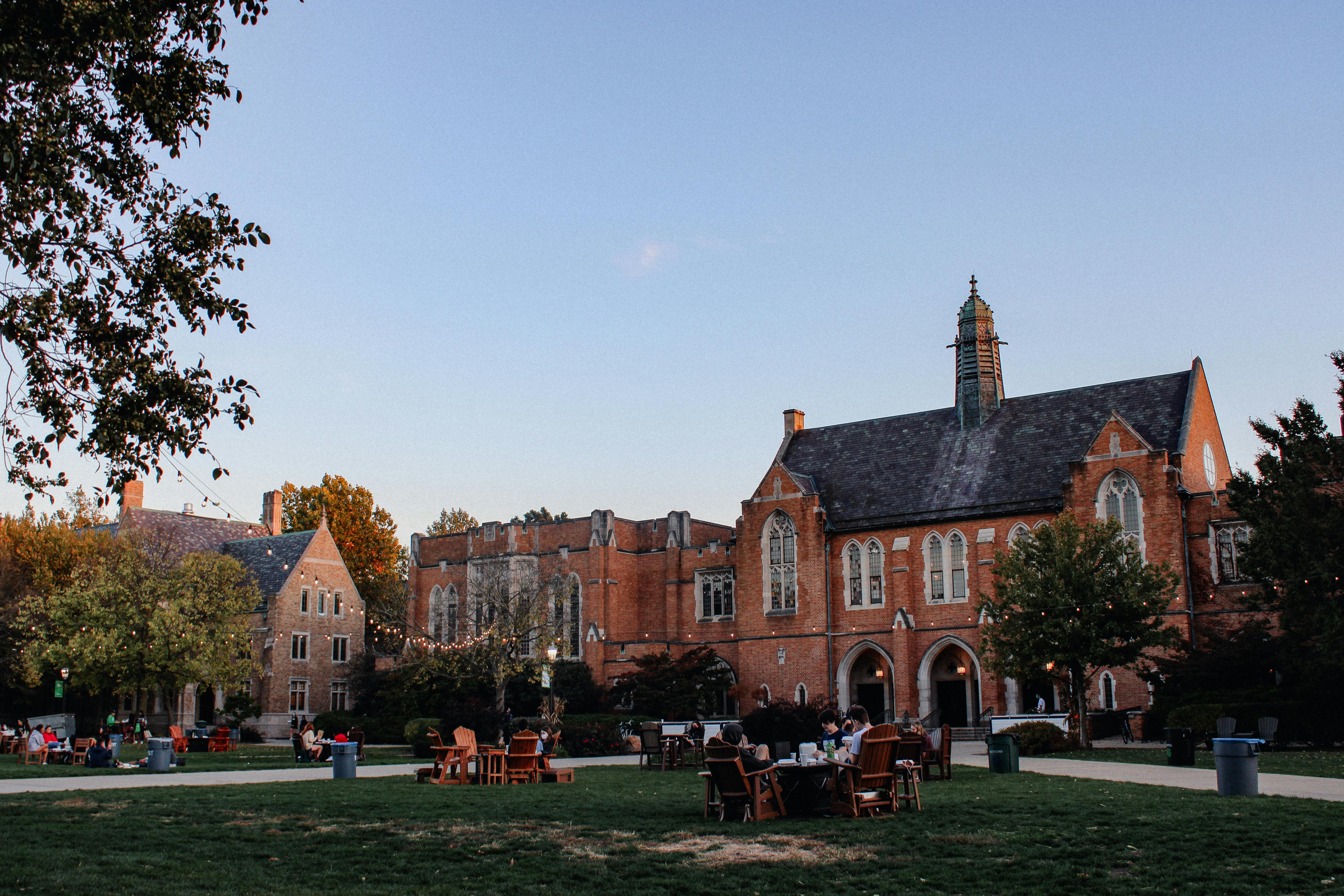
The core idea is not hard. TikTok wants to be where students already are, and where they might stay longer. Frankly, that is the whole story in one sentence. But the details matter. If the Campus Hub is tied to verified school communities, then it can reduce random noise and make local content more relevant. If verification is weak, the whole thing gets messy fast.
This is also where responsible design matters. Human beings are not just metrics, despite what app dashboards suggest. A campus tool should serve real community needs, not just extract more minutes from tired students. There is a moral difference between helping people coordinate and baiting them into endless scrolling. Small difference in code. Big difference in outcomes.
Core Benefits and Why People Might Care
The first benefit is obvious. Centralization. Students often use three or four apps to do what one decent campus layer could handle. That is a headache. A campus feed can cut down on hunting for information, especially when events, housing updates, club posts, and casual announcements are all in one place.
The second benefit is faster peer discovery. New students, transfer students, and commuters often struggle to find their people. A school-based feed can make it easier to see which clubs are active, which events are happening, and which student groups are worth joining. That is not trivial. Social belonging matters, and no, a string of emojis does not replace it.
The third benefit is lower friction for coordination. Group chats for classes, dorms, clubs, or project teams can be useful when they are scoped properly. Anyone who has tried to manage a team project through a half-dead email thread knows the pain. A good chat layer saves time. A bad one creates twelve subgroups and duplicate messages. You know the type.
The fourth benefit is better local relevance. TikTok’s recommendation system already favors content that feels close to you. If campus content is separated from the general feed, students may see more useful posts and less random noise from people far away. That could help event turnout, club engagement, and practical updates.
The fifth benefit is possible safety gains through verification. In theory, school-based access reduces outsiders pretending to belong. In practice, that depends on the implementation, because many platforms say “verified” and mean “good luck.”
Here’s the kicker: not every feature has to be life-changing to be valuable. A campus hub only needs to solve a boring problem well. That is often where the useful stuff lives. The flashy stuff gets keynote attention. The unglamorous stuff gets used.
- Privacy concerns: students may not want every group chat connected to a public identity.
- Moderation burden: school communities need rules, or they become trash fires.
- Attention overload: one more feed can become one more distraction.
- Duplicate functionality: if students already use GroupMe, Discord, WhatsApp, or iMessage, TikTok has to offer more than novelty.
- Trust issues: campus communities work best when people believe the space is actually for them.
I’m skeptical of any platform claiming it will “improve community” while also optimizing for screen time. Those two goals often fight each other. Still, if TikTok keeps the features restrained, practical, and genuinely school-specific, then the Campus Hub could be more than a gimmick.
For context on how students already juggle devices and apps, the best student phone plans and budget gear covered in best phone plans for students help explain why app consolidation matters. Less app hopping is not a luxury when your battery is at 9 percent and your class starts in four minutes.
Step-by-Step: How Campus Hub Would Actually Work for Students
Let’s be real. Most feature launches look intuitive in the demo and slightly annoying in the real world. So here is the practical version.
- Verify your school affiliation
A student likely has to confirm enrollment through school email, student ID, or another verification method. That part matters. Without it, the hub becomes just another generic local feed. I would trust this feature only as far as its verification is strict. - Join your campus space
Once verified, users can enter a school-specific area where posts, chats, and feeds are tied to the institution. This is where the product either becomes useful or turns into clutter. The smarter the segmentation, the better the result. - Browse campus feeds
Here students can see club announcements, campus events, housing notes, and whatever else the school community shares. This is where TikTok tries to be useful instead of merely entertaining. - Enter group chats or topic channels
Students might join chats based on classes, dorms, majors, clubs, or campus interests. The best case is a clean, manageable group. The worst case is a chaotic thread where nobody answers the actual question. - Use it for coordination, not replacement
This is the part people miss. A campus hub should supplement existing tools, not pretend to replace everything. Class files may still live in Google Drive. Formal announcements may still need email. The hub is the social layer, not the entire operating system of college life. - Adjust notifications aggressively
If students do not control alerts, the feature becomes a noise cannon. I always recommend hard limits: only important posts, only relevant chats, and no endless pings for nonsense. - Treat it as a public commons, not a toy box
People tend to act silly when a new digital room opens. That fades once moderation, etiquette, and actual responsibilities show up. It should. Shared tools work better when people remember that other humans are on the other end.
The real value of this setup appears when it solves recurring pain points: finding events, making plans, coordinating study groups, and keeping students informed without burying them in app switching. That is the kind of boring efficiency that good software should provide.
If you want a useful benchmark for student organization, compare the whole thing with the tools discussed in best note-taking apps for students. Those apps win because they remove friction. Campus Hub will need the same discipline. No fluff. No circus.

Comparison Table: TikTok Campus Hub vs. Discord
| Feature | TikTok Campus Hub | Discord |
|---|
| Primary focus | Campus social discovery and feeds | Community servers and chat |
| Verification | Likely school-linked access | Usually invite-based, less identity-focused |
| Content type | Short video, posts, feeds, chats | Text, voice, images, roles, channels |
| Best for | Campus updates and student discovery | Structured communities and deeper discussion |
| Moderation | Depends on school and platform controls | More mature tools, but server-dependent |
| Noise level | Could be lower if campus-only | Can vary widely by server |
| Discovery | Strong, if TikTok ranking works | Weaker unless promoted externally |
| Risk | Attention overload and privacy issues | Community fragmentation and admin burden |
| Ideal use case | Casual campus coordination | Organized clubs, study groups, and long-form coordination |
Discord is still the tougher tool for serious communities. It has channels, roles, moderation tools, and a culture built around structured discussion. TikTok has the reach and the habit-forming feed. That makes Campus Hub interesting, because it is trying to blend social discovery with group communication.
But reach is not the same as trust. And trust is the real commodity here.
Common Mistakes to Avoid
The first mistake is assuming more features mean better community. They do not. Most tech reviews are marketing fluff wrapped in screenshots. More buttons usually mean more confusion unless the product is tightly scoped. Campus Hub has to be disciplined, or it will collapse under its own chatter.
The second mistake is overestimating student patience. Students are busy. They are juggling classes, work, commuting, clubs, and the usual mess of adult life in training. If the hub takes too many taps, too much setup, or too much personal data, they will leave.
The third mistake is treating moderation as an afterthought. That is how platforms end up with hostile threads, spam, harassment, and useless noise. School-based spaces need stronger boundaries than entertainment feeds. The people building these systems should know that a community is not a feed filter. It is a responsibility.
The fourth mistake is ignoring privacy. If the feature exposes school affiliation too broadly, students may hesitate to join. Some people want campus connection without making their academic life public. Reasonable, frankly.
The fifth mistake is thinking TikTok will replace everything else. It will not. Email still matters. Learning platforms still matter. Notes still matter. A social campus hub can complement those tools, but it cannot absorb them all without becoming a mess.
The sixth mistake is confusing novelty with utility. People will try a new campus feature because it is new. That does not mean they will keep using it. Retention depends on usefulness. That old rule still applies, even if the app looks polished.
The seventh mistake is letting the feed outrank the need. This is where the Catholic view quietly helps. Tools should serve people, not consume them. The proper order matters. Technology is a gift when it supports truth, friendship, prudence, and the common good. It becomes a problem when it demands too much of the human person.
- Can I mute what I do not need?
- Can I verify that a space is really tied to my school?
- Can I use it without exposing too much personal data?
- Does it save time, or just split my attention?
- Does it help actual coordination, or just create more noise?
That is the whole game. Pretty simple. Not easy, but simple.
For more on cutting through platform noise, the broader advice in how to manage app notifications remains more useful than most launch-day hype. And if you are evaluating whether a platform feature is worth your attention, the same skeptical standard applies across devices, software, and accessories.
Frequently Asked Questions
What is TikTok Campus Hub?
TikTok Campus Hub is a school-focused feature set designed to organize campus-related feeds, chats, and student discovery inside the app. It aims to make college communication more local and relevant.
How is Campus Hub different from the regular TikTok feed?
The regular feed is built around broad recommendations and entertainment. Campus Hub is centered on school communities, so the content should be more local, more specific, and more useful for student life.
Is Campus Hub better than Discord for college groups?
Not automatically. Discord is stronger for structured discussion, roles, and long-term community management. Campus Hub may be easier for discovery and casual campus updates, but it is not likely to replace Discord for serious coordination.
Is TikTok Campus Hub safe for students?
Safety depends on verification, moderation, and privacy controls. If those are weak, the feature can become noisy or intrusive. If they are strong, it can be a practical tool for campus communication.
Final Thought
TikTok’s Campus Hub is not a miracle. Good. We do not need one. What we need is software that respects how people actually live, study, and cooperate. If the feature helps students find each other, coordinate events, and share useful updates without turning every spare minute into content consumption, then it earns its keep.
I’ve seen enough tech products to know the pattern. The loudest launch is rarely the most useful tool. The useful one is often plain, well-scoped, and a little boring. That is fine. Boring software can be a mercy.
If TikTok wants Campus Hub to matter, it should serve the student before the algorithm, the community before the metric, and the common good before the dopamine hit. That is not an anti-tech position. It is the only sane one. And honestly, it is overdue.