Washington National Lab’s New Facility Could Put Automated Research Tools Within Reach
A new facility at a Washington national laboratory is expected to give researchers free access to automated tools, according to the supplied October 23, 2026 headline. The announcement points to a practical shift in research: more scientists may be able to use equipment and workflows that are expensive to build, maintain, and staff on their own. The headline does not identify the facility, its tool inventory, eligibility rules, or application process, so those details should be confirmed before researchers make plans.
What Is the New Washington National Lab Facility?
The reported facility is a shared research resource: a place where eligible scientists can access automated tools without having to purchase and maintain the same equipment inside their own institutions. That basic model is familiar across U.S. national laboratories. The Department of Energy’s Office of Science operates user facilities so outside research teams can apply to use specialized equipment and expertise. The specific Washington facility in this headline, however, is not named in the supplied material. That matters. It would be careless to claim a particular robot, instrument, or laboratory program is included without an official equipment list.
Washington’s national laboratory is commonly understood to mean Pacific Northwest National Laboratory, or PNNL, in Richland. PNNL operates research facilities, including the Environmental Molecular Sciences Laboratory (EMSL), which supports scientific work in areas such as environmental molecular science. But the headline alone does not establish whether the new facility belongs to EMSL, another PNNL program, or a different organization. Treat the location as a useful clue, not proof of a facility’s identity.
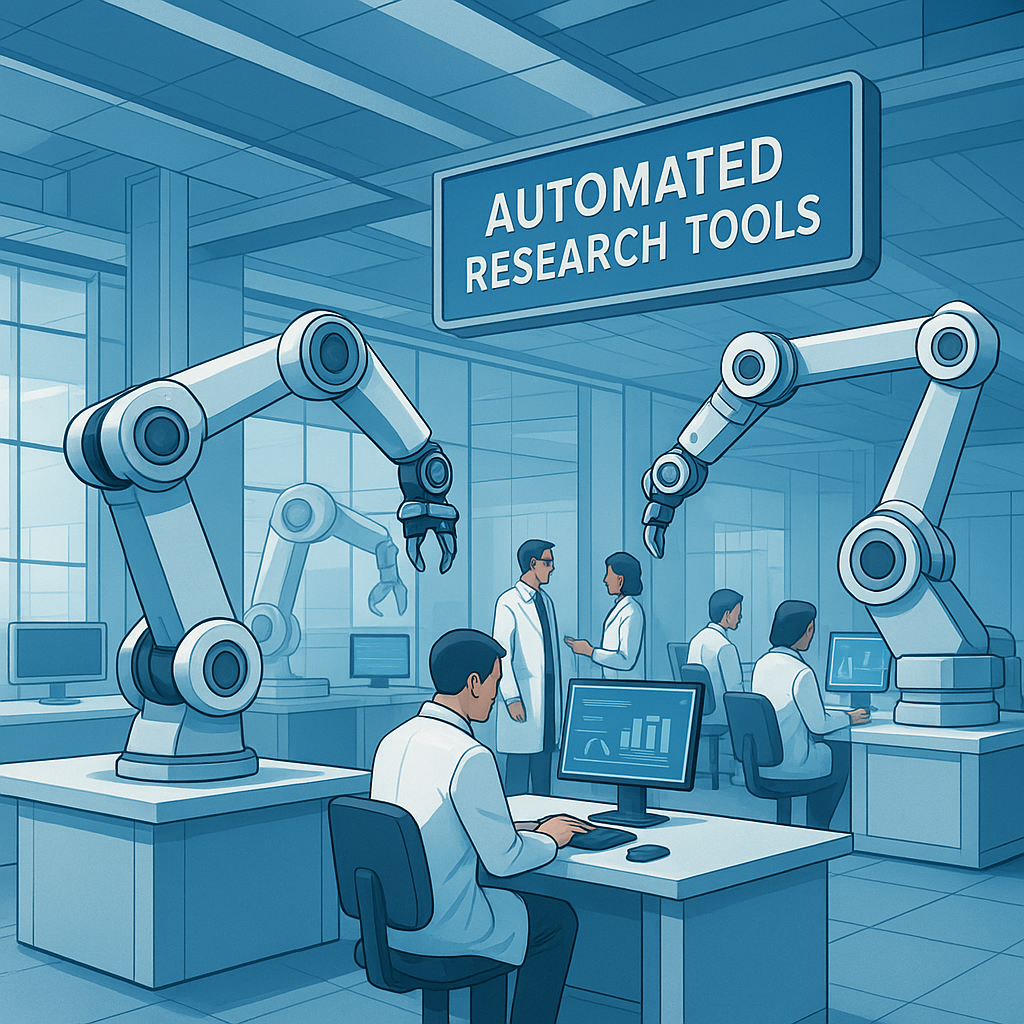
What does “automated tools” mean in practice? It can describe equipment that handles repeated laboratory tasks, software that coordinates instruments, robotic systems that move samples, or integrated platforms that combine measurement with data collection. Those are examples of the broad category, not a confirmed inventory for this announcement. Automation may improve consistency and throughput, but it does not make research self-running. Scientists still decide what to measure, design controls, check for error, and interpret results.
I have reviewed enough equipment claims to be wary of the word “automated” when it is used as a selling point. A machine can repeat a procedure precisely and still repeat a flawed procedure precisely. The useful question is not whether a facility has robots; it is whether its tools, staff, sample protocols, and data systems fit a researcher’s actual question. For general background, see the DOE Office of Science user facilities and PNNL’s user facilities information. Those pages describe the broader shared-resource model, not necessarily the new facility announced in the headline.
A facility like this sits between a lab’s own equipment and a commercial testing service. Instead of each university buying a costly setup, a shared center can make specialized tools available to multiple research teams. The arrangement can also connect users with staff who know the equipment’s limits. That expertise is not a side benefit; with sophisticated instruments, it can be the difference between a useful measurement and an expensive pile of bad data.
Why Free Access to Research Automation Matters
The most obvious benefit is lower upfront cost. A small research group may have a sound idea but lack the capital, floor space, engineering support, or specialist staff to build a fully automated workflow. Access to a shared facility can lower that barrier. It gives researchers a chance to test whether automation suits their work before they argue for a major purchase or redesign a project around a tool they cannot maintain.
- More repeatable procedures: Automated steps can reduce variation caused by manual handling, especially when a workflow involves many repeated operations. That advantage depends on careful setup, calibration, and quality checks; automation is not a substitute for experimental controls.
- Greater throughput: A platform may process more samples or run repeated tasks with less hands-on time. Faster processing helps only when the results remain relevant and the project can manage the resulting data.
- Access to specialist knowledge: Shared facilities often have staff who understand instrument operation, sample preparation, and common failure modes. Researchers should ask whether technical consultation is included, rather than assume a machine comes with unlimited expert support.
- A fairer chance for smaller teams: Institutions without large equipment budgets can potentially apply for access to capabilities normally concentrated in well-funded labs. That helps broaden participation, provided the application process is clear and awards are not limited to researchers with existing connections.
- A path to better-designed studies: Trying a platform can reveal whether a proposed workflow is technically feasible before a team commits to a large experiment.
Here’s the kicker: “free” describes a price point, not the whole cost of doing science. A user may still need to pay for shipping, sample preparation, travel, specialized consumables, or staff time, depending on the facility’s rules and the project. Some user facilities provide access at no charge for approved work, while other costs remain the user’s responsibility. The headline does not spell out what is covered here. Researchers should get the terms in writing before budgeting around a zero-dollar assumption.
Shared access also has public value. National laboratories and universities receive public support, and facilities funded for broad scientific use can help that investment serve more than one institution. Good stewardship means using expensive equipment carefully, sharing results responsibly, and making access decisions transparent. Scientific ingenuity is at its best when it answers worthwhile questions and contributes to the common good—not when a shiny machine becomes an end in itself.
There are limits. A facility may have finite capacity, so access could require competitive review, scheduling, or a project proposal. Instruments may be unsuitable for particular sample types, and automation can impose rigid protocols. More data is not automatically better data. A research team should start with the scientific question and work backward to the tool, not chase a platform because it is new or free.
How Researchers Should Prepare to Use the Facility
The headline does not provide an application link or instructions. Until the official facility page is available, researchers can still prepare the questions and materials that most shared labs are likely to need. Do not treat this checklist as a confirmed application procedure; use it to avoid wasting time once the official rules are published.
- Confirm the facility’s identity. Find the announcement on the national laboratory’s official website and verify the facility name, operator, location, and launch date. A news summary or headline may omit important distinctions between an announcement, a pilot program, and a facility already accepting applications.
- Read the official access rules. Check who may apply, whether access is limited to particular research areas, how proposals are reviewed, and whether the facility accepts academic, government, nonprofit, or industry projects. The DOE’s overview of Office of Science user facilities explains the general model, but the local rules govern the specific opportunity.
- Write down the research question first. Explain what the project needs to learn, what measurements would answer it, and why an automated workflow is appropriate. I find that a focused question beats a shopping list of instruments every time. Staff can help assess feasibility, but they cannot rescue a proposal that has no clear purpose.
- Check sample and safety requirements. Ask about sample quantity, preparation, labeling, contamination risks, shipping, storage, and disposal. Also verify whether hazardous or regulated materials are accepted. A promising protocol can fail at the door if the sample violates handling rules.
- Ask what “free” includes. Confirm whether instrument time, staff consultation, training, consumables, data processing, and shipping are covered. Ask about charges for repeat runs or work outside the approved scope. Get the answer from the facility rather than relying on an informal interpretation of the headline.
- Plan for data ownership and security. Establish who can access raw data, how long it is retained, what formats are supplied, and whether publication or public release rules apply. Commercial or sensitive research may need additional review. Data policy is not paperwork to leave until the final week.
- Check compatibility before submitting. Share enough information about the method, sample, and desired output for facility staff to identify technical mismatches early. If a tool requires a particular format or preparation step, discovering that before travel saves money and calendar time.
- Make a realistic schedule. Ask about proposal deadlines, review periods, instrument availability, training, and turnaround time. Automation may shorten a measurement sequence, but it does not erase queues, calibration, maintenance, or analysis.
- Agree on success criteria. Decide in advance what counts as a useful result, what controls are necessary, and how failed or ambiguous runs will be handled. This protects the project from the common trap of treating every output as confirmation.
- Credit the facility properly. Follow the facility’s instructions for acknowledgement, publication, and reporting. Shared infrastructure depends on evidence that it produces worthwhile work; proper attribution helps document that value.
For a concrete starting point, researchers can review EMSL’s user information and compare it with the eventual page for the newly announced facility. EMSL is a distinct resource, so its procedures should not be assumed to apply to another center. Likewise, a facility page should take precedence over general advice in this article. Frankly, reading the rules first is dull, but it beats learning about sample restrictions after the courier arrives.

Comparison: Shared Automation Facility vs. In-House Equipment
The closest alternative for many teams is to buy, build, or maintain a similar capability inside their own institution. A commercial testing laboratory may also be an option, though it typically sells a service rather than offering researchers direct access to equipment. The table compares general models, not confirmed terms for the Washington facility; the headline supplies no prices, tool list, or access policy.
| Factor | Shared national-lab automation facility | In-house equipment |
|---|
| Initial purchase cost | Potentially avoided by the user; confirm any project charges | Usually borne by the institution or grant |
| Maintenance | Facility operator generally manages instrument upkeep | Local lab must budget for service, parts, and staff |
| Access | May require an application, review, and scheduling | Available to the owning group, subject to local rules |
| Technical support | Facility specialists may provide guidance; scope varies | Depends on local expertise and service contracts |
| Workflow flexibility | May be limited by facility protocols and instrument configuration | Greater control over setup, timing, and modifications |
| Capacity | Shared among approved users, so queues are possible | Reserved capacity may be easier for the owning group to plan |
| Best fit | Specialized work, early feasibility tests, and teams lacking equipment | Frequent, stable workflows that justify ongoing ownership |
| Main risk | Misunderstanding eligibility, costs, or sample restrictions | Underestimating purchase, training, and maintenance burdens |
A shared facility wins when the equipment is expensive, specialized, or needed only occasionally. An in-house system can make sense when a lab runs the same validated workflow constantly and needs immediate control over scheduling. Neither option is automatically better. A free shared service can be a poor fit if its queue conflicts with a deadline, while a purchased instrument can become an idle monument if the lab lacks trained operators.
Compared with a commercial testing service, the main question is how much control the researcher needs. A service provider may accept samples and return results, which is convenient when the method is standardized. Direct facility access can be more useful when researchers need to collaborate with staff, refine an approach, or understand the process closely. The specific arrangement varies, and the headline does not say whether users operate the tools themselves or work alongside facility personnel.
There is also a distinction between access and ownership. Borrowing time on a platform does not give a research group control over the equipment, its software, or its maintenance schedule. That trade-off is usually sensible for early-stage work, but teams should think ahead if a promising result depends on repeated access. Ask whether the facility supports follow-up work and how projects move from a pilot study to sustained research.
Common Mistakes to Avoid
The first mistake is assuming the word “free” means every part of a project costs nothing. Facility time might be subsidized while transportation, sample preparation, consumables, training, or analysis still require money. The headline does not define the financial terms. Ask for a full cost breakdown, including charges that arise if a sample fails or a run must be repeated.
The second mistake is assuming “automated” means “unbiased.” Machines can reduce some kinds of human variation, but the workflow still reflects choices made by people: which samples enter the system, how the instrument is calibrated, what thresholds count as a signal, and how outliers are handled. Automation can make a poor method faster and more consistent. It cannot decide whether the method answers the right question.
Another common misstep is applying before checking whether the samples fit. Facilities often have technical and safety constraints, and even small differences in material, volume, or preparation can matter. Ask facility staff for a feasibility review before shipping anything. If you do not know which questions to ask, describe the research goal and sample plainly rather than dressing the project in fashionable terminology.
Researchers also underestimate data work. An automated platform can create large datasets quickly, but storage, metadata, quality control, and interpretation still need people and time. A team should know what file formats it will receive and whether it has the software and expertise to analyze them. Otherwise, “high throughput” can mean high-volume confusion.
Do not treat a shared instrument as a magic replacement for collaboration. Facility specialists may know the equipment deeply, but they are not necessarily responsible for the user’s hypothesis, experimental controls, or final interpretation. Agree on roles before work begins. If a protocol needs adaptation, establish who approves changes and how those changes are documented.
Finally, do not build a proposal around unverified claims. The supplied headline does not name the facility, list its tools, promise universal eligibility, or specify when applications open. Check the official announcement and facility page before citing details in grant applications, lab plans, or press releases. I’m skeptical of articles that fill missing facts with confident guesses; researchers should be, too. A short pause to verify the source is cheaper than planning a study around a service that does not exist yet or does not accept the project.
Frequently Asked Questions
Which Washington national laboratory is the headline referring to?
The headline points to a national laboratory in Washington but does not name it. Pacific Northwest National Laboratory is the best-known DOE national laboratory in the state, but the supplied headline alone does not confirm the facility’s operator or program. Verify the laboratory and facility name on the official announcement before treating that identification as certain.
What automated tools will researchers be able to use?
The supplied headline does not list the tools. “Automated tools” can refer broadly to robotic sample handling, automated instruments, or software-controlled laboratory workflows, but those are examples, not confirmed features of this facility. Wait for the official equipment inventory and ask facility staff whether a proposed sample and method are supported.
Does free access mean the entire project will cost nothing?
Not necessarily. The headline says researchers will receive free access to automated tools, but it does not explain whether that covers consumables, shipping, training, sample preparation, travel, data analysis, or repeat runs. Request written details about what is included and what users must pay for before setting a project budget.
How can researchers apply?
The headline does not provide application instructions, eligibility rules, deadlines, or an application URL. Researchers should monitor the national laboratory’s official facility page and follow its published proposal process. Before applying, prepare a clear research question, sample details, safety information, and an explanation of what data or results the project needs.
Final Thought
A new shared automation facility could be genuinely useful, especially for research teams that have strong questions but cannot justify buying specialized equipment. The value will not be measured by the number of robotic arms, automated benches, or impressive photographs in an announcement. It will be measured by whether qualified researchers can get access, whether the tools fit real scientific needs, whether staff provide sound technical support, and whether the resulting work is reliable enough to matter.
For now, the responsible reading of this news is modest: a Washington national laboratory has announced a facility that will give researchers free access to automated tools, but the supplied headline leaves important operational details unanswered. We know the broad promise, not the fine print. That is enough to recognize the potential, but not enough to make a budget, choose a sample, or promise a grant panel that a particular instrument is available.
Researchers should watch for the official facility page, then check the equipment list, application process, cost boundaries, data rules, training requirements, and timeline. If those details are clear and access is handled fairly, the facility could make sophisticated methods available to teams that would otherwise be shut out. If the process is opaque or the tools do not match the science, “free” will not rescue it. Technology serves research best when it supports careful human judgment, respects the people affected by scientific work, and is shared with enough discipline to produce dependable knowledge.