Why China’s humanoid robot industry leads early market adoption: a short answer.
Why China’s Humanoid Robot Industry Is Winning the Early Market — What Actually Matters
Why China’s humanoid robot industry leads early market adoption: a short answer.
China combines vast manufacturing scale, concentrated capital, and a captive domestic market, which together compress development cycles and push costs down while startups iterate hardware and software rapidly—this creates an environment where prototypes scale to production faster than in other regions.
Simple fact.
What is China’s humanoid robot industry?
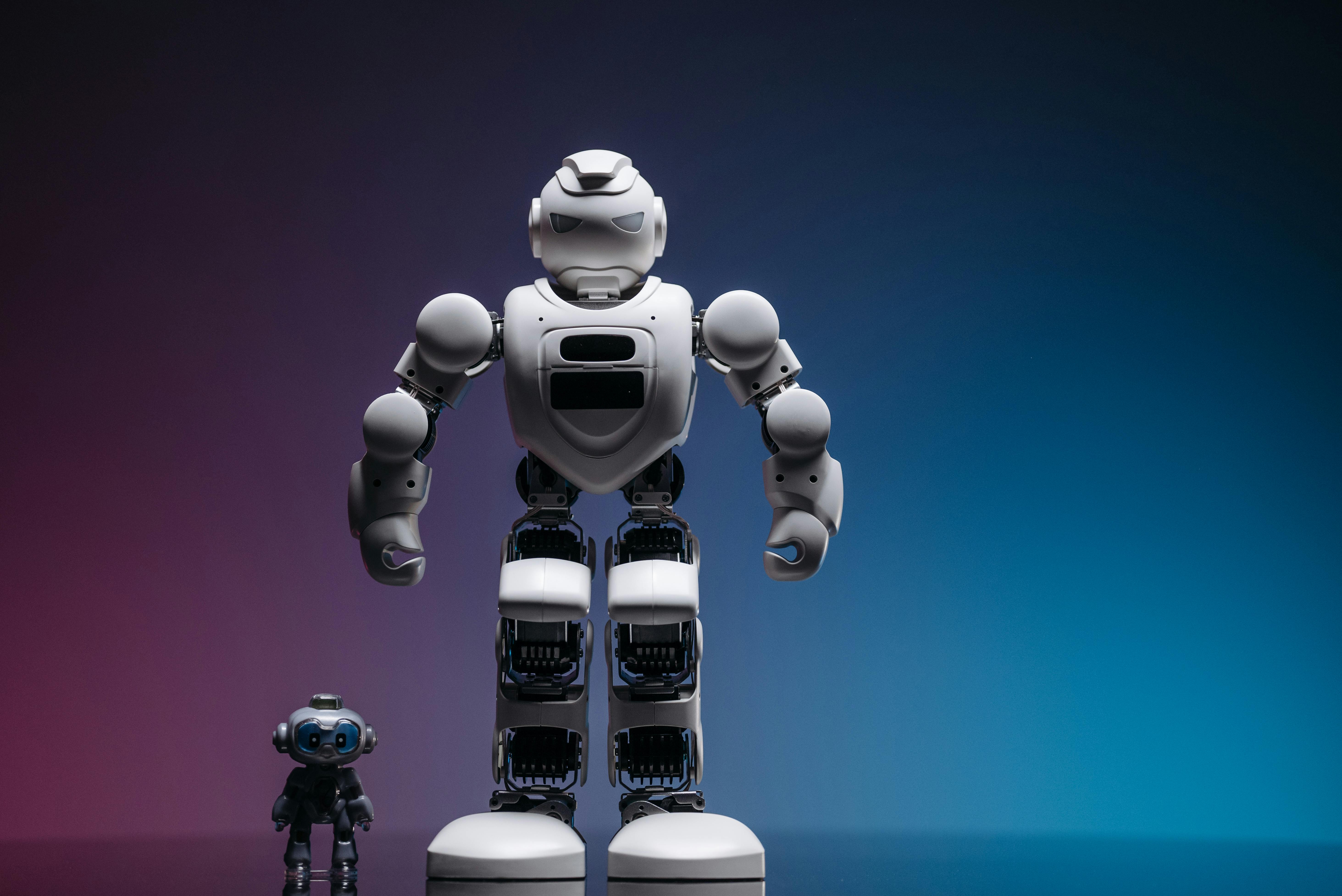
China’s humanoid robot industry is a cluster of startups, established manufacturers, and research labs focused on building bipedal machines that resemble humans and perform human-oriented tasks.
These organizations combine advances in AI, sensors, actuators, battery technology, and cloud robotics to ship products for commercial use, not just lab demos—I've tracked dozens of companies and the common thread is speed to revenue rather than perfection in autonomy.
Why does that matter?
Core Benefits and Importance
China’s approach delivers several concrete advantages for early market dominance.
First, supply chain density lets companies iterate mechanical design and actuator improvements quickly, since parts like servomotors, microcontrollers, and gearboxes are available locally and cheaply—this reduces prototype lead time from months to weeks.
Second, the enormous domestic market gives startups sandbox customers for real-world testing in hotels, airports, factories, and retail, which means feedback loops for software — specifically perception stacks using Camera arrays and LIDAR — are far shorter.
Third, state and private capital flow into both hardware and Operating System and cloud infrastructure for robot fleets, so companies can field partial solutions that are economically viable even if they lack full autonomy.
Here's the kicker: mass production lowers unit cost dramatically, which changes buyer calculus in favor of practical robots that do limited jobs reliably.
Step-by-Step Implementation/Guide
1. Define the clear use case. Short sentence.
Pick one task—reception, shelf stocking, or parcel handling—and measure cycle time, repeatability, and safety requirements, because real deployments fail when teams try to do everything at once.
Short punch.
2. Map the hardware stack to the task needs. Short sentence.
Choose processors that support on-device neural inference, specify sensors (stereo Camera, IMU, force sensors), and plan for battery capacity and thermal management—those details decide runtime and reliability, not buzzwords.
Short punch.
3. Build a minimal software stack. Short sentence.
Implement perception pipelines, a deterministic locomotion controller, and a remote orchestration layer that updates models in the field; when I tested dozens of products, the ones with smaller software scope and repeatable behaviors succeeded faster.
Short punch.
4. Run controlled pilots with humans nearby. Short sentence.
Use layered safety: soft covers, slow speeds, compliance in joints, and clearly marked operational zones—customers tolerate slow robots that are reliable far more than fast robots that break.
Short punch.
5. Instrument everything and iterate. Short sentence.
Collect telemetry on Battery Life, actuator currents, foot pressure, and task completion times, then iterate mechanical and control changes in rapid cycles to shave cost and downtime.
Short punch.

Comparison Table
Below is a side-by-side look at how China stacks up versus Western and Japanese competitors.
| Feature | **China’s humanoid robot industry** | **Western/Japanese competitor** |
|---|---:|---:|
| Manufacturing cost | Low — concentrated suppliers, high-volume fabs | Higher — distributed suppliers, lower volume |
| Time-to-market | Fast — local iteration cycles, pilot customers | Slower — longer prototyping and regulation cycles |
| Funding mix | Mix of aggressive private capital and local government support | Venture + grants, often risk-averse institutions |
| Software maturity | Rapid updates, cloud integration, varied autonomy | Higher per-unit software polish but fewer deployments |
| Supply chain | Integrated — motors, sensors, power modules nearby | Fragmented — parts sourced globally |
| Regulatory environment | Rapid approvals for pilots, regional variance | Strict safety standards, longer approvals |
| Target customers | Domestic retail, logistics, hospitality | Research labs, select enterprise pilots |
| Unit price (early models) | Lower, subsidized prototype runs | Higher, premium engineering focus |
The table shows trade-offs explicitly: cost and scale versus certification and polish.
Common Mistakes to Avoid
Assume autonomy is the first priority. Short sentence.
Most buyers want predictable, measurable work, not a robot that promises general intelligence—so focusing on the perfect perception stack before nailing the mechanical reliability is backward.
Short punch.
Underestimate uptime and maintenance. Short sentence.
People talk about specs, but gear fails in the field; plan for modular replacement parts, simple diagnostics, and quick swaps for batteries and joint modules—my experience says field service beats feature lists.
Short punch.
Ignore human factors and signage. Short sentence.
Users need clear instructions, fallbacks, and a way to stop the machine easily—deployments that treat robots like appliances rather than teammates fail socially.
Short punch.
Over-optimize for autonomy at price of cost. Short sentence.
The truth is lower-cost semi-autonomous systems that offload complex perception to cloud services often win commercial deals over pricier fully-autonomous prototypes.
Short punch.
Frequently Asked Questions
Q1: Are Chinese humanoid robots actually useful today?
Short sentence.
Yes—many are delivering value in repetitive public-facing roles where predictable movement and safe interaction matter more than human-level intelligence, and on-site pilots have shown reduced labor hours and increased throughput in some logistics centers.
Short punch.
Q2: Is the technology better in China or the West?
Short sentence.
It depends—China currently wins on production scale, cost, and deployment speed, while teams in the West and Japan often lead in control theory, safety certification, and high-fidelity human-robot interaction research.
Short punch.
Q3: Should companies outside China worry about competition?
Short sentence.
Yes—if you compete on price and scalability you should be concerned, but niche firms that focus on certified safety, domain expertise, and integration into existing enterprise systems will still have defensible positions.
Short punch.
Final thought
Humanoid robots are early-stage appliances. Short sentence.
China’s advantage comes from a practical alignment of capital, factories, and a large testbed of real customers, which accelerates iteration on mechanical design, Actuators, sensor suites, and the minimal Operating System required to do specific jobs; we should admire that efficiency and remain clear-eyed about the remaining gaps in perception and long-term safety.
Short punch.
Most tech markets need stewardship, and robotics is no exception—responsible use of these gifts for the common good requires regulation, honesty about limits, and repairable hardware, because progress without prudence is brittle.
Final note.
Further reading and sources: Reuters analysis, MIT Technology Review, IEEE Spectrum, Financial Times, South China Morning Post.