Slovenia’s <strong>.si domain</strong> is seeing a spike in registrations. The trigger is not a tech breakthrough in Ljubljana, but a political and semantic...
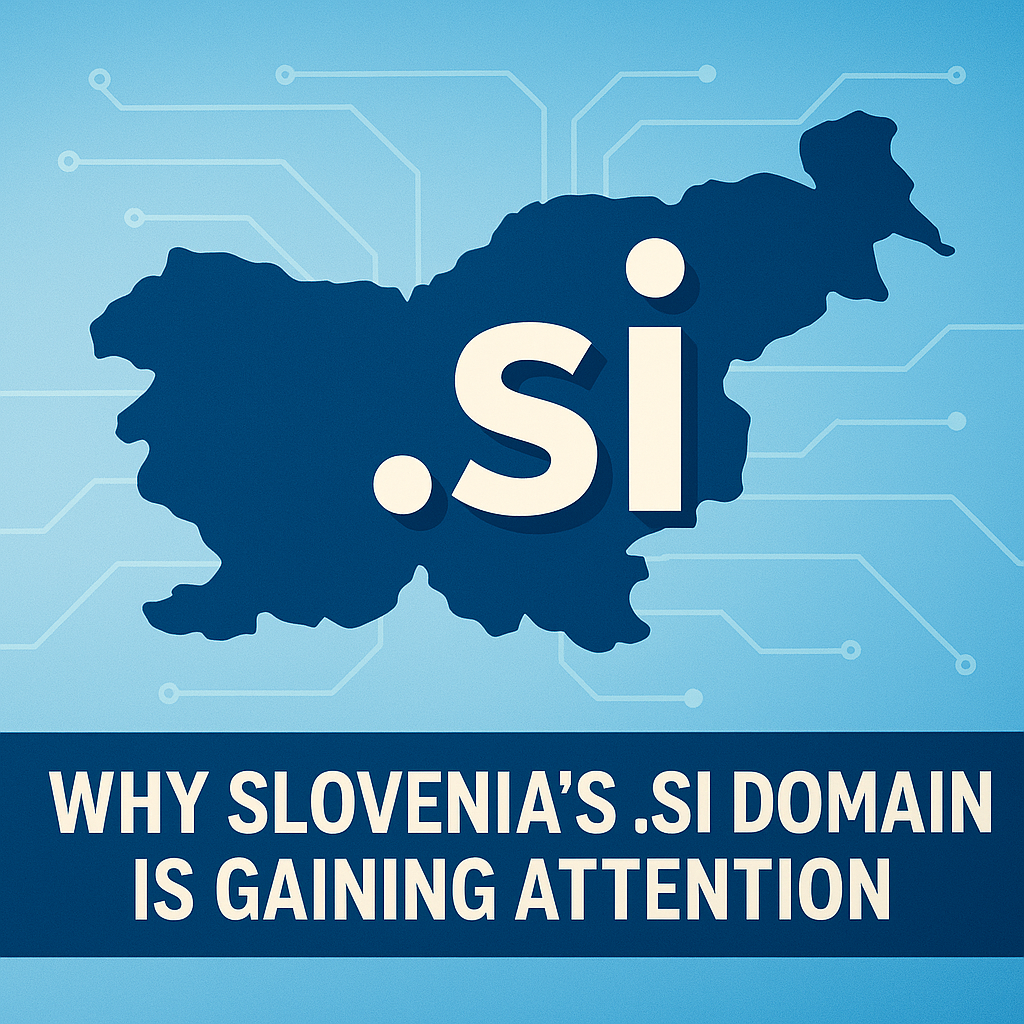
Slovenia’s .si domain is seeing a spike in registrations. The trigger is not a tech breakthrough in Ljubljana, but a political and semantic freak show in the United States, where Trump’s “super intelligence” order sent people hunting for short, memorable, oddly apt domain names. The result is classic internet behavior: speculation, opportunism, and a small country’s web suffix getting dragged into a global news cycle.
Key Takeaways:
- The .si domain is Slovenia’s country-code top-level domain.
- Registrations rose after Trump’s “super intelligence” order made the letters “SI” suddenly more interesting.
- Most of the activity is probably speculative, not a signal of long-term demand.
- Country-code domains often get temporary boosts from headlines, memes, and branding trends.
- For businesses, a domain should still be judged on clarity, trust, and usefulness—not on hype.
What happened here is straightforward. A phrase with artificial urgency, “super intelligence,” collided with a two-letter country code that happens to look like a useful brand asset. That is the whole trick. The internet, being what it is, turned it into a buying frenzy. If you’ve watched domain trends before, this has the smell of quick speculation rather than meaningful adoption. Still, there is a real lesson buried under the noise: names matter, symbols matter, and people will pay for linguistic accidents when they think they can get ahead of a trend.
I’ve seen enough tech cycles to know the pattern. A policy headline appears, the SEO crowd notices, and then somebody realizes a domain extension can be treated like a commodity. Most of the time, the buyers are not building anything noble or even sensible. They are parking names, testing resale value, or trying to capture attention while the headline is hot. Frankly, that tells you less about Slovenia and more about the internet’s habit of treating every memorable string of letters as inventory. A proper stewardship mindset would ask a better question: what is this domain for, and does it serve real people?
What is the .si domain, and why is it in the news?
The .si domain is Slovenia’s country-code top-level domain, or ccTLD. It is the official web suffix tied to the country, much like .fr for France or .de for Germany. On paper, it is a geographic identifier. In practice, it is also a brand surface, a trust signal, and sometimes a vanity play for anyone who wants short, sharp letters that look good on a logo, a pitch deck, or a product box.
The recent spike in registrations appears tied to Trump’s “super intelligence” order, which gave the letters “SI” a fresh burst of attention. That kind of thing happens more often than people admit. Domains are not just technical addresses; they are also little semantic traps. If a phrase in the news happens to match a code, acronym, or abbreviation, speculators pile in. The market does not need a lot of logic to get noisy. It just needs a headline and a whiff of perceived scarcity.
Most tech coverage treats domain activity like a pure numbers story. It isn’t. It is part infrastructure, part identity, and part social signal. When I look at a registration surge, I ask who is buying and why. Are these real businesses? Are these defensive registrations? Are these resellers hoping to flip names later? Usually, the answer is a mix. And that mix matters because the meaning of a spike depends on the buyer, not the chart.
For context, country-code domains often rise in value when they are short, pronounceable, or useful in English-language branding. That is why places like Tuvalu (.tv), Moldova (.md), and Colombia (.co) have all seen outsized interest beyond their borders. Slovenia’s .si extension is now getting a turn in the spotlight for a very different reason: not because it suddenly became more useful, but because the letters fit the moment. That is the whole story, really.
If you want a sober reference point on what a ccTLD is and how it works, the technical background is well documented by the ICANN overview of ccTLDs. For registration rules and policy context, Slovenia’s registry operator Register.si is the source that actually matters, not the breathless blogs. And if you want to see how domain market behavior gets tracked, services like DNJournal have long chronicled the resale side of the business.
Core benefits and importance of a ccTLD surge
- Short domains still carry power. Two letters are easier to remember, easier to print, and often easier to fit into a brand system. In a world drowning in junky URLs, brevity wins more often than it should.
- Country-code domains can gain global use. A ccTLD does not have to stay local. Businesses outside a country often buy one because it looks cleaner than a long .com alternative.
- Attention creates market value. Even temporary hype can make a domain extension more visible, which encourages speculation, hoarding, and secondary-market activity.
- Branding matters more than raw price. A good domain can improve trust and recall. A bad one can make a serious company look cheap. People underestimate this all the time.
- Search and click behavior can shift. When a suffix becomes recognizable, even for silly reasons, it can influence user trust and click-through behavior. That is practical value, not just vanity.
Here’s the kicker: a registration spike does not automatically mean long-term adoption. Most headlines confuse excitement with durability. They are not the same. When I see a registration rush, I assume a chunk of it is opportunistic and will vanish when the news cycle moves on. That does not make the event irrelevant. It makes it instructive. It shows how quickly digital assets can be reinterpreted when language, politics, and scarcity collide.
There is also a more serious angle. The web should serve people, not just speculation. A domain name is a resource, and like any resource, it can be used well or abused. That is where a more humane view of technology helps. Innovation should support honest work, clear communication, and the common good—not merely feed the appetite for arbitrage. That sounds old-fashioned because it is. It is also correct.
From a practical business standpoint, a ccTLD surge can help local registries, increase visibility for national digital infrastructure, and encourage entrepreneurs to think more carefully about naming. But there is a ceiling. If the extension becomes associated mostly with flipping and novelty, the bump will cool. Most buyers do not want cleverness forever. They want reliability.
If you want broader context on how domains fit into brand strategy, see my earlier analysis of how to choose a domain name, the piece on best website builders for small teams, and the guide to SEO basics for startups. Those topics sound boring until you realize they decide whether a business looks credible or amateurish.
Step-by-step guide to evaluating a domain trend like this
- Check the trigger. Was the surge caused by a policy announcement, a meme, a celebrity mention, or a product launch? In this case, the spark was Trump’s “super intelligence” order. That matters because event-driven spikes often fade fast.
- Separate registrations from usage. A registration is not a live site. It is just a claim. I’ve reviewed enough web trends to know that parked domains, redirect farms, and speculative holdings can make a market look busier than it is.
- Look at renewal behavior. The real signal is not first-day excitement. It is whether people renew the names a year later. If they don’t, the “growth” was mostly noise.
- Inspect the buyer profile. Are these end users, agencies, resellers, or privacy-shielded speculators? The mix tells you whether the extension is getting functional adoption or just a temporary squeeze.
- Compare the extension with alternatives. A domain’s appeal depends on competition. If a business can get a better .com, .io, or .co, it may ignore a ccTLD unless the spelling or meaning is especially strong.
- Test branding fit. Ask whether the suffix supports trust, pronunciation, and recall. A clever domain that confuses customers is a bad deal. Simple beats smug every time.
- Check local registry policy. Some domains are open, some are restricted, and some carry residency or documentation rules. The policies matter more than the hype.
- Watch for resale inflation. Speculators often chase limited combinations first. That can create inflated asking prices that never translate into actual sales.

The truth is, most domain advice online is recycled fluff. People repeat “get the shortest name possible” as if that solves the problem. It doesn’t. Clarity matters more than cleverness. Relevance matters more than trend-chasing. And if you are a serious operator, you should pick a domain that still makes sense when the news cycle has gone cold and nobody is talking about your cute acronym anymore.
When I evaluate a domain trend, I also ask one more question: does it help people do honest work? That may sound oddly moral for something as mundane as DNS, but it is the right question. A digital name should not exist just to feed vanity. It should help someone find a service, a product, or a trustworthy source. That is the proper order of things.
Comparison table: .si vs. .com
| Factor | .si (Slovenia ccTLD) | .com (Global generic TLD) |
|---|
| Primary meaning | Slovenia country code | Commercial/global default |
| Brand flexibility | Good for short or clever names | Best for broad international recognition |
| Trust with general users | Moderate to strong, depending on audience | Very strong, widely recognized |
| Availability | Often better than .com for short names | Scarce, many names already taken |
| SEO impact | No direct ranking boost, but local relevance can help | No direct ranking boost, broad familiarity helps clicks |
| Best use case | Regional brands, short acronyms, speculative registrations | Main corporate sites, global products, long-term brand anchors |
| Risk | Hype can be temporary | Premium prices and scarcity |
| Biggest appeal | Brevity and novelty | Familiarity and universality |
The table tells the story without any marketing perfume. .si is attractive when letters matter and the brand can benefit from a compact identity. .com remains the heavyweight because users already know what it means. This is why domain hype should be handled like fire: useful when controlled, expensive when mishandled, and mostly stupid when people mistake sparks for strategy.
If you’re a business considering a ccTLD, the real question is not “Is it trending?” The real question is “Will customers trust it, remember it, and use it?” That’s the measure. Everything else is theater.
Common mistakes to avoid
- Buying because of headlines. If you only noticed the extension because news coverage spiked, you are already late. That is not strategy. That is imitation.
- Assuming a spike means adoption. Registrations can rise for speculative reasons and still produce very little real-world usage. A parked domain is not a company.
- Ignoring renewal costs. Cheap first-year pricing often hides higher renewal rates. The second year is where optimism goes to die.
- Treating cleverness as a substitute for trust. A smart-looking domain can still feel flaky if the site itself is poor. Customers notice. They just don’t always say it.
- Using a domain that confuses the audience. If people do not know how to pronounce it, spell it, or type it, you have bought yourself a problem.
- Copying speculative behavior without a plan. Domain parking, flipping, and hoarding are not business models for most people. They are side bets, and usually weak ones.
I’m skeptical of the usual advice here because it ignores human behavior. A domain is part of a promise. It suggests what kind of place a user is about to visit. If the promise is vague, the user hesitates. If the promise is clear, the user moves forward. That is why short-term hype should never outrank plain usefulness.
Most importantly, do not confuse digital possession with real value. Ownership without purpose is just clutter in another registry. From a moral angle, that matters. Resources should be used well. Technology should serve real ends. Otherwise it becomes another field of waste, dressed up as innovation.
Frequently asked questions
Why did Slovenia’s .si domain suddenly get more registrations?
Because the letters “SI” became newly attractive after Trump’s “super intelligence” order drew attention to the acronym. That kind of event can create a temporary surge in registrations, especially among speculators and domain traders.
Does a .si domain help with SEO?
Not directly. Google does not reward a domain extension by itself. What matters more is content quality, user trust, site speed, backlinks, and whether the domain matches the audience or geography you are targeting.
Is .si only useful for Slovenian businesses?
No. While it is Slovenia’s country-code domain, it can be used by anyone, depending on the registry rules. Some companies like it because it is short, visually clean, or brandable.
Should I buy a trending domain extension just because it is popular?
Usually not. If you do not have a clear use, you are probably speculating. That can work sometimes, but most of the time it produces empty registrations and renewal bills.
The funny thing about domain hype is how quickly it exposes people. Short strings of letters look like opportunity to one crowd and like noise to another. I side with the second group more often than not, because most things that look like sudden brilliance are really just timing, vanity, and a bit of digital gullibility.
That does not mean the .si surge is meaningless. It means it should be read properly. Slovenia’s domain got dragged into a larger story about language, attention, and scarcity. That is normal on the internet. It is also a reminder that technical systems are never just technical. They carry human choices, human appetites, and human limits. A good domain, like a good tool, should be ordered toward service. Anything else is decoration at best and waste at worst.
So yes, the spike is real. The wisdom in it is modest. Buy names that make sense, not names that merely make noise. That advice is old, but it still beats most of what passes for tech commentary these days.