Micron is not Nvidia.
Micron is not Nvidia.
That sounds obvious, but Wall Street keeps comparing them anyway, because Micron sits in the part of AI that makes the whole thing work, and that matters when data centers are stuffed with GPUs that need fast, dense memory to keep feeding the beast. Why are investors acting like this matters now?
Key Takeaways- Micron sells memory, not AI models.
- HBM is the prized product in the current AI buildout.
- Pricing power can lift margins, but memory stays cyclical.
- Nvidia remains the dominant AI platform play.
- Investors are betting on scarcity, not magic.
What is Micron, and why is Wall Street talking about it?
Micron Technology is a U.S. semiconductor maker focused on DRAM, NAND flash, and especially high-bandwidth memory, or HBM. That last piece is the one getting all the attention, because AI systems need memory that can move data at high speed without choking the accelerator stack. The hardware is boring in the best possible way: no glossy software pitch, just chips, wafers, yield rates, and margins.
Most tech coverage turns every AI supplier into a mythical beast. Frankly, that is junk. Micron is interesting because AI servers consume far more memory than older systems, and the company operates in a supply-constrained market where capacity expansion takes money, time, and patience. When I look at this sector, I ignore the buzz and focus on one thing: does the company sell something essential, scarce, and hard to replace? Here, the answer is yes.
Micron’s own company overview lays out its memory portfolio, while Nvidia’s data center page shows the scale of the accelerator market that depends on fast memory. That pairing explains the market logic. AI training and inference workloads do not run on compute alone; they need bandwidth, packaging, and supply discipline. Without those, you get a very expensive stall.
There is also a strategic angle. A U.S. memory supplier has industrial importance, especially when supply chains are fragile and geopolitical risk hangs over advanced electronics. That does not mean the stock must go up. It does mean the company matters, and in semiconductors, importance can be a decent starting point. The trick is not to confuse national relevance with guaranteed profits. That would be sloppy. A wise approach, closer to stewardship than speculation, asks whether the business can serve the common good by making useful technology reliably and profitably.
Wall Street likes the setup because it sees leverage. If AI server demand keeps growing, memory content per system rises, HBM remains tight, and Micron can sell at stronger prices. If that happens, earnings can move a lot faster than revenue. That is the dream. The question is whether the dream survives contact with the next supply cycle. Semiconductor history is rude that way.
Core benefits and why investors care
Wall Street does not pay for poetry. It pays for earnings potential. That is the whole show.
- AI exposure without direct platform risk: Micron does not need to build a chatbot empire to benefit from AI spending. It sells the memory that powers the infrastructure, which is a cleaner way to ride the wave.
- HBM scarcity: High-bandwidth memory is expensive to make and in short supply. That scarcity gives Micron a shot at premium pricing, which is where semiconductor profits get interesting.
- Margin expansion: When demand outruns supply, margins improve. Everyone talks about revenue, but the real money is in what is left after manufacturing costs, packaging, and depreciation chew through the top line.
- Fewer competitors than people assume: This market is not a free-for-all. Advanced memory production is capital-heavy and technically nasty, which limits the field.
- Strategic U.S. manufacturing story: Domestic production matters more now than it did a few years ago, and that carries weight with investors and policymakers alike.
Here is the catch. Memory is still memory. It is not a software subscription with recurring revenue and fat gross margins glued to a cloud dashboard. It is cyclical, capital-intensive, and annoyingly prone to oversupply. So yes, the upside can be large, but it can also vanish when fabs ramp too fast or customers reduce orders. That is not pessimism. It is arithmetic.
AnandTech’s coverage of HBM3E explains why this product class matters for next-generation AI hardware, and Tom’s Hardware’s reporting helps illustrate the manufacturing and capacity constraints behind the excitement. Those details matter because they show the difference between a commodity chip and a premium bottleneck part. One gets ignored. The other gets bid up.
When I evaluate hardware businesses, I ask whether the company can keep selling something essential while others chase volume. Micron’s current strength comes from that exact equation. Still, the market tends to overpay for the first clean story it can tell itself. Let’s be real, Wall Street loves a narrative almost as much as a margin chart. The smarter move is to separate temporary pricing power from durable advantage. If the company uses its capacity wisely, serves customers honestly, and avoids treating scale like an idol, it can create real value rather than just a trading spike.

Step-by-step: how to think about Micron like a serious investor
Do not buy a semiconductor stock because the internet got excited. That is how people donate money to the market.
- Start with AI demand. Look at cloud capex, data-center expansion, accelerator shipments, and customer commentary. Micron lives or dies on whether the AI buildout stays hot enough to need more memory.
- Check HBM supply. The premium product is where a lot of the upside sits. If supply stays tight, pricing power survives. If supply loosens too quickly, the profit picture changes.
- Watch gross margin, not just revenue. Revenue growth without pricing power is theater. Gross margin tells you whether the business is actually keeping more of what it earns.
- Study inventory. Inventories are the canary in the mine. When they climb too fast, the cycle usually turns ugly.
- Compare valuation with peers. Nvidia gets a premium because it controls the AI accelerator stack and software ecosystem. Micron may still be cheaper for good reason, but cheaper can also mean more cyclical risk.
- Review capital spending. Memory fabs cost a fortune. Heavy capex can improve future positioning, but it can also suppress returns if timed badly.
- Separate strategic importance from stock performance. A company can matter a great deal to the industry and still produce a rough stock chart. Do not confuse usefulness with easy gains.
Micron’s SEC filings are worth reading because the numbers tell a cleaner story than press headlines do. I have reviewed enough investor decks to know the trick: shiny slides hide the ugly bits, while filings usually admit them. If you want the truth, start there.
Most investors also miss the human element. Technology should serve people, not the other way around. In practice that means looking for firms that build useful infrastructure, respect customers, and avoid wasteful excess. That sounds quaint until you realize the whole semiconductor industry depends on disciplined stewardship of scarce capital, labor, and materials. The market may not care about that ethic, but reality does.
Here's the kicker: a good buy at the wrong point in the cycle can still be a bad trade. That is why patience matters. The job is not to sound clever at the dinner table. The job is to buy when expectations are reasonable and the company’s actual operating leverage can do the heavy lifting.
Comparison: Micron vs. Nvidia
| Category | Micron | Nvidia |
|---|
| Core business | Memory chips, including DRAM, NAND, and HBM | AI accelerators, GPUs, networking, software stack |
| AI exposure | High through memory demand in data centers | Extremely high through training and inference |
| Pricing power | Improving, but cyclical | Stronger and more durable |
| Margin profile | Cyclical, but rising in tight supply | Elite margins with software leverage |
| Business model | Component supplier | Platform ecosystem |
| Valuation perception | Cheaper, but more cyclical | Premium multiple due to dominance |
| Risk | Oversupply, commodity pressure, capex burden | Competitive pressure, lofty expectations |
| Investor appeal | Value-plus-growth play | Dominant growth compounder |
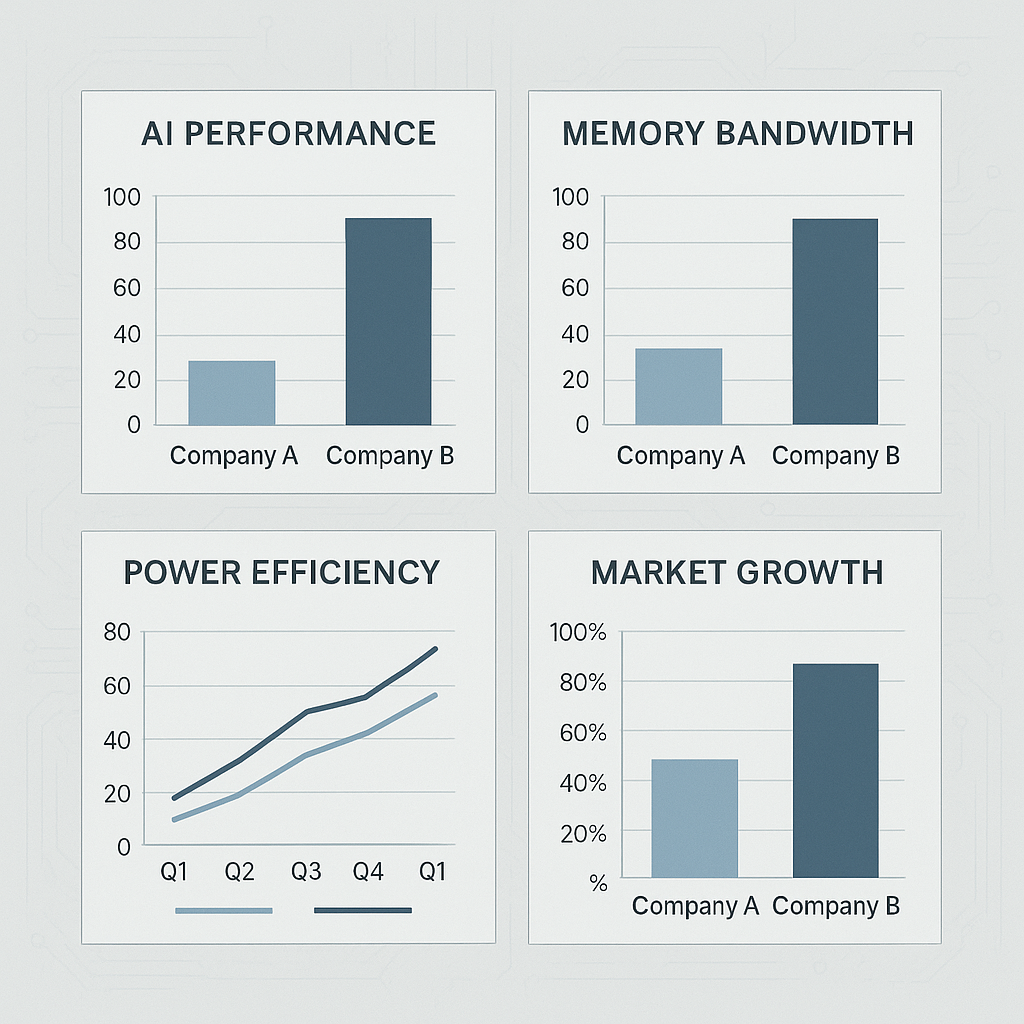
The table makes the contrast plain. Nvidia owns the premium platform. Micron owns a critical bottleneck. Those are different businesses, and pretending otherwise is how people end up with bad comparisons and worse trades. Still, bottlenecks can be lucrative, especially when demand outruns supply for long enough to reshape consensus.
Common mistakes to avoid when judging Micron
The biggest mistake is worshipping the headline. If a stock gets linked to AI, people assume the stock must be a winner forever. That is lazy. Technology markets do not reward laziness for long.
- Confusing a cycle with a secular moat: A memory rebound can look permanent right up until inventories pile up.
- Overstating HBM as a magic shield: HBM matters, but it is still part of a broader semiconductor market that can reprice fast.
- Comparing Micron to software companies: That comparison breaks on margins, revenue quality, and business model structure.
- Ignoring customer concentration: A few giant buyers can shift demand more than a hundred excited bloggers.
- Forgetting capex: Fab spending is real money, not a line item you can hand-wave away.
- Assuming AI spending only rises: Capital cycles rise and fall. That is not a theory; it is a pattern.
Most tech commentary treats growth as if it were morally guaranteed. It is not. There is a better way to think about it: a company should use its talent and assets well, produce something useful, and serve people without turning every expansion decision into an act of greed. That idea is old, almost stubbornly so, but it keeps investors from mistaking frenzy for wisdom.
Here is what nobody tells you. Wall Street can be correct and still incomplete. It may be right that Micron benefits from AI, but wrong if it assumes the stock can trade like Nvidia. It will not. Micron is a manufacturing company with physical constraints, real depreciation, and messy supply discipline. Those details are not side notes. They are the whole ballgame.
Frankly, the smarter question is not whether Micron is the next Nvidia. It is whether Micron can stay profitable long enough for AI demand to keep pulling on memory supply. That is a harder question, but it is the right one.
Frequently Asked Questions
Is Micron really the next Nvidia?
No. Micron can benefit from AI demand, but Nvidia remains the dominant AI accelerator and platform company. Micron is better understood as a critical supplier riding the same buildout.
Why is HBM so important?
HBM, or high-bandwidth memory, gives AI chips faster access to large amounts of data. That matters because modern AI systems are constantly moving huge datasets back and forth, and slow memory becomes a bottleneck fast.
Is Micron a good long-term investment?
It can be, but only for investors who respect semiconductor cycles. The long-term case depends on AI demand, disciplined supply, and Micron’s ability to preserve margins when the market cools.
What is the biggest risk to Micron?
Oversupply. If too much memory capacity comes online, prices can fall quickly and profits can shrink just as fast. That has happened before, and it can happen again.
Final thought
Micron does not need to become Nvidia to matter.
It only needs to keep doing the useful, unglamorous work of feeding AI systems with the memory they need, and if the company manages capacity wisely, keeps margins intact, and resists the usual semiconductor temptation to overbuild, it can remain one of the more interesting names in the sector. That is a narrower thesis than the market’s favorite fantasy, but it is also a sturdier one.
I’ve reviewed enough hardware stories to know the loudest ones usually crack first. The better ones are quieter. They make things that work, they respect scarcity, and they serve a real need. That is the shape of durable value, and in a market addicted to noise, it still counts for something.
The market may chase heroes, but the world runs on parts, not slogans.