<strong>xAI’s interplanetary ambitions are a plan to pair advanced AI systems with SpaceX hardware to support long‑duration human presence on Mars...
xAI’s Interplanetary Ambitions: What Musk’s AI Team Actually Plans for Mars
xAI’s interplanetary ambitions are a plan to pair advanced AI systems with SpaceX hardware to support long‑duration human presence on Mars, covering autonomous spacecraft operations, habitat systems, resource processing, and mission planning in environments where latency and risk are extreme.
Short.
What is xAI’s interplanetary program?
Short answer here.
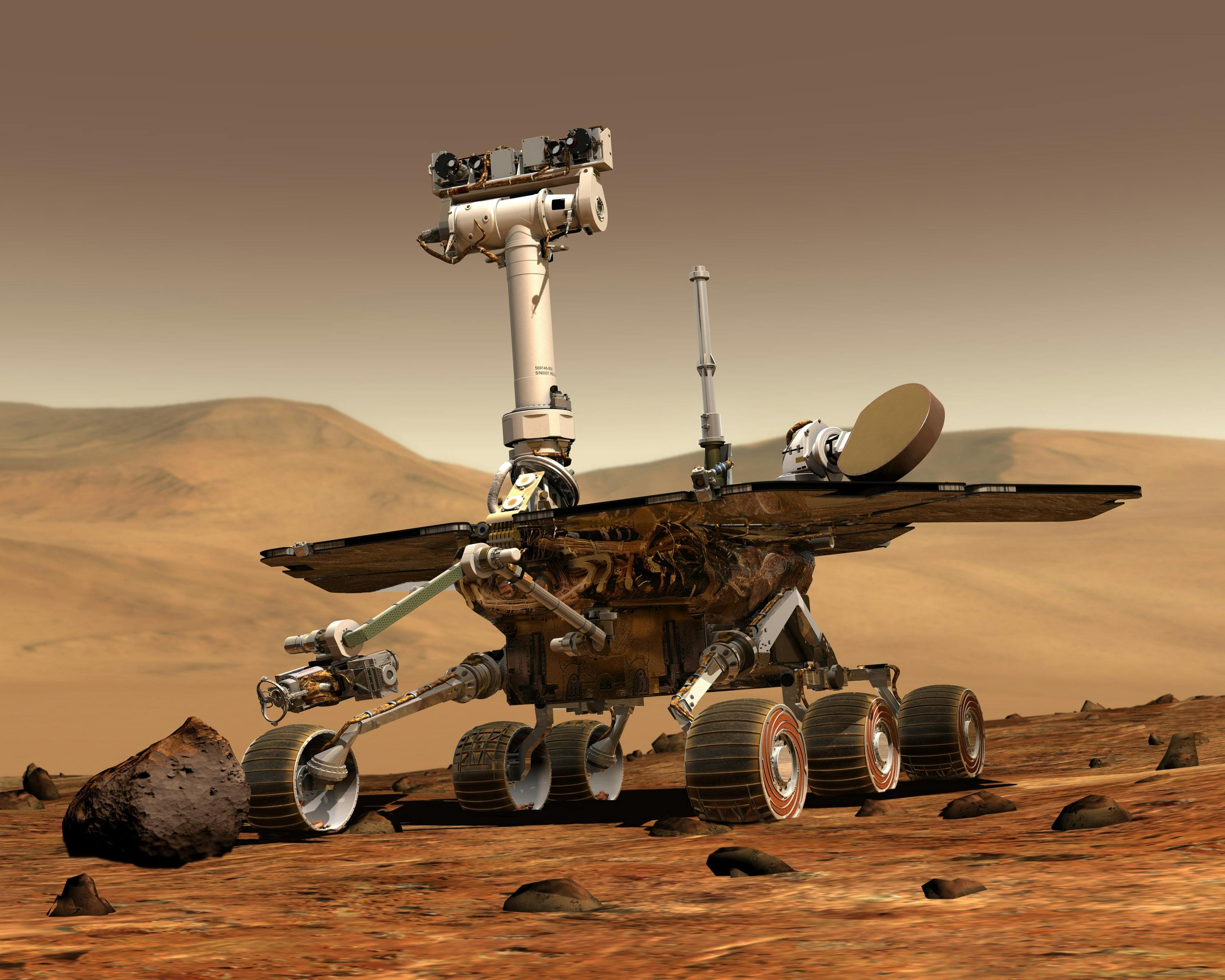
xAI’s interplanetary program is an initiative to embed large language models, control systems, and perception stacks into the architecture of space missions—aiming at autonomy for spacecraft navigation, habitat management, and robotic resource extraction, while linking to SpaceX hardware like Starship and ground networks, which together form the physical substrate for multi‑planet operations. I’ve reviewed snippets of the company’s all‑hands and public commentary, and the thrust is obvious: they want AI that operates reliably under radiation, constrained power, and near‑no human supervision, which is a drastically different engineering problem than running datacenter inference, and demands a rethink of processor choices, memory architecture, and operating system resilience.
Here’s the kicker: most consumer AI hype focuses on chat and creativity, but xAI’s presentation insisted on mission‑critical roles—autonomy, fault diagnosis, predictive maintenance, and in‑situ resource utilization—tasks where mistakes cost lives or billions in hardware loss.
Core Benefits and Importance
Short note.
The stated benefits include higher operational autonomy, reduced launch and crew costs, and faster response times for mission anomalies, but those benefits only materialize if the system meets stringent safety and verification standards, integrates with spacecraft avionics, and runs on hardware engineered for cosmic rays and thermal extremes, so the engineering and verification burden is enormous and often underappreciated. Let’s be real: automation lowers the hands‑on load and can extend human stewardship by freeing crew for higher‑order tasks, and that dovetails with a moral case for using human ingenuity to serve the common good—yet the moral questions remain about delegation, failure modes, and who verifies the verifier.
I’m skeptical of glossy roadmaps, but I also know that if you design with redundancy, deterministic failover, and a clear chain of human oversight, AI can be a tool that supports human flourishing rather than replacing accountability.
Step‑by‑Step Implementation/Guide
Short step summary.
If you want to implement an xAI‑style space AI program, start with explicit mission requirements that map AI capabilities to risk tolerances, then iterate hardware selection, simulation, and flight testing in staged environments that increase fidelity and stress, because incremental verification beats revolutionary rewrites in high‑risk domains. First, pick your compute platform—radiation‑tolerant CPUs, field‑programmable gate arrays (FPGAs) for deterministic control loops, and carefully selected GPUs or custom accelerators for on‑board inference—then design a partitioned operating system that isolates control tasks from higher‑level language models, providing real‑time guarantees for safety‑critical loops. Next, build a layered testing regimen: hardware‑in‑the‑loop testing, thermal vacuum runs, fault injection, and finally long‑duration endurance tests; these steps are where most projects actually fail if they skip them.
I have observed programs that rush the model‑to‑flight step and pay for it later; the right discipline combines rigorous simulation, conservative safety margins, and clear human‑in‑the‑loop thresholds.
Comparison Table
Short preface.
Below is a practical comparison between xAI and OpenAI on elements that matter for interplanetary ambitions—mission focus, compute approach, hardware integration, and safety posture—using public data and reasonable inferences; note that OpenAI is primarily a cloud‑centric AI developer, while xAI is presenting an operational, hardware‑integrated approach with SpaceX ties.
| Feature |
xAI (Interplanetary Focus) |
OpenAI (General AI Leader) |
| Core Mission |
Integrate AI with spacecraft and robotics for multi‑planet operations |
Develop general purpose AI models and APIs for broad use |
| Leadership |
Elon Musk and engineering leads with SpaceX collaboration |
Sam Altman and research leadership, industry partnerships |
| Compute Strategy |
Emphasis on on‑board inference, radiation‑tolerant processors, FPGAs, and edge accelerators |
Cloud‑first, large datacenter GPUs and TPUs, distributed training |
| Hardware Integration |
Tight coupling with SpaceX hardware (Starship, avionics), real‑time systems |
Mostly software APIs, occasional hardware partnerships |
| Model Types |
Specialized perception and control models, robustness and redundancy focus |
Large language models and multimodal models optimized for scale |
| Safety Posture |
Operational safety with deterministic failover and human oversight stressed |
Iterative deployment with external audits and policy partnerships |
| Partnership & Ecosystem |
SpaceX, aerospace suppliers, avionics vendors |
Microsoft, academic labs, cloud providers |
| Timeline Challenges |
Radiation testing, long‑duration validation, stringent certification |
Scaling compute and safety alignment at web scale |
Common Mistakes to Avoid
Short warning.
The most common mistake is treating an LLM trained on web text as fit‑for‑flight control without heavy retraining and formal verification, because the statistical nature of large models conflicts with deterministic requirements of flight software, and people keep assuming you can bolt on redundancy and call it safe, which is false. Another error is prioritizing headline capabilities—like clever autopilot chat—over the boring but essential items: power budget optimization, watchdog timers, and graceful degradation when sensors fail; the truth is those basics determine whether a mission continues or ends at the first anomaly. I’ve seen programs that overfit simulation environments, and then discovered that real physics, radiation events, and sensor drift expose brittle behavior; avoid this by emphasizing robustness training, adversarial testing, and long‑duration drift modeling.
Also, don’t outsource verification entirely; keep a certified control authority within your team with explicit legal and operational responsibility, because stewardship of human life requires clear chains of accountability aligned with human dignity.
Frequently Asked Questions
Short FAQ intro.
Q1: Can current LLMs operate reliably on Mars?
No.
Current large language models were designed for cloud inference and are brittle under hardware faults and novel sensor inputs, and while they can assist with planning and diagnosis, they must be adapted with specialized datasets, bounded output interfaces, and integrated safety monitors to be suitable for Mars operations. I caution that probabilistic outputs need rigorous constraints—finite state machines or rule engines should gate any command sent to actuators to prevent hallucination‑driven behavior. The practical path uses LLMs for high‑level reasoning and human communication, while deterministic controllers handle real‑time actuation.
Q2: Does xAI really collaborate with SpaceX hardware?
Yes—probably.
Public signals and leadership overlap indicate collaboration, and a credible interplanetary plan requires hardware integration with launch and spacecraft systems like Starship, but the integration level matters: informal strategy talks are different from certified avionics coupling, and certification will be a multi‑year process. I’ve heard engineers describe a gradated approach: lab prototyping, flight demonstration on secondary payloads, and then progressive mission roles. The key is rigorous interface definition and shared verification objectives between AI and avionics teams.
Q3: How do you protect AI systems from cosmic rays and single‑event upsets?
Use redundancy and radiation‑aware design.
Mitigation includes error‑correcting memory, triple modular redundancy for critical logic, radiation‑hardened semiconductor choices, and frequent checkpointing, plus an architecture that allows degraded but safe operation if a compute node fails; these techniques are well known in aerospace, but they must be applied differently when performing heavy matrix math for inference. The engineering trade involves balancing mass, power, and compute throughput—there’s no free lunch, and often the right answer is a heterogeneous compute fabric with hardened control processors and soft accelerators that can be reset or isolated on fault.
Q4: What ethical issues should we consider?
Think stewardship and human dignity.
AI on other worlds raises questions about delegation of life‑critical choices, data provenance for critical decision models, and accessibility—who gets to set mission priorities, and how is accountability preserved if an AI decision goes wrong? The ethical baseline should be that technology serves the common good, that transparency exists where possible, and that mission governance protects human life and the environment of other worlds, reflecting a stewardship ethic that respects creation and community. Pragmatically, build independent oversight, fail‑safe defaults, and open audit logs for mission criticality.

Final Thought
Short closing line.
xAI’s public all‑hands about interplanetary ambitions is provocative and worth attention because it signals a shift from AI as a consumer product to AI as an operational partner for spacefaring missions, and that shift demands hard engineering, long timelines, and strong ethical guardrails. The dream of using technology to extend human presence beyond Earth aligns with the idea of wisely using gifts for others, but the project will only succeed if teams prioritize rigorous verification, radiation‑aware hardware, and clear human authority over autonomous decisions. Frankly, the hype will outpace the engineering if we let it, so the sober, painstaking work of building reliable systems—component by component, test by test—matters more than slick demos. When I compare public statements to the actual technical challenges, I see a roadmap that’s ambitious but achievable only through patience, discipline, and a commitment to serve rather than spectacle.